Automated archive / Monster Hunter Stories 3: Twisted Reflection
Sector Intelligence Report #01 – Monster Hunter Stories 3: Twisted Reflection Enters Live Combat Ops
Monster Hunter Stories 3: Twisted Reflection has fully deployed, bringing late-game anomalies, political turbulence, and a surprisingly demanding tactical layer to the spin-off RPG line. This week’s intel breaks down high-threat targets, early Monstie exploits, and how Capcom is quietly training players to think...
AI-generated summary. This archive article does not have a current recorded source check. Check linked sources before relying on details. Editorial policy
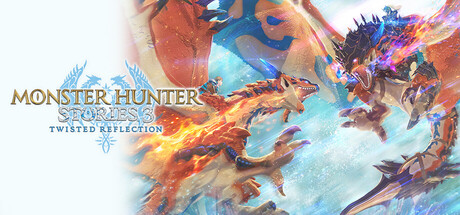
Strategic Overview: Operation “Twisted Reflection” Goes Live
Monster Hunter Stories 3: Twisted Reflection has exited staging and is now a full live deployment across platforms, pushing the spin-off RPG line into its most system-dense form yet. This week’s telemetry paints a clear picture: Capcom is treating this launch like a long-tail campaign, not a one-and-done sortie. Between free cosmetic DLC, early access to high-tier Monsties, and a sharpened focus on narrative stakes, the game is positioning itself as a bridge between story-driven Riders and the mainline hunting ecosystem.
From a #gamedev perspective, Twisted Reflection is iterating on a proven loop—turn-based combat plus monster collection—while layering in more explicit route-planning, patrol-tracking, and resource optimization. The result is a tactics RPG that behaves more like a live battlefield simulation than a traditional monster-collecting comfort title.
Narrative Front: The Princess of Azuria and Escalating Kingdom Conflict
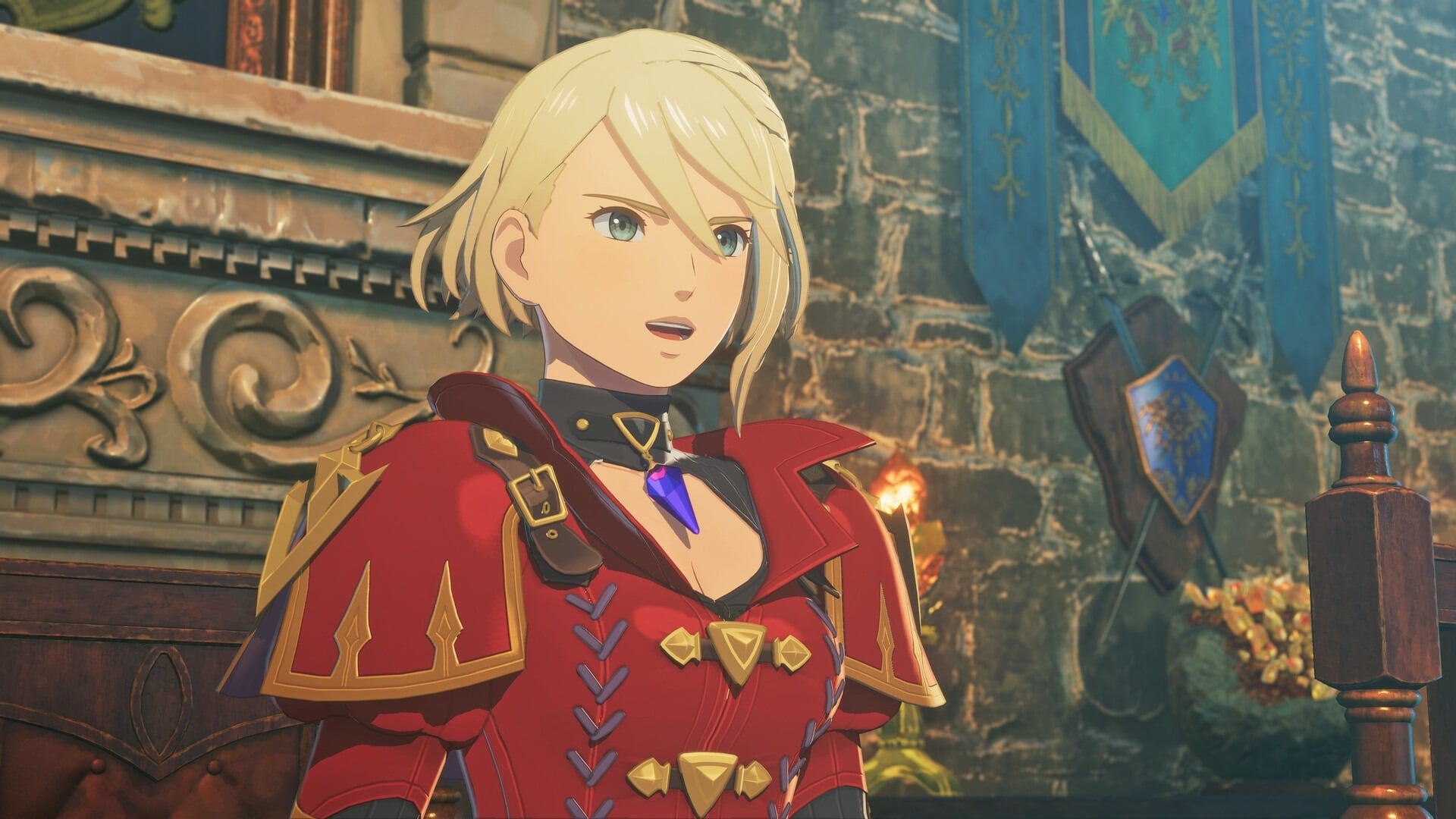
Capcom’s current messaging is crystal: the Princess of Azuria is not just a story NPC, but a narrative and mechanical anchor. The latest launch trailer frames her as both diplomatic leverage and frontline cavalry, riding into conflicts that now have explicit geopolitical fallout.
Watch: Transmitting Gameplay footage from the field: Princess of Azuria launch trailer
Key narrative intelligence:
- Cross-kingdom turbulence: The anomaly at the heart of monster behavior has political teeth. Expect shifting alliances and rider deployments that mirror a strategy game’s front-line map.
- Mounted engagements as storytelling: The campaign leans on in-battle cinematics and traversal vignettes to convey character arcs, rather than isolating drama to cutscenes.
- Continuity stakes: The briefing materials explicitly call back to prior Stories operations, which means returning players are rewarded with context, while new riders get a soft recap of the series’ long-running ecosystem experiments.
For developers tracking narrative design, this is a case study in how to escalate a spin-off’s stakes without abandoning its lighter tonal baseline.
Systems Audit: Turn-Based Combat, Visual Modes, and Performance Tuning
This week’s field analysis confirms that Monster Hunter Stories 3: Twisted Reflection is a combat-strong, exploration-competent deployment. The turn-based system leans into speed control, elemental targeting, and skill-rotation discipline, with a premium on reading enemy intent.
Capcom’s technical stack on consoles is split into three distinct rendering modes:
- Performance Mode – Prioritizes high, stable frame rates for riders who value input responsiveness during high-speed encounters and traversal.
- Balanced Mode – A hybrid profile that stabilizes frame pacing while retaining respectable resolution and effects; likely to be the default recommendation for most players.
- Quality Mode – Cranks up resolution and visual fidelity at the cost of fluidity, ideal for cinematic story segments or players with a higher tolerance for motion stutter.
From a #gamedev and #indiegame lens, this is a clean example of communicating tech trade-offs in player-facing language. The modes are framed as tactical choices, not vanity toggles, which subtly pushes players to think like systems designers—prioritizing responsiveness, clarity, or spectacle depending on their mission profile.
High-Threat Targets: Invasive Odogaron and Late-Game Anomalies
The most notable combat intel this week is the emergence of Invasive Odogaron, a late-game anomaly flagged as a high-threat protocol breach. This variant is tuned to punish sloppy squad-building and poor bleed management.
Operational notes from the field:
- Route intelligence matters: Tracking patrol paths before entering its arena is effectively a soft difficulty slider. Unscouted entries are punished.
- Defensive Monsties + bleed resistance: High-defense partners and bleed mitigation are treated as mandatory, not optional optimization.
- Strict healing cadence: Healing items are best used on a timer, not reactively, reinforcing the game’s focus on pre-planned turn economies.
This encounter encapsulates Twisted Reflection’s design thesis: even in a story-centric spin-off, monster behaviors are tuned to reward the same pattern recognition and risk budgeting that define mainline hunts.
Roster Advantage: Early Access to Pink & Dreadqueen Rathian
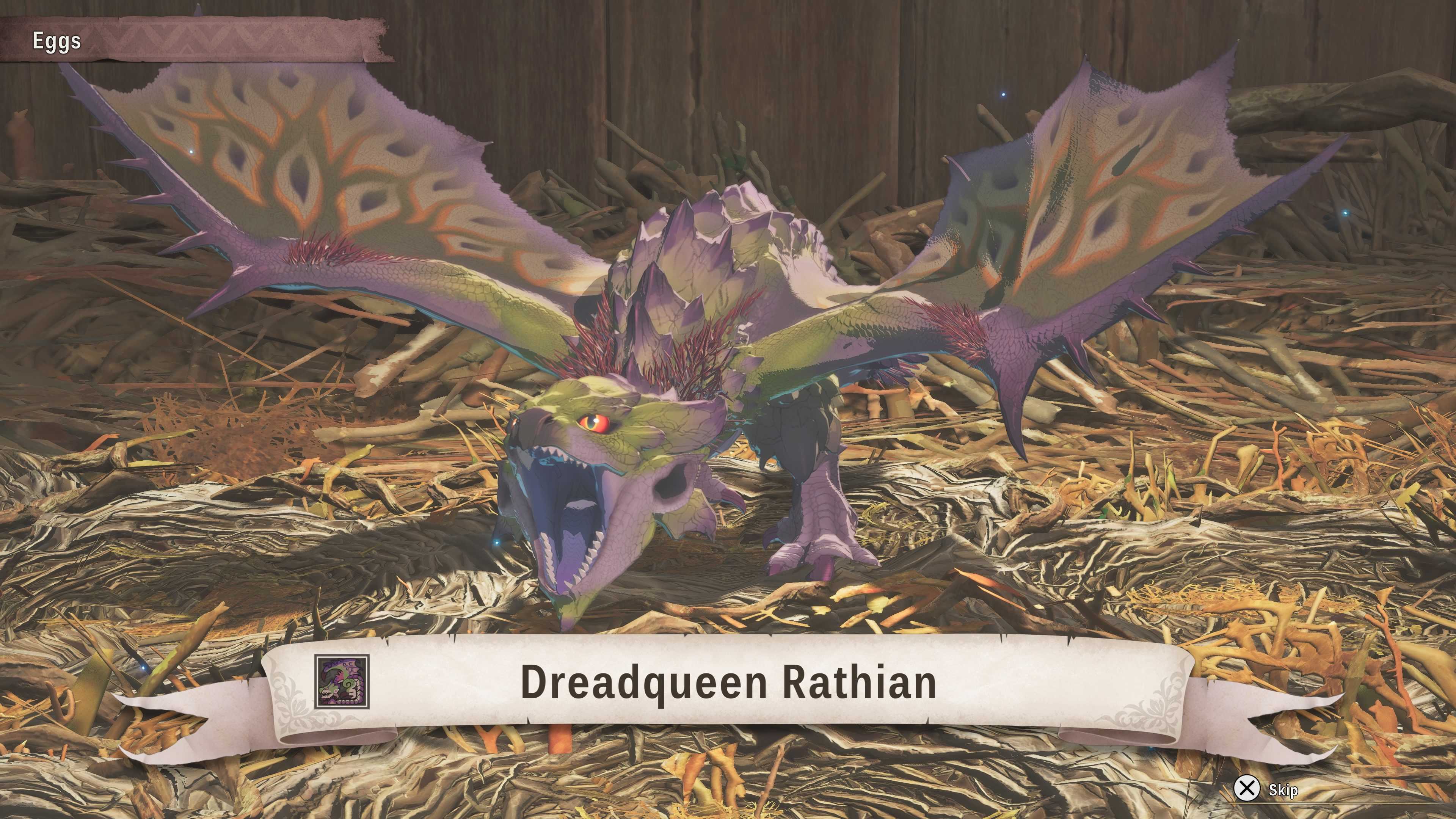
On the recruitment front, decrypted routes now allow early acquisition of Pink Rathian and Dreadqueen Rathian—two high-tier flying wyverns that can tilt the late-game balance if secured ahead of the curve.
Why this matters for systems design:
- Pacing control: Allowing early access to late-game-caliber Monsties creates deliberate difficulty compression for players willing to engage with side conditions and specific quest chains.
- Meta-shaping: These wyverns can redefine optimal gene synergies and party compositions, encouraging players to rebuild their grids rather than coasting on early favorites.
- Replayability lever: Early unlock routes function as soft New Game+ tools for experienced riders starting fresh saves.
For designers, this is a clear example of how progression curves can be bent without outright breaking them—rewarding knowledge and routing discipline rather than raw grind.
Efficiency Protocols: Eggs, Routes, and Early-Game Economy
The latest operational field guide surfaces 22 targeted techniques for egg gathering and hunt optimization, reframing what could be a casual loop into a near-speedrun syllabus:
- Den scanning and route memorization reduce dead time between viable egg pulls.
- Stable resource loops keep riders flush with currency and consumables, ensuring they can afford to experiment with gene builds.
- Terrain and turn-order exploitation encourages players to think in layered systems—positioning, initiative, and elemental coverage all feeding into a single decision tree.
Paired with early-game advice on securing your economy and prioritizing gene synergy, Monster Hunter Stories 3: Twisted Reflection is quietly training its audience to think like designers—evaluating opportunity cost, route value, and long-term roster potential.
Verdict So Far: Combat-Forward, Narrative-Ambitious
Early review telemetry frames Twisted Reflection as a stable fusion of turn-based combat, monster collection, and branching narrative, with measurable upgrades in visual fidelity, encounter pacing, and mount-based traversal versus prior entries. The key risk factors—predictable story beats and repetitive side objectives—are notable but not disqualifying, especially for players primarily invested in combat depth and Monstie optimization.
As the operation’s first week closes, the message is clear: Monster Hunter Stories 3: Twisted Reflection is less a side story and more a parallel combat lab for the broader Monster Hunter ecosystem. For developers tracking Capcom’s playbook, this is a live case study in how to evolve a spin-off into a systems-rich companion line without losing its approachable on-ramp to the franchise.
Sources and corrections
This archive entry does not have a verified article-source list. Images and video embeds alone are not evidence for every claim.
Found an error? Request a correction. Include the passage and a supporting source.