Automated archive / Monster Hunter Stories 3: Twisted Reflection
Monster Hunter Stories 3 Dials In Its Sharpest Hunt Yet
Monster Hunter Stories 3: Twisted Reflection has exited staging and entered full deployment, with launch-week intel highlighting a combat-strong, system-dense RPG that’s already fueling optimization discourse. From performance-mode tuning to early Dreadqueen Rathian routes, Capcom’s third Stories entry is quietly...
AI-generated summary. This archive article does not have a current recorded source check. Check linked sources before relying on details. Editorial policy
Sector Intelligence Report // Week of March 13
Monster Hunter Stories 3: Twisted Reflection has officially exited staging and gone fully live, and the last seven days of telemetry paint a clear picture: Capcom’s third spin-off is quietly becoming the most tactically mature entry in the Stories line. This week’s signals cluster around three fronts — systems optimization, visual deployment on consoles, and early high-tier monstie routing — all of which matter if you care about #gamedev craft as much as you care about crit numbers.
Systems Status: Turn-Based Combat, Collection Loops, and Narrative Risk
Field reviews flag Monster Hunter Stories 3: Twisted Reflection as the cleanest build of the sub-series to date. The combat loop fuses monster collecting, party synergy, and turn-based reads into a tightly tuned system that rewards deliberate planning over button-mashing. Gene synergy, elemental stacking, and turn-order manipulation aren’t side mechanics anymore; they’re the backbone of the design.
Two independent analyses converge on the same verdict: combat-strong, exploration-competent, with incremental but meaningful upgrades over prior deployments. Encounter pacing has been smoothed, mount-based traversal is less of a chore, and visual feedback in battle better telegraphs big swings and team synergies.
The trade-off: narrative predictability and some repetition in side-objectives. From a #gamedev perspective, this is a familiar tension — heavy investment in systemic depth and combat readability can leave side content feeling like content padding rather than bespoke narrative beats. For players, it means the mainline story and combat sandbox are the primary draw, while side quests function more as resource pipelines than storytelling showcases.
Visual Deployment: Performance vs Balanced vs Quality on Consoles
Rendering intel for console hunters confirms a three-pronged graphics strategy: Performance, Balanced, and Quality modes. This isn’t just a cosmetic toggle; it’s a tactical choice that shapes how you experience the game’s combat and traversal.
- Performance Mode: Prioritizes frame-rate stability. This is the recommended profile for players who value input responsiveness in turn-based combat and snappier camera movement while riding Monsties across large zones. It’s the closest thing to a competitive setting in what is technically a single-player RPG.
- Balanced Mode: A hybrid profile that aims for a steady middle ground between resolution and FPS. For most riders, this will be the default “set and forget” configuration, especially on living-room setups where consistency beats razor-sharp image quality.
- Quality Mode: Cranks resolution and visual fidelity, particularly noticeable in armor detail, monster textures, and environmental lighting. The cost is fluidity — acceptable for story segments and slower exploration, less ideal if you’re hypersensitive to motion stutter.
From a development update angle, this three-mode deployment shows Capcom leaning into a tiered rendering philosophy that’s now standard in the console space, but with a key twist: the game’s turn-based structure gives them more leeway to let players choose aesthetics over raw performance without breaking playability. The design takeaway for #indiegame teams: even in non-action genres, performance options are now player expectations, not luxuries.
Narrative Front: Princess of Azuria and a World on the Brink
Watch: Transmitting Gameplay footage from the field: Princess of Azuria launch trailer
The latest official trailer pivots the spotlight to the Princess of Azuria, positioning her as both diplomatic fulcrum and combat asset. The narrative framing emphasizes:
- Cross-kingdom diplomacy as a core tension, not just background lore.
- Mounted engagements and route-based planning, reinforcing that Riders are field commanders as much as protagonists.
- A spreading anomaly threatening world-state collapse, escalating the stakes beyond localized village dramas of earlier entries.
This aligns with the broader sector readout: Monster Hunter Stories 3: Twisted Reflection is less about intimate village myth and more about regional geopolitics, with Riders functioning as mobile, monster-backed special forces. For story-focused players, the risk is that some arcs may feel telegraphed, but structurally it gives Capcom room to justify large-scale deployments, multi-biome traversal, and escalating monster rosters.
Early-Game Doctrine: Economy, Eggs, and 22-Point Optimization
Two major intel drops this week focus on early-game efficiency:
- "Tips I wish I knew before starting": This briefing underlines three pillars — early-game economy stability, gene synergy planning, and terrain/turn-order exploitation. The message is clear: treat your first 5–10 hours as a foundation phase, not a throwaway tutorial.
- 22 Hunting and Egg Gathering Tips: This is a full tactical syllabus for riders who want to optimize den routing and rare egg acquisition.
Key operational themes:
- Efficient den scanning: Learn layouts, recognize telltale signs of high-value nests, and avoid time-wasting dead ends.
- Route memorization and resource loops: Build repeatable circuits that feed both your egg pipeline and your currency/material stockpiles.
- Gene planning early: Don’t wait for late-game monsties to think about builds. Lock in elemental and skill synergies from the moment you hatch your first serious partner.
For #gamedev observers, the existence and popularity of such granular guides indicate that Capcom’s systems are robust enough to support high-level optimization, but also dense enough that onboarding via in-game tutorials alone is insufficient for mastery. That tension is often where long-tail engagement lives.
High-Tier Monstie Routing: Pink & Dreadqueen Rathian Fast-Track
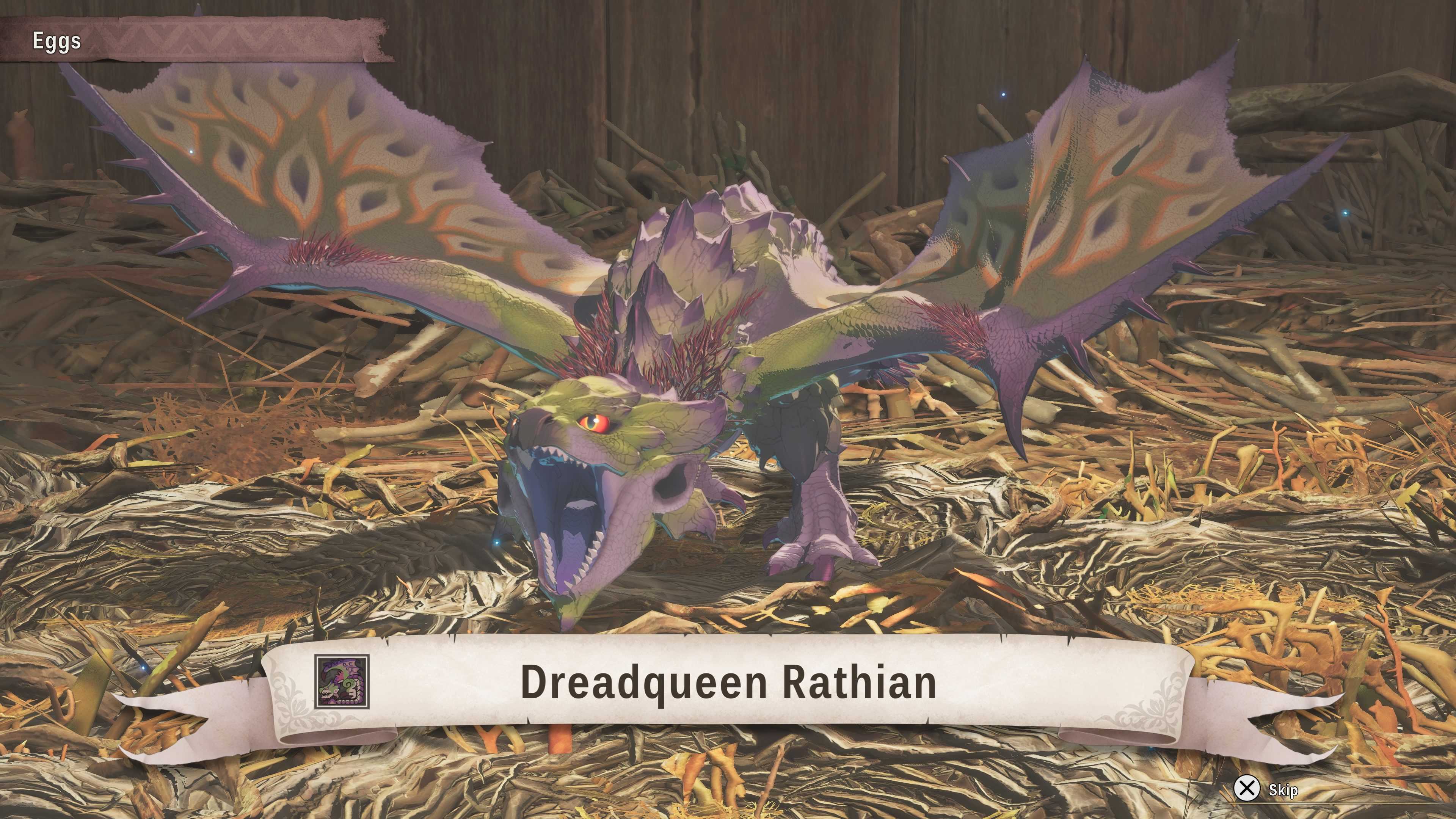
A standout data packet this week details early access routes to Pink Rathian and Dreadqueen Rathian. By syncing story progress with specific quest triggers and conditions, riders can recruit these high-tier flying wyverns well ahead of standard progression.
Strategic implications:
- Roster skew: Early access to top-tier monsties can significantly tilt late-game balance, effectively letting experienced players front-load power in exchange for knowledge and precision.
- Replay value: These kinds of hidden or sequence-sensitive unlocks are catnip for min-maxers and challenge-run communities.
- Design signal: Capcom is comfortable embedding power shortcuts that reward system literacy rather than raw grinding.
From a broader sector perspective, this positions Monster Hunter Stories 3: Twisted Reflection closer to a tactical RPG with discoverable meta routes than a purely linear monster-collector.
Platform Deployment and Live Ops Outlook
The PS5 deployment on March 13 formalizes Stories 3 as a cross-platform pillar rather than a side experiment. With launch-day DLC in the form of the Gold Circlet accessory and Wind Wyvern’s Friend layered armor for Simon (Legiana set), Capcom is signaling a live-ops mindset without leaning into aggressive monetization.
Short-term, expect the meta conversation to focus on:
- Optimal graphics modes per platform and display setup.
- Early-game egg routes and gene builds.
- High-tier monstie fast-tracks like Pink and Dreadqueen Rathian.
Mid-term, the real test will be whether narrative predictability and side-quest repetition dampen long-tail engagement, or whether the combat sandbox and collection depth are strong enough to keep riders in the saddle.
For now, the sector verdict is clear: Monster Hunter Stories 3: Twisted Reflection is the apex form of Capcom’s turn-based monster-bonding experiment — a system-rich RPG that’s already generating the kind of optimization discourse most designers dream about.
Sources and corrections
This archive entry does not have a verified article-source list. Images and video embeds alone are not evidence for every claim.
Found an error? Request a correction. Include the passage and a supporting source.
Your games, in one place
Keep up with Monster Hunter Stories 3: Twisted Reflection
Follow this game to collect its posts in your personal feed. Come back to see what you missed.
More to read about Monster Hunter Stories 3: Twisted Reflection
- Source-checked briefMonster Hunter Stories 3 comes to Xbox on PC November 18
Monster Hunter Stories 3: Twisted Reflection is scheduled for Xbox on PC on November 18, 2026. The announcement says Xbox Play Anywhere will support progress and content across eligible devices....