Automated archive / Forza Horizon 6
Forza Horizon 6 Hits 500K on Steam and Arms Up with Telemetry-Grade Hardware
Forza Horizon 6 has already cleared 500,000 pre-sold copies on Steam with a month to go, signaling that open-world racing is still a high-value frontier on PC. With telemetry-grade limited edition hardware and a neon-soaked urban focus, Playground and Xbox are quietly redefining the UX baseline for the next...
AI-generated summary. This archive article does not have a current recorded source check. Check linked sources before relying on details. Editorial policy
Pre-Launch Market Telemetry: 500K Steam Copies and Climbing
Forza Horizon 6 hasn’t left the garage yet, but the market data is already redlining. According to recent activity signals, the racer has surpassed 500,000 pre-sold copies on Steam with a full month still remaining before launch. For a traditionally console-leaning franchise, that’s a serious PC-side voltage spike.
From a #gamedev perspective, this is a clean, quantifiable proof point that open-world racing sandboxes still command premium attention on PC. In a cycle dominated by extraction shooters and survival crafting, Forza Horizon 6 is demonstrating that:
- High-fidelity, systemic racers still convert at scale.
- PC players are willing to commit early to a franchise historically anchored in the Xbox ecosystem.
- Launch-week concurrency is likely to be heavy enough to stress-test matchmaking, telemetry, and social layers.
For teams building their own #indiegame racers or open-world sandboxes, the signal is clear: there is still room in the lane, but expectations for production quality and systems depth are now firmly AAA-grade. Horizon’s pre-launch traction suggests that players want big, reactive worlds with clean onboarding and constant progression drip, even in a genre that used to be more about static track rotations.
Hardware Strategy: Limited Edition Controller & Headset as UX Extenders
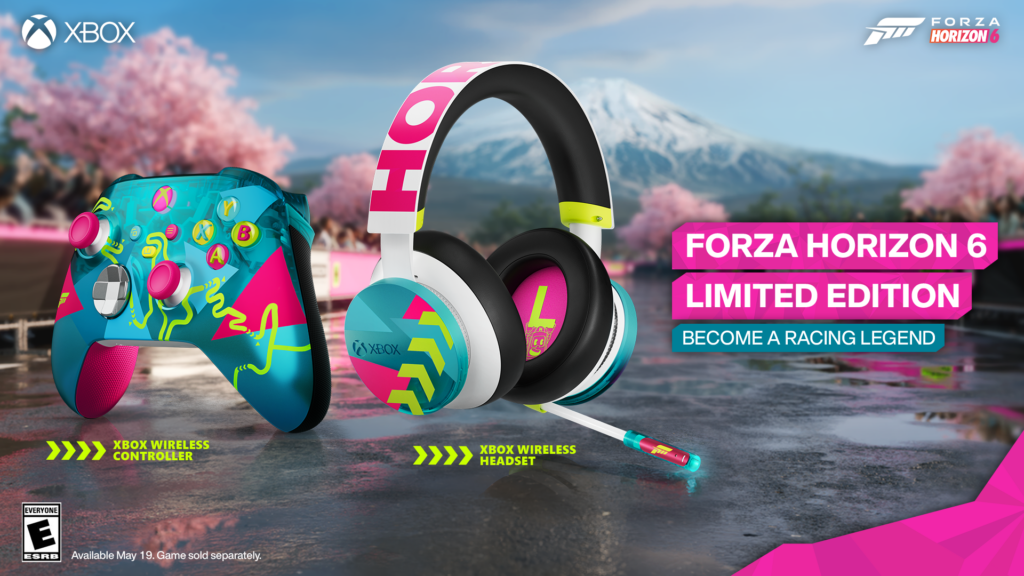
In parallel with software momentum, Xbox has deployed a Forza Horizon 6 Limited Edition controller and headset. At first glance, this looks like classic collector’s gear, but the messaging and industrial design point to something more deliberate: a UX extension strategy.
Key takeaways for developers and hardware partners:
- Visual Telemetry: The neon gradients and horizon-flare detailing aren’t just cosmetics; they’re high-contrast cues aligned with rapid visual scanning at high speed. In high-velocity titles, peripheral visibility and pattern recognition can subtly reduce input error and fatigue.
- Haptic as Design Surface: When platform holders push “precision input hardware,” they’re implicitly telling designers to tune haptics and trigger feedback as first-class systems, not afterthoughts. Expect Forza Horizon 6 to leverage nuanced rumble patterns for traction loss, surface transitions, and ABS behavior.
- Spatial Audio as Gameplay Channel: A themed headset with messaging around “spatial audio at 200+ mph” is an invitation for audio teams to treat engine mix, wind shear, and environmental occlusion as readable gameplay signals—not just flavor.
For #gamedev teams, especially those on smaller budgets, the lesson isn’t “ship a custom controller.” It’s to design with the default ecosystem in mind: adaptive triggers, advanced rumble, and spatial audio are now part of the baseline feature set players quietly expect from any premium racer, whether AAA or #indiegame.
Systems Implications: Designing for Heavy Launch Traffic
The 500K+ Steam pre-sell figure, combined with cross-platform launch expectations, implies a high-stress initial concurrency window. This has several design and infrastructure implications:
1. Social and Festival Layer Resilience
Forza Horizon’s hallmark is its always-on festival layer—convoys, seasonal events, and shared-world traffic. With this many PC players queued up, the team must:
- Shard intelligently to avoid empty-feeling instances while maintaining stable frame pacing.
- Prioritize graceful degradation: if seasonal servers wobble, core offline racing must remain pristine.
- Ensure cross-play matchmaking respects input method, latency, and skill brackets to prevent early friction.
These are patterns any online-focused #gamedev project should be modeling, even at smaller scale.
2. Content Pacing and Retention Design
High pre-sell volume means a massive Day 1 cohort. The risk: a steep drop-off if early hours don’t convert curiosity into routine. Expect Forza Horizon 6 to:
- Front-load signature set pieces and high-visibility routes that show off the new map’s verticality and city density.
- Use smart progression rails to keep players bouncing between road, off-road, and festival activities without decision paralysis.
- Integrate live ops hooks—weekly challenges, rotating playlists, and limited-time rewards—to normalize return habits within the first 72 hours.
For smaller #indiegame teams, the principle scales down: even with fewer systems, early-game pacing and clear progression beats are non-negotiable for retention.
Visual Language and World-Building: Night City and Expressway Focus
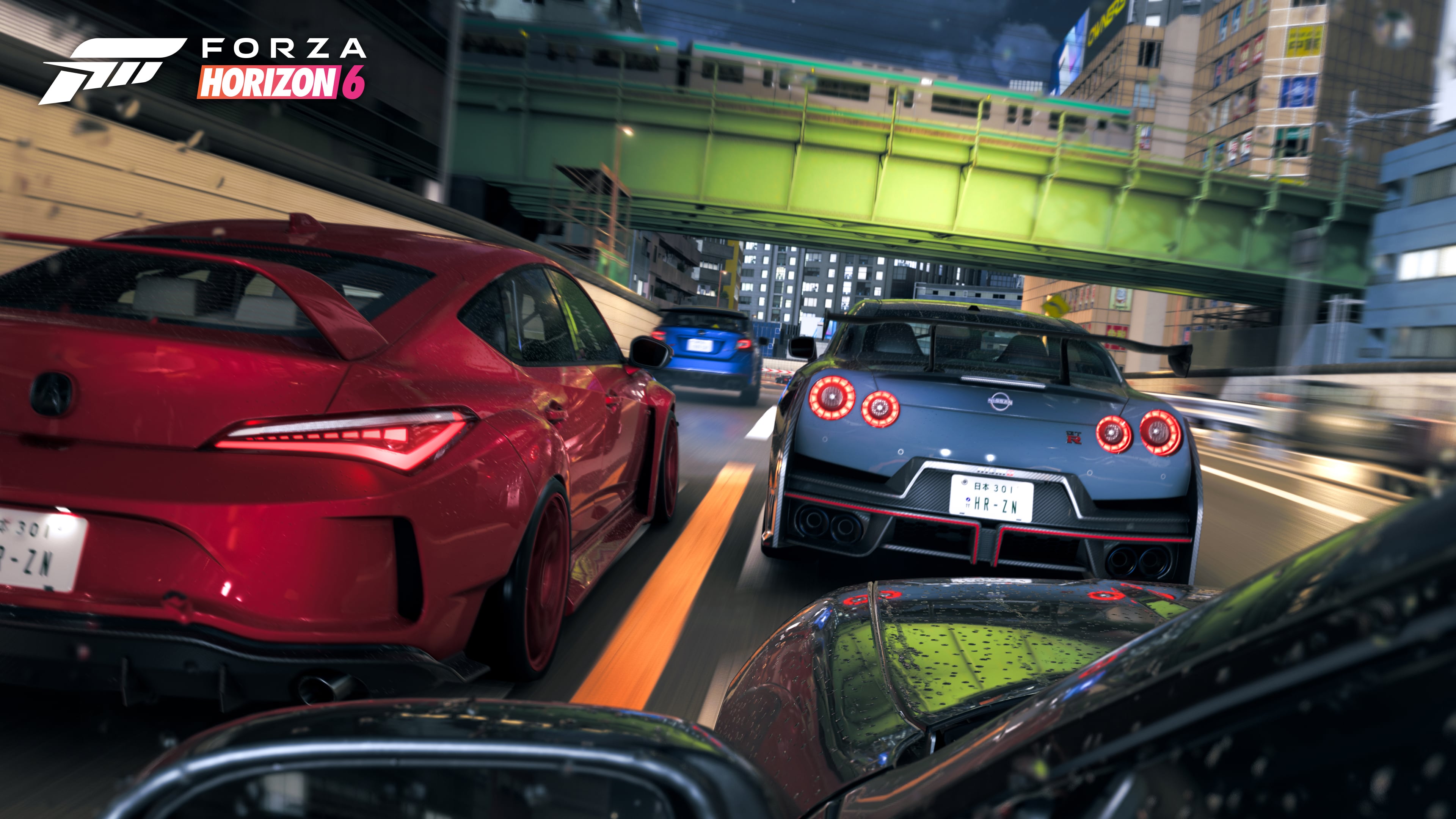
Preview imagery for Forza Horizon 6 is leaning hard into neon-lit cityscapes and high-speed expressways. This is a notable directional shift from purely pastoral vistas toward urban density and light-play.
Design implications:
- Readability at Speed: Night racing with dense lighting requires ruthless discipline in signposting. Track edges, braking zones, and shortcuts must remain readable at 200+ mph without UI clutter.
- Performance Budgeting: Reflections, emissive materials, and volumetric lighting can crush performance on lower-spec PCs. Given the Steam audience size, expect aggressive LOD strategies, dynamic resolution scaling, and possibly configurable lighting presets.
- Brand & Festival Identity: The chromed, neon-heavy visual language mirrors the limited edition hardware. This is a cohesive brand loop: the world, the UI, and the physical peripherals all speak the same design dialect.
For world-builders and environment artists, Forza Horizon 6 is shaping up as a case study in how to merge festival spectacle with high-speed legibility.
Strategic Outlook: What Forza Horizon 6 Signals to the Sector
Forza Horizon 6’s current telemetry—500K+ Steam pre-sales, synchronized hardware drops, and a clearly defined visual identity—positions it as the de facto benchmark for open-world racers in this cycle. The key signals to the broader development sector:
- The open-world racing niche is not saturated; it’s consolidating around a few dominant exemplars.
- PC is no longer a secondary audience for console-born franchises; it’s a primary concurrency driver.
- Hardware-aligned UX design (haptics, spatial audio, visual contrast) is becoming a standard expectation, not a deluxe extra.
For teams charting their own path—whether chasing a slice of the racing audience or just borrowing its systemic lessons—Forza Horizon 6 is the live case study to watch over the coming month. The launch window will reveal whether this pre-launch overdrive converts into long-term festival occupancy, or if the genre’s ceiling is closer than the early numbers suggest.
Sources and corrections
This archive entry does not have a verified article-source list. Images and video embeds alone are not evidence for every claim.
Found an error? Request a correction. Include the passage and a supporting source.