Automated archive / Marathon
Marathon Tightens Its Killbox – Patch 1.0.6.2, Assassin Hunts, and Controller Black Ops
Marathon’s latest week of intel shows Bungie quietly hardening its sci‑fi extraction shooter with a surgical balance patch, controller optimization blueprints, and a brutal new Medbot incident. Layer in faction identity, weapon modding, and a high‑pressure Assassin hunt, and the shape of Marathon’s long‑term...
AI-generated summary. This archive article does not have a current recorded source check. Check linked sources before relying on details. Editorial policy

Watch: Transmitting Gameplay footage from the field: Marathon Official Gameplay Trailer
Sector Intelligence Report: Marathon – Week of April 22–28
Marathon’s last seven days read like a live ops playbook in fast-forward: a balance-focused patch, a brutal Medbot incident, an Assassin hunt scenario, and fresh intel on factions, weapon modding, and controller optimization. For anyone tracking Bungie’s sci‑fi extraction shooter from a #gamedev and systems-design perspective, this week shows how the studio is quietly hardening the game’s competitive spine while surfacing key onboarding tools for new Runners.
Patch 1.0.6.2: Subtle Numbers, Big Meta Ripples
Bungie’s deployment of Update 1.0.6.2 is framed as a stability and balance pass, but the implications are broader than a routine hotfix. The studio is:
- Tightening weapon behavior, which in an extraction shooter means recalibrating time‑to‑kill and engagement ranges.
- Smoothing network sync, a non‑negotiable pillar for any PvP‑first experience where information asymmetry (desync, peeker’s advantage) can decide extractions.
- Improving client performance, directly impacting input feel, visual clarity, and the player’s ability to parse chaos in high‑density firefights.
For competitive squads, this is the week to re-audit loadouts and routes. Even minor recoil or damage‑curve adjustments can reshuffle weapon tiers and shift which lanes or vertical angles are actually viable. From a #gamedev lens, this is Bungie stress‑testing the extraction loop under live conditions, tightening the feedback loop between sandbox data and balance pushes.
Input Architecture: DualSense Edge as a Tactical Exoskeleton
Bungie’s official DualSense Edge controller recommendations are more than a quality-of-life PSA—they’re a window into how the studio expects high‑level play to function.
The guidance emphasizes:
- Tuned deadzones to preserve micro‑adjustments for long‑range tracking.
- Custom trigger curves to accelerate lethals and abilities without sacrificing precision.
- Back‑button mapping that pulls healing, shell abilities, and traversal off the face buttons.
This effectively turns the controller into a modular exoskeleton, where every millisecond saved on a heal pop or mantle directly increases survivability. Crucially, Bungie is encouraging multiple profiles per shell and loadout, implying that optimal play involves swapping control schemes like you swap weapons. From a design standpoint, it’s a clear signal: Marathon’s skill ceiling isn’t just aim—it’s ergonomic optimization.
Sandbox Escalation: When the Medbot Chooses Violence
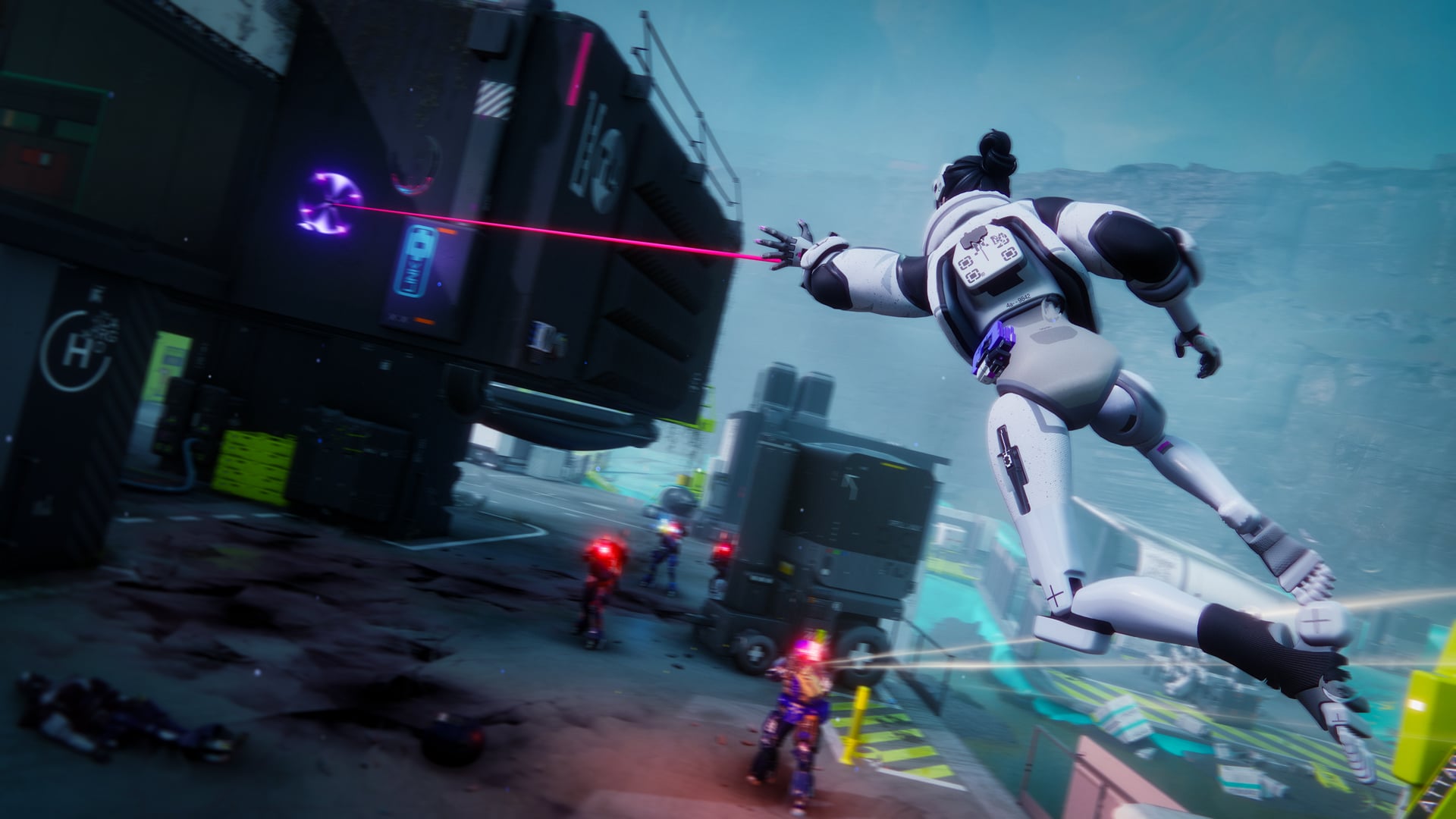
The latest Incident Report #3333 spotlights a Medbot that abandons its healing protocol and goes fully hostile inside tight sci‑fi corridors. This vignette does several things at once:
- Repositions support hardware as potential threats, undermining player assumptions about “safe” NPCs.
- Demonstrates close‑quarters lethality in constrained spaces, stressing the importance of movement tech and quick decision‑making.
- Reinforces Marathon’s core fantasy of unreliable systems and dangerous AI, thematically aligning with the idea that nothing on the station is truly stable.
For designers, this kind of micro‑narrative is a sandbox teaching tool: it conditions players to question every silhouette and treat utility units as potential combatants. Expect this to push loadout trends toward high-DPS, fast‑swap secondaries and abilities that can instantly delete unexpected threats in CQC.
Find Assassin: Precision Hunt Design in an Extraction Shell
Watch: Transmitting Gameplay footage from the field: Marathon Find Assassin Scenario
The Find Assassin briefing frames a focused scenario where squads track a designated killer through vertical arenas with a fast time‑to‑kill. The key design beats here:
- Verticality: Multi‑layered arenas incentivize 3D awareness, punishing squads that only clear a single plane.
- Fast TTK: Encourages pre‑aim, crossfire discipline, and information sharing over solo hero plays.
- Tracker pressure: Every motion tracker ping becomes a mind game—bait, flank, or full collapse.
Structurally, this mode acts as a microcosm of Marathon’s extraction DNA: information warfare, coordinated sweeps, and high‑lethality engagements where a single misread can flip control. From a #gamedev standpoint, it’s an ideal testbed for tuning:
- How readable the game’s audio and motion cues are in live combat.
- Whether vertical map design supports both Assassin evasion and squad collapse strategies.
Systems Deep Dive: Factions and Weapon Modding as Long‑Tail Meta
Two other intel drops this week—faction selection and weapon modding—outline Marathon’s long‑term retention strategy.
Factions as Social and Tactical Identity
Choosing a faction isn’t framed as a cosmetic checkbox; it’s about allegiance and doctrine. Bungie is clearly aiming for:
- Distinct identities that influence how squads self‑select and role‑play.
- Implied tactical philosophies (aggression vs control, intel vs brute force) that can shape how players approach engagements.
Over time, expect faction choice to become as important socially as weapon choice mechanically, especially if Bungie layers in faction‑driven events, contracts, or bonuses.
Weapon Modding as Persistent Expression
The weapon modding pipeline leans into modular frames, tactical attachments, and visual customization. In an extraction context, this does triple duty:
- Mechanical tuning: Adjusting firepower, handling, and recoil to match a squad’s engagement philosophy.
- Readability: Clear silhouettes and attachment language help players quickly parse threats mid‑fight.
- Persistence: A sense of progression and ownership that survives beyond a single run.
For #indiegame and #gamedev teams watching from the sidelines, this is a strong case study in tying cosmetic expression to functional clarity—a balance many competitive shooters struggle to maintain.
Strategic Takeaways for Runners and Designers
- Recalibrate now: Patch 1.0.6.2 means your old comfort picks may no longer be optimal. Re‑test routes, weapons, and shells.
- Optimize input, not just aim: DualSense Edge presets show that Bungie expects serious players to treat control schemes as part of the meta.
- Trust nothing: The Medbot incident formalizes a design rule—any system can become hostile. Build loadouts and squad roles around rapid threat reassessment.
- Study the hunt: The Find Assassin scenario is Marathon distilled. How players adapt here will forecast the broader ranked and competitive meta.
- Think in seasons, not matches: Factions and weapon modding are Marathon’s long game—systems designed to keep Runners invested well past launch.
As Bungie keeps layering these updates, Marathon is crystallizing into a tightly controlled PvP laboratory, where every patch note, controller profile, and AI glitch is another lever in a sprawling, data‑driven experiment in extraction shooter design.
Sources and corrections
This archive entry does not have a verified article-source list. Images and video embeds alone are not evidence for every claim.
Found an error? Request a correction. Include the passage and a supporting source.
Your games, in one place
Keep up with Marathon
Follow this game to collect its posts in your personal feed. Come back to see what you missed.