Automated archive / Marathon
Marathon Sector Intelligence Report: Stability Pass, Story Grid, and the Rise of Destroyed Wing Runs
Marathon’s latest sector sees Bungie pushing a fresh stability and balance pass while quietly confirming a multi-year, player-driven story grid. Meanwhile, high-speed Destroyed Wing runs are turning early maps into laboratories for movement tech and meta discovery.
AI-generated summary. This archive article does not have a current recorded source check. Check linked sources before relying on details. Editorial policy

Sector Intelligence Report // Marathon Weekly
Bungie’s extraction shooter marathon continues to harden its systems this week, with a live stability pass, fresh confirmation of a long-haul narrative roadmap, and a growing body of high-skill runs turning early maps into laboratories for movement tech. For #gamedev watchers, the last seven days read like a live case study in how to tune a service shooter while quietly laying down rails for a multi-year story grid.
Update 1.0.6.3: Stability, Balance, and the Quiet Death of Edge-Case Exploits
Bungie has deployed Marathon Update 1.0.6.3, framed internally as a “systems stability pass” with targeted balance calibration and quality-of-life corrections.
On paper, this sounds routine; in practice, it signals a few key priorities:
1. Systems Stability as Live Ops Baseline
The language around a “stability pass” suggests Bungie is still aggressively shoring up the simulation layer: server reliability, desync edges, and deterministic outcomes in high-stress combat scenarios. For a competitive extraction shooter, these passes aren’t just bug sweeps—they’re trust passes for the player base.
From a #gamedev perspective, this is the phase where telemetry from early testing or live exposure gets weaponized: crash clusters, outlier latency spikes, and replication failures are fed back into engine-level fixes. The more often these passes land, the more confident Bungie becomes in scaling Marathon’s concurrency and event cadence.
2. Balance Calibration and the Meta Reboot
The patch notes emphasize “balance calibration” across core loops. That usually points to:
- Weapon TTK normalization: Smoothing out outliers that delete players too fast or feel like peashooters.
- Ability and gadget tuning: Reining in combos that trivialize risk, especially in extraction contexts.
- Economy and reward pacing: Adjusting how quickly players can snowball into dominant loadouts.
The report specifically notes that “edge-case exploits are now statistically… discouraged.” That’s a tactful way of saying: if you were leaning on degenerate strats—geometry abuses, animation cancels, or economy loops—you should expect your comfort picks to feel different.
For high-skill players and #indiegame devs studying live balance, this is a reminder that early metas are disposable. Bungie is clearly willing to disrupt emergent exploit paths before they calcify into community expectation.
3. Player Guidance: Re-Evaluate Loadouts and Movement Patterns
The directive to “re-evaluate loadouts and movement patterns” is more than flavor text. It’s Bungie nudging players to:
- Run fresh test batteries in controlled conditions.
- Rebuild muscle memory around updated recoil, spread, or traversal values.
- Treat this patch as a soft meta season reset, even without a formal season tag.
For designers, this is a classic live-service feedback loop: push a stability + balance pass, observe how quickly the community adapts, then track whether the overall kill-death curves and extraction success rates flatten into healthier distributions.
Long-Haul Narrative Uplink: A Story Grid Planned for Years, Driven by Players
Bungie has also confirmed that Marathon’s narrative architecture is mapped out years into the future, but crucially, it’s not a locked script. Instead, the studio is building what it calls a “multi-year story grid” designed to be rerouted by player behavior.
1. A Story Grid, Not a Linear Campaign
Rather than a traditional campaign, Marathon is leaning into adaptive storytelling:
- Evolving factions: Expect power shifts based on aggregate player choices—who you ally with, who you farm, which contracts you prioritize.
- Dynamic objectives: Mission types and macro goals may pivot in response to live data: extraction success rates, favored routes, or even kill heatmaps.
- Lore as a living system: Instead of lore dumps, Marathon is positioning its fiction as something that reacts to the community’s statistical footprint.
This is a natural extension of Bungie’s live storytelling experiments in Destiny, but here it’s more systemic. For #gamedev teams, this is a blueprint for data-driven narrative design: plot beats as nodes on a grid, unlocked or altered by real-time player trends.
2. Player Agency as a Design Constraint
Designing “years” of story in advance while allowing for player-driven rerouting means Bungie is likely building:
- Branching macro-arcs with pre-authored outcomes, unlocked via community milestones.
- Fail-forward states where even missed goals push the narrative somewhere interesting.
- Telemetry hooks that translate in-game behaviors (kill ratios, extraction density, faction contract completion) into story triggers.
For players, this means your collective behavior is canon. For developers, it’s a reminder that live storytelling is now a systems design problem, not just a writing challenge.
Watch: Transmitting Gameplay footage from the field: Official Marathon briefing trailer
Destroyed Wing: Speedrun Viability and Combat-Optimization Drills
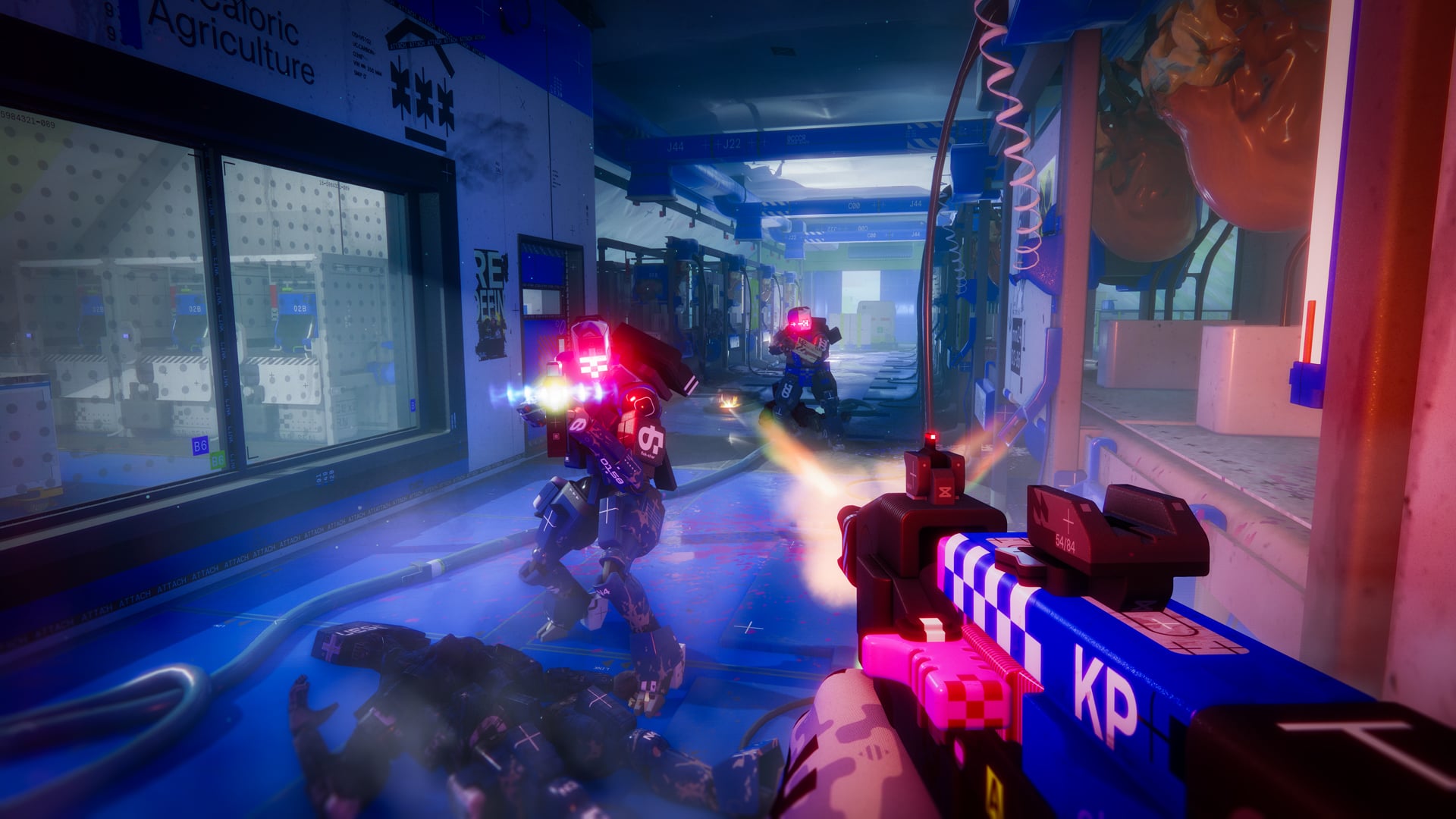
The week’s standout field report is a continuous high-speed run through the “Destroyed Wing” space—low-visibility, low-geometry conditions that double as a stress test for both the engine and the player’s mechanical ceiling.
1. The Map as a Movement Lab
“Destroyed Wing” is emerging as a movement-tech crucible:
- High-speed corridor clearing rewards tight cornering and pre-aim discipline.
- Precision jumps expose the limits of the current movement kit—slide windows, jump buffers, and mantle forgiveness.
- Aggressive contact neutralization under constrained sightlines forces players to optimize peek timings and audio reads.
From a design standpoint, this kind of map is ideal for:
- Routing experiments: finding the cleanest lines that minimize downtime between engagements.
- Combat drills: repeating specific segments to internalize recoil patterns and target acquisition.
- Benchmarking stability: seeing how the engine handles rapid transitions, particle loads, and quick camera swings post-1.0.6.3.
2. Speedrunning as Systems QA
The report notes “strong viability for speedrun routing and combat-optimization drills”, which is more than just a compliment to skilled pilots. Speedrunners are effectively informal QA:
- They hit edge cases faster than average players.
- They stress-test collision, navmesh, and spawn logic.
- They expose whether stability passes (like 1.0.6.3) actually hold up under maximum input density.
For #indiegame developers studying competitive level design, “Destroyed Wing” is a reminder that clean, readable geometry with intentional choke points can serve both casual play and high-end routing communities.
Strategic Takeaways for Marathon’s Next Cycle
- Live Ops Discipline: Update 1.0.6.3 shows Bungie tightening the bolts on simulation stability while refusing to let exploits define the meta.
- Narrative as Infrastructure: The multi-year story grid confirms Marathon isn’t chasing short-term content spikes; it’s building a long-horizon fiction layer that treats player data as a first-class input.
- Maps as Laboratories: “Destroyed Wing” exemplifies how a single space can be tuned for onboarding, high-skill routing, and systemic stress-testing all at once.
As Marathon iterates, expect future sector reports to track how these three pillars—stability passes, adaptive narrative, and high-skill routing spaces—interlock. The interesting question now isn’t just how Marathon plays today, but how much of its long-range design we’ll be allowed to bend through collective behavior over the coming years.
Sources and corrections
This archive entry does not have a verified article-source list. Images and video embeds alone are not evidence for every claim.
Found an error? Request a correction. Include the passage and a supporting source.