Automated archive / Call of Duty: Modern Warfare 4
Modern Warfare 4 Beta Turns Into a Live-Fire Design Lab
Modern Warfare 4’s open beta is operating less like a demo and more like a live-fire design lab, where weapon balance, loadouts, and even character models are being rebuilt in real time. From the Gunny Loadout system to Switch 2 performance, Infinity Ward is quietly stress-testing the future of its flagship shooter...
AI-generated summary. This archive article does not have a current recorded source check. Check linked sources before relying on details. Editorial policy
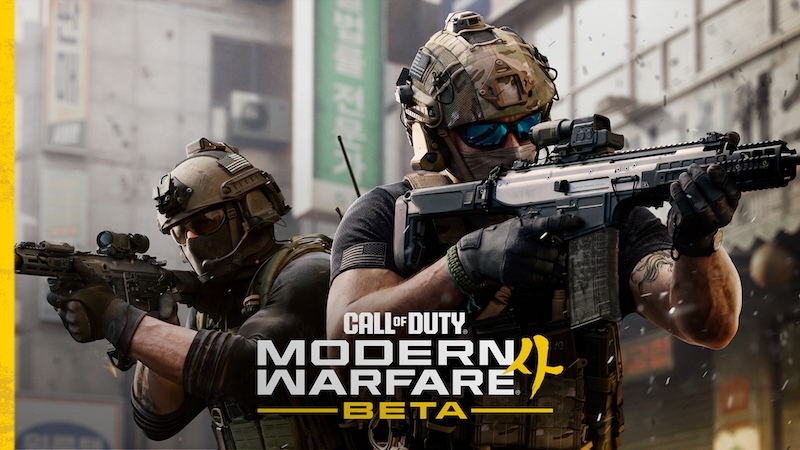
Situation Overview: Beta as Battlefield R&D
The Call of Duty: Modern Warfare 4 open beta isn’t behaving like a traditional marketing demo; it’s operating as a live-fire design lab where Infinity Ward is quietly rewriting core multiplayer doctrine. Over the last seven days, telemetry from Weekend Two shows a clear pattern: systems are being pushed to failure on purpose, from revised time-to-kill curves to the experimental Hijack and Inflation modes, all while the studio tunes around hard data rather than sentiment.
For #gamedev teams watching from the sidelines, MW4 is a case study in how to weaponize an open beta as a production tool. For players, it’s a stress test of muscle memory, as legacy habits from previous titles collide with a leaner, more modular combat sandbox.
Multiplayer Delta: Eight Shifts That Matter
1. Recalibrated TTK and Recoil Profiles
The updated TTK curves and recoil profiles are the most immediate shock to returning operators. Weapons feel less like reskinned archetypes and more like distinct ballistic personalities. Assault rifles lean into adaptable mid-range control, while SMGs now clearly telegraph their intended role as hyper-aggressive entry tools rather than all-purpose lasers.
This is reinforced by the new Apex attachment architecture: barrels, optics, grips, and magazines alter recoil vectors and acquisition speed in quantifiable ways. The meta will favor players and creators who treat builds like lab projects, not superstition. From a #gamedev standpoint, this is a transparent push toward measurable trade-offs instead of flat, linear upgrades.
2. Perk Grid and Streak Economy Rewrites
The perk grid restructuring and altered streak economy signal a move away from passive, always-on power and toward role-driven decision-making. Streaks are tuned to feel earned rather than automatic, which should cut down on late-game snowballing in public lobbies. For competitive play, this reduces variance and raises the skill ceiling around streak management.
3. Map Lane Decomplexity
Map design is trending toward decomplexified lanes—cleaner sightlines, fewer "gotcha" angles, and more readable flow. Team Deathmatch and Domination benefit most, emphasizing tempo control and gunskill over gimmicks. Ground War, meanwhile, leans into combined-arms clarity with armor and vehicles acting as deliberate macro objectives instead of random chaos injectors.
Gunny Loadout Architecture: From Class to Craft
Modern Warfare 4’s Gunny Loadout system is the spine of this new combat philosophy. Instead of leaning on broad-brush "class" labels, the game breaks your kit into modular subsystems: primary, secondary, melee, equipment, perks, Field Upgrades, and Killstreaks all slot into a single, engineered combat role.
This is where MW4 quietly overlaps with #indiegame and systems-driven design thinking. The loadout screen behaves like a lightweight build editor, encouraging pre-mission theorycrafting instead of mid-match guesswork. The message is blunt: if your squad wipes, it’s on preparation as much as aim.
Weapons Matrix: 22 Guns, 33-Gun Launch Arsenal
The beta currently exposes 22 weapons out of a 33-strong launch arsenal across nine classes and three categories (Primary, Secondary, Melee). Within that slice, roles are sharply defined:
- Assault Rifles: Flexible mid-lane anchors with attachment-driven recoil tuning.
- SMGs: Close-quarters room clearers with blistering TTK but punishing falloff.
- Shotguns: Zone-denial tools rather than full-map bullies.
- Snipers: Long-range overwatch with clear counterplay via flanking lanes.
- Launchers and Melee: Utility picks for anti-vehicle and close-in disruption.
Crucially, the open beta encourages players to cycle through roles—entry fragger, anchor, objective brawler, overwatch—to generate broad telemetry. For developers, this is gold: real-world data on how often roles are adopted, abandoned, and iterated.
Progression Telemetry: Level 1–30 as a Design Funnel
Weekend One and Two progression from Level 1 to 30 is structured like a guided onboarding funnel. Default loadouts rotate in early to showcase archetypes, then Create-a-Class unlocks at Level 4, flipping the switch from curated to self-directed play.
Every level is a micro-test: does a new weapon, perk, or attachment meaningfully alter player behavior? Immediate unlock feedback in the After Action Report keeps the loop aggressive and visible, reducing friction and keeping players in the experiment longer. Beta rewards that carry into launch act as retention anchors, ensuring that early adopters remain invested in the final product.
Modes as Testbeds: From TDM to Inflation
Team Deathmatch and Domination are functioning as baseline control groups: familiar modes used to benchmark new systems. Around them, Infinity Ward is deploying experimental ops like Hijack and Inflation, plus 3v3 Gunfight and Ground War, to probe edge cases:
- Hijack / Inflation: Stress-test unconventional objectives and pacing.
- 3v3 Gunfight: Micro-arena for weapon and TTK tuning under high-pressure, low-variance conditions.
- Ground War: Macro-scale validation of vehicle balance, spawn logic, and performance.
This multi-mode matrix turns the open beta into a layered QA environment, where different playlists surface different systemic failures.
Cross-Platform Focus: Switch 2 as a Technical Statement
Field reports from gamescom 2026 highlight unexpectedly strong performance on Nintendo’s Switch 2 hardware. Stable frame pacing, low input latency, and respectable visual fidelity under stress point to a scalable engine profile.
For #gamedev teams, this is a clear signal: MW4’s tech stack is built for wide deployment, not just top-end PCs and consoles. Portable parity won’t be perfect, but it’s combat-viable—critical for a live-service shooter chasing reach.
Watch: Transmitting Gameplay footage from the field: Official Modern Warfare 4 Multiplayer Deep Dive
Live Feedback Loop: Captain Price and Canon Integrity
Infinity Ward’s rapid response to the community backlash over Captain Price’s beta haircut is more than meme control. The studio is quietly acknowledging that visual identity is part of canon integrity. Adjusting a flagship character model mid-beta demonstrates a willingness to treat art direction as iteratively as weapon balance.
For players, it’s proof that visual feedback is heard. For developers, it’s a reminder that character pipelines must stay flexible deep into the beta window.
Operational Window: Weekend Two and Beyond
Weekend Two of the Call of Duty: Modern Warfare 4 open beta (August 28–September 1) is designed as a full-scale server and systems stress test. No codes, no pre-order walls—just raw throughput to hammer netcode, matchmaking, and progression.
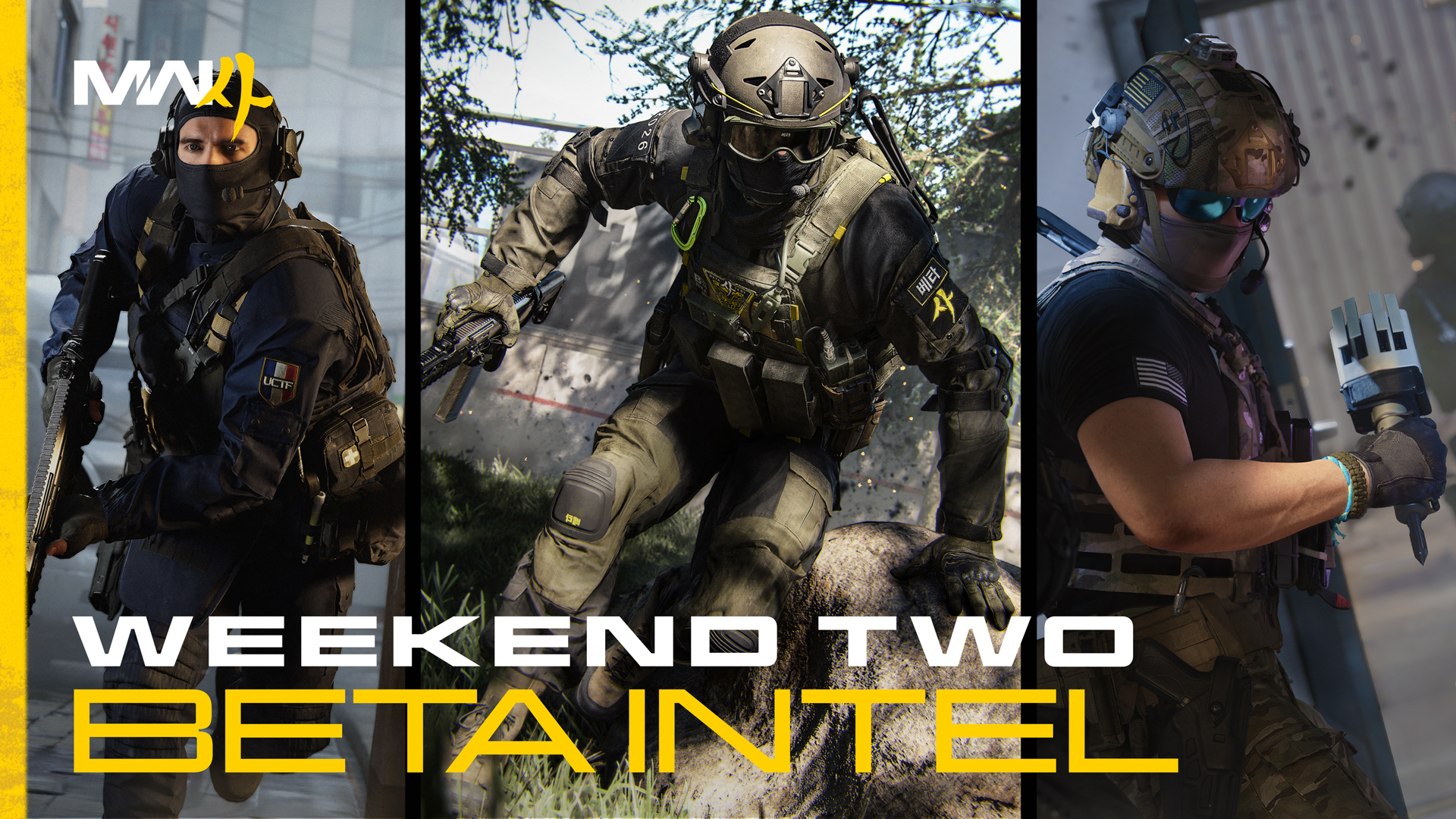
From a development update perspective, the priorities are clear:
- Validate the revised TTK, recoil, and streak economy under population load.
- Gather attachment usage and performance data to sculpt the launch-day meta.
- Monitor platform-specific stability, especially on lower-spec hardware.
Strategic Takeaways
Call of Duty: Modern Warfare 4’s open beta is less a marketing beat and more a public-facing iteration sprint. Systems are modular, data-driven, and tuned in real time, blurring the line between live ops and pre-launch polish.
For players, the message is simple: your matches are telemetry. For developers—from AAA to #indiegame—the lesson is sharper: if you treat your beta as a live-fire lab instead of a trailer with a download button, the final build ships smarter, leaner, and closer to the game your data says people actually play.
Sources and corrections
This archive entry does not have a verified article-source list. Images and video embeds alone are not evidence for every claim.
Found an error? Request a correction. Include the passage and a supporting source.
Your games, in one place
Keep up with Call of Duty: Modern Warfare 4
Follow this game to collect its posts in your personal feed. Come back to see what you missed.
More to read about Call of Duty: Modern Warfare 4
- Source-checked briefModern Warfare 4 campaign early access begins October 16
Pre-ordering Call of Duty: Modern Warfare 4 grants campaign early access from October 16, ahead of the announced October 23 global launch. Pre-orders include early access to the campaign beginning...
- Source-checked briefModern Warfare 4 outlines DMZ mode and deployment options
Call of Duty: Modern Warfare 4 is set to launch with DMZ on October 23 alongside Campaign and Multiplayer. The mode includes a Forward Operating Base that expands through Operations, plus three...