Automated archive / Call of Duty: Modern Warfare 4
Modern Warfare 4 Beta Turns Into Activision’s Largest Live-Fire Lab Yet
Modern Warfare 4’s Open Beta has dropped the façade of a simple demo and emerged as Activision’s largest live-fire systems test to date. From Kill Block to Gunny Loadouts, every match is feeding a data-driven redesign of Call of Duty’s core multiplayer loop.
AI-generated summary. This archive article does not have a current recorded source check. Check linked sources before relying on details. Editorial policy
Sector Overview: The Beta That’s Really a Systems Test
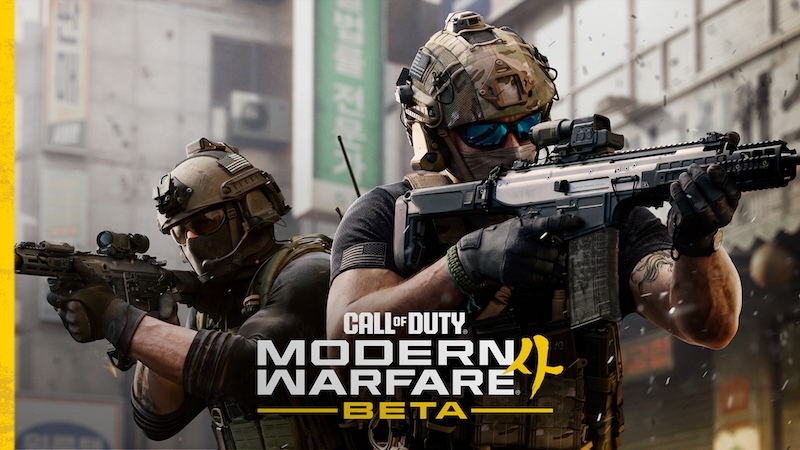
The call of duty: modern warfare 4 Open Beta has stopped pretending to be a marketing demo and fully embraced its role as a live-fire systems lab. Over the last week, Infinity Ward has spun up the largest pre-launch theater this franchise has fielded: two stacked weekends, cross-platform deployment, and a telemetry-first mindset that’s closer to a public QA sprint than a traditional preview. For #gamedev teams watching from the outside, this is a case study in how to run a multi-week, data-driven beta at AAA scale.
Weekend Two is now live, with no codes, no pre-order walls, and full Create-a-Class access from Level 4 through 30. Every match is feeding balance data on TTK curves, recoil profiles, map flow, and even controversial engagement systems like Kill Block. The takeaway: Modern Warfare 4 isn’t just iterating on its own formula; it’s quietly re-negotiating the social contract between sweatlords, casuals, and the matchmaker.
Combat Stack: Movement, TTK, and the New Multiplayer Delta
Field reports flag eight core deviations from prior Modern Warfare entries:
- Revised TTK curves: Weapons hit hard, but not uniformly. Expect sharper differentiation between SMGs, ARs, and precision rifles, with recoil patterns tuned for faster target acquisition.
- Perk grid restructuring: Perks now behave more like modular subsystems than static buffs, encouraging role-based builds instead of one-size-fits-all meta kits.
- Altered streak economy: Killstreak pacing is being stress-tested to minimize snowballing while still rewarding high-skill chains.
- Lane decomplexity: Maps lean into faster read times and cleaner sightlines, reducing the labyrinth effect that plagued some recent entries.
For #gamedev and #indiegame designers, MW4’s approach is a live example of muscle-memory disruption: deliberately forcing veteran players to re-learn fundamentals to refresh the meta without abandoning the franchise’s core feel.
Modes Under Fire: Hijack, Inflation, Arms Deal, and Classic Pillars
The mode mix in the Open Beta is deliberately broad, designed to probe both pacing and player preference:
- Team Deathmatch & Domination return as the baseline telemetry generators: stable, familiar, ideal for weapon tuning and spawn logic iteration.
- Hijack (6v6, Beta) introduces a mobile objective spike that can be carried, thrown, and passed. Planting at the enemy Comm Station generates points over time with a detonation bonus, while defenders must breach and defuse. This is essentially Hardpoint meets Oddball, but tuned for higher tempo and more clutch handoffs.
- Inflation (in testing) appears to be a more experimental economy-driven mode, pushing players to adapt loadouts and risk profiles mid-match.
- Arms Deal (5v5) is a lethal variant of Search and Destroy with single-life rounds and an in-match cash economy, where each kill and objective action funds a restricted buy between rounds.
- Search and Destroy remains locked in, acting as the high-stakes control case for tactical play.
This spread gives Infinity Ward a rich dataset on round-based economies, objective stickiness, and player churn under pressure—insights any systems designer should be watching.
Gunny Loadout & Apex Attachments: Modular War Machine Design
Modern Warfare 4’s Gunny Loadout system reframes pre-match prep as an engineering exercise rather than a cosmetic checklist. Weapons, attachments, and perks are treated as modular subsystems, each tuned for specific combat roles:
- Entry fragger
- Anchor/lanes controller
- Long-range overwatch
- Objective brawler
Layered on top is the Apex attachment suite, where barrels, optics, grips, and magazines meaningfully alter recoil vectors, time-to-kill thresholds, and ADS speed. The signal from the field is clear: superstition builds are dead; lab-grade testing is required.
From a #gamedev perspective, this is a mature attempt at horizontal depth: expanding the space of viable builds without exploding raw stat complexity. The Open Beta’s Level 1–30 progression curve—default loadouts early, full Create-a-Class at Level 4, and a steady unlock cadence—keeps players in a tight loop of test → iterate → refine across the entire weekend.
Progression & Rewards: Beta as Persistent Service Record
Watch: Transmitting Gameplay footage from the field: Official MW4 Multiplayer Deep Dive
Infinity Ward is explicit: this Beta progression is not disposable. Climbing from Level 1 to 30 unlocks all core gameplay systems plus eight Beta-exclusive rewards that carry over to launch on October 23.
Design-wise, the studio is leaning into:
- Immediate feedback loops via visible XP bars and After Action Reports.
- No-guesswork unlocks, where players see exactly what each level grants.
- Persistent proof-of-service cosmetics, turning the Beta into a soft-launch season zero.
For live-service architects, this is a blueprint for how to convert test participation into early retention without overloading the launch meta with pay-to-win advantages.
Kill Block: Engagement-Optimised, Merit-Contested
One of the more contentious systems surfacing in the intel feed is Kill Block—a behind-the-scenes mechanic that quietly throttles dominant killstreaks to keep weaker players from rage-quitting.
In practice, Kill Block is:
- A soft cap on runaway performance, tuned by matchmaker telemetry.
- An engagement-protection layer that prioritizes session length and churn reduction over pure meritocracy.
From a design ethics standpoint, it’s a classic retention vs. fairness trade: efficient at preserving lobbies, but frustrating for high-skill players who feel their ceiling is artificially lowered. How Infinity Ward tunes (or communicates) this system between Beta and launch will be a key narrative to track in future Sector Intelligence Reports.
Visual & Platform Intel: Price’s Haircut and Switch 2 Performance

On the cosmetic front, community feedback has already forced a visual hotfix for Captain Price. After the internet roasted his Beta haircut, Infinity Ward quietly began pushing an updated model. It’s a small story with big implications: in a live-service era, character fidelity is canon, and studios are increasingly willing to iterate on iconic heroes in real time.
More surprising is the Switch 2 performance brief from gamescom 2026. Early hands-on reports describe MW4 as “combat-viable” on Nintendo’s next-gen hardware, with stable frame pacing and acceptable input latency under stress. For engine teams, that’s a strong signal that Infinity Ward’s tech stack has been aggressively profiled for scalable performance, not just flagship consoles and PC.
Strategic Takeaways for Developers and Players
For players, the mission is straightforward: this is the time to break the game. Stress the netcode, push loadout extremes, and feed telemetry on everything from spawn logic to sightline abuse.
For #gamedev and #indiegame teams, Modern Warfare 4’s Open Beta doubles as a public postmortem-in-progress on:
- Running a two-weekend, progression-persistent beta as a live ops rehearsal.
- Using experimental modes like Hijack, Inflation, and Arms Deal to probe future ranked ecosystems.
- Balancing engagement-first systems (like Kill Block) against community expectations of competitive integrity.
The war machine is running hot, but the real story is systemic: Modern Warfare 4 is treating its Beta as a full-stack development update, and the industry is watching.
Sources and corrections
This archive entry does not have a verified article-source list. Images and video embeds alone are not evidence for every claim.
Found an error? Request a correction. Include the passage and a supporting source.
Your games, in one place
Keep up with Call of Duty: Modern Warfare 4
Follow this game to collect its posts in your personal feed. Come back to see what you missed.
More to read about Call of Duty: Modern Warfare 4
- Source-checked briefModern Warfare 4 campaign early access begins October 16
Pre-ordering Call of Duty: Modern Warfare 4 grants campaign early access from October 16, ahead of the announced October 23 global launch. Pre-orders include early access to the campaign beginning...
- Source-checked briefModern Warfare 4 outlines DMZ mode and deployment options
Call of Duty: Modern Warfare 4 is set to launch with DMZ on October 23 alongside Campaign and Multiplayer. The mode includes a Forward Operating Base that expands through Operations, plus three...