Automated archive / Call of Duty: Modern Warfare 4
Modern Warfare 4 Beta Goes Loud, Systems Get Surgical
Modern Warfare 4’s beta has shifted from marketing beat to full-blown systems lab, with Gunny loadouts, Apex attachments, and controversial Kill Block logic all under live-fire scrutiny. From Switch 2 optimization to Captain Price’s emergency haircut hotfix, Infinity Ward is iterating in public—and the data from...
AI-generated summary. This archive article does not have a current recorded source check. Check linked sources before relying on details. Editorial policy
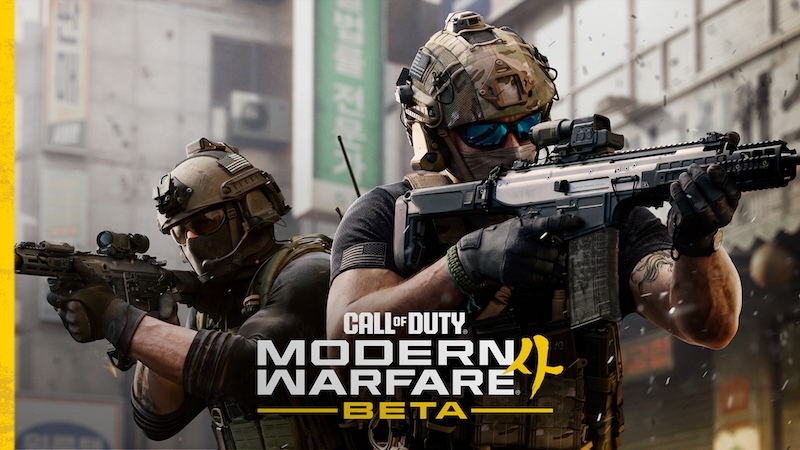
Operational Overview: The Biggest Call of Duty Beta as Live-Fire Dev Lab
The past week has turned call of duty: modern warfare 4 from a controlled reveal into a full-spectrum systems test. With CODNext 2026 wrapped, Weekend One Early Access concluded, and Weekend Two Open Beta now live, Infinity Ward is effectively running a distributed QA lab at planetary scale.
Two key realities define this phase:
- The beta is not a marketing demo; it’s a telemetry-driven balancing pass under peak load.
- Core multiplayer fundamentals—TTK, movement, streak economy, and the new Gunny/Apex systems—are already in flux based on player behavior.
For #gamedev and #indiegame devs watching from the sidelines, MW4’s beta cadence is a case study in how to stage a live service launch without calling it one.
Multiplayer Sandbox: Faster Steel, Shorter Sightlines
TTK, Recoil, and the Eight-Point Delta
Field intel flags eight major multiplayer deviations from prior Modern Warfare entries: reworked time-to-kill curves, a perk grid restructuring, streak economy changes, and decomplexified map lanes among them. The net effect: gunfights resolve faster, information is clearer, and the game pushes you into decisive engagements instead of angle-holding purgatory.
Recoil has been re-profiled—less random wobble, more predictable vector patterns. In practice, this is a stealth skill ceiling increase: casuals experience cleaner gunfeel, while high-skill players can lab recoil paths and squeeze out micro-advantages.
Movement: Boots on the Ground, Not Boots in the Ceiling
Infinity Ward’s "boots-on-ground" mantra is more than nostalgia. Slide/stance abuse and air-strafing extremes are dialed back in favor of snappy, readable movement. The combat loop is tuned for speed and responsiveness, but not circus acrobatics. For competitive design, that’s huge: fewer animation outliers, more trackable targets, and cleaner server reconciliation under load.
Loadout Architecture: Gunny and Apex Turn Prep into Engineering
Gunny Loadout System – Pre-Mission as Design Phase
The new Gunny Loadout system reframes loadout building as pre-mission engineering instead of casual menu tinkering. Weapons, attachments, and perks behave like modular subsystems orchestrated around combat roles: entry fragger, lane anchor, flex, long-range denial, etc.
This is where MW4 quietly edges into systems-design territory usually discussed in #gamedev postmortems:
- Granularity: Each slot has a clearly defined tactical purpose.
- Role clarity: Builds are less about "my favorite gun" and more about "my job in this squad."
- Reduced guesswork: Stat surfaces and behavior deltas are legible enough that players can predict performance before spawning.
Apex Attachments – Lab-Grade Tuning, Not Superstition
The Apex attachment suite deepens this further. Barrels, grips, optics, and mags push measurable changes in recoil vectors, TTK thresholds, and target acquisition speed. MW4 is effectively inviting players to become their own balancing department.
For designers, this is a textbook example of bounded complexity: the surface area of choice expands, but each choice has clear, testable tradeoffs instead of fuzzy "maybe this feels better" placebo.
Mode Architecture: Hijack, Arms Deal, and the New Objective Economy
Watch: Transmitting Gameplay footage from the field: Multiplayer, modes, and movement deep dive
Hijack (6v6) – Mobility as Objective
Hijack weaponizes movement and spatial control. The mobile data spike that can be carried, thrown, and passed effectively turns the objective into a roaming control point. Planting generates points over time, with a bonus on detonation.
Design read:
- Encourages dynamic lane swapping and mid-round route rewrites.
- Forces teams to constantly re-evaluate map priority as the spike migrates.
- Reduces static turtling, increasing data on how maps perform under frequent pivoting.
Arms Deal (5v5) – Single-Life, Economy-Driven Lethality
Arms Deal is a lethal S&D variant where every kill and objective tick feeds an in-round cash economy, spent at a restricted armory each round. The CS-style buy phase in a CoD tempo is a major meta experiment:
- Weapon selection becomes a risk/reward investment loop.
- Round-to-round adaptation is visible in telemetry: which guns spike win rates when purchased, which are bait.
- Designers get live data on how economy pressure shapes pacing and tilt.
Combined with Search and Destroy in the beta and the broader playlist mix, MW4’s mode stack is clearly calibrated to harvest information on high-stakes, low-respawn decision making.
Kill Block: Engagement Optimization vs. Meritocracy
The most controversial system so far is Kill Block—a behind-the-scenes mechanic that effectively throttles killstreak snowballing to keep less-skilled players from rage-quitting.
Mechanically, it’s an engagement-optimized safety net: when the matchmaker detects a statistical mismatch, it quietly dampens the ability of top performers to farm. From a player-agency perspective, that feels like invisible rubber-banding in a shooter that sells itself on mastery.
From a #gamedev lens, though, Kill Block is a brutal but honest acknowledgment of the genre’s retention math. The design risk is clear: if the system becomes perceptible, it erodes trust in the competitive contract. Expect this to be one of the most heavily scrutinized and iterated systems before launch.
Visual Fidelity & Character Canon: The Captain Price Hotfix

Infinity Ward’s rapid response to Captain Price’s beta haircut backlash is more than meme damage control. It’s a reminder that in an IP this storied, character models are canon, not cosmetics.
The quick visual patch in response to community feedback shows a live pipeline agile enough to:
- Iterate on high-profile assets mid-beta.
- Preserve brand continuity across campaigns and marketing.
- Signal that fan perception is a first-class constraint in the art direction doc.
For character-focused #indiegame teams, this is a high-budget mirror of the same reality: if your protagonist reads wrong, the entire fiction takes a hit.
Platform Intel: Switch 2 Viability and PC Security Wall
Gamescom recon confirms Modern Warfare 4 runs surprisingly well on Switch 2, with stable frame pacing, combat-viable latency, and visually coherent scenes under stress. That implies a scalable engine profile and careful streaming/LOD strategy—critical if MW4 is to maintain feature parity across platforms without fragmenting the meta.
On PC, the TPM 2.0 and Secure Boot requirement cements Activision’s commitment to a hardware-rooted anti-cheat perimeter. The cost: some legacy or misconfigured rigs are simply non-operational until BIOS and OS security flags are corrected. The benefit: a higher integrity baseline for competitive play and fewer vectors for kernel-level exploit chains.
Beta as Systems Test: What Comes Next
Weekend Two’s Open Beta is the franchise’s largest operational testbed to date, spanning:
- Revised movement and gunplay
- New and returning modes (Hijack, Arms Deal, S&D, Ground War: Combat Outpost)
- Warzone Resurgence on the Zodiac map
- Fully customizable operators and loadouts via Gunny + Apex
Telemetry from these weeks will drive final passes on TTK, visibility, spawn logic, Kill Block thresholds, and loadout balance. For players, this is the window to shape the launch meta. For designers, MW4 is a live case study in orchestrating a multi-week, multi-platform beta as a production-stage design tool, not just a pre-order funnel.
The war machine is running hot. The question now isn’t whether Modern Warfare 4 will launch loud—it’s how much of this experimental scaffolding makes it into the final build intact.
Sources and corrections
This archive entry does not have a verified article-source list. Images and video embeds alone are not evidence for every claim.
Found an error? Request a correction. Include the passage and a supporting source.
Your games, in one place
Keep up with Call of Duty: Modern Warfare 4
Follow this game to collect its posts in your personal feed. Come back to see what you missed.
More to read about Call of Duty: Modern Warfare 4
- Source-checked briefModern Warfare 4 campaign early access begins October 16
Pre-ordering Call of Duty: Modern Warfare 4 grants campaign early access from October 16, ahead of the announced October 23 global launch. Pre-orders include early access to the campaign beginning...
- Source-checked briefModern Warfare 4 outlines DMZ mode and deployment options
Call of Duty: Modern Warfare 4 is set to launch with DMZ on October 23 alongside Campaign and Multiplayer. The mode includes a Forward Operating Base that expands through Operations, plus three...