Automated archive / Call of Duty: Modern Warfare 4
Modern Warfare 4 Beta Turns into a Live-Fire Systems Lab
Modern Warfare 4’s beta isn’t just a demo—it’s a live-fire lab where netcode, Kill Block, and the new Apex attachment system are being stress-tested at scale. From grounded movement to economy-driven modes like Arms Deal, the franchise is openly negotiating between competitive integrity and engagement metrics.
AI-generated summary. This archive article does not have a current recorded source check. Check linked sources before relying on details. Editorial policy
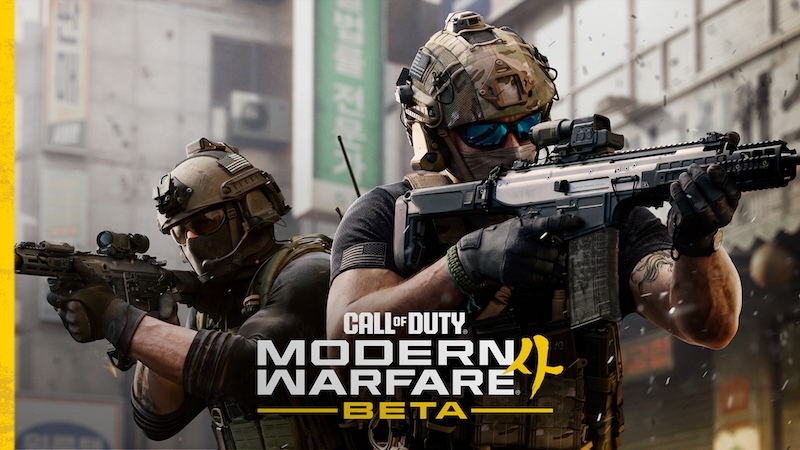
Sector Intelligence Report – Modern Warfare 4, Week of August 25
The last seven days around call of duty: modern warfare 4 have been less like a marketing cycle and more like a controlled detonation of systems design. Between CODNext 2026, the largest franchise beta to date, and the first hard data on controversial mechanics like Kill Block and Apex attachments, MW4 has effectively moved from rumor to live-fire verification.
This week’s Sector Intelligence Report breaks down what’s actually changing in the combat stack, how the beta is being used as a telemetry engine rather than a simple demo, and where the early meta is already starting to crystallize.
Multiplayer Combat Stack: Grounded Movement, Lethal TTK
Field reports from CODNext and Weekend One confirm that Modern Warfare 4 multiplayer is firmly back to boots-on-ground warfare. Movement is more grounded and readable, with fewer extreme mobility exploits and a tighter emphasis on lane control and angle discipline.
- TTK is fast and punishing. Multiple logs reference “rapid TTK” and “weapons HIT HARD,” signaling a design intent closer to classic MW lethality than the more forgiving arcs of recent entries.
- Recoil and gunfeel are being treated as first-class systems. Refined recoil patterns and improved gunfeel are called out repeatedly, implying backend work on netcode, hit registration, and animation timing to keep weapon feedback crisp even under peak load.
- Map design is in telemetry mode. Heatmaps and live beta data are being mined to refine chokepoints, sightlines, and spawn logic. The language in the briefings makes it clear: this beta is a balance lab, not a marketing tour.
From a #gamedev perspective, MW4’s multiplayer push is about closing the loop between map geometry, movement bandwidth, and TTK. The beta is stress-testing that triangle at scale.
Mode Architecture: Hijack, Arms Deal, and the Inflation Stack
The mode slate is where MW4 starts to feel strategically experimental again:
Hijack (6v6, Beta)
Hijack turns the classic bomb-run loop into a mobile objective sport. Squads carry, throw, and pass a data spike toward an enemy comm station. Once planted, it generates points over time, with a detonation bonus.
Design-wise, this is:
- A testbed for possession-based objective design in a lethal TTK environment.
- A way to force dynamic route planning instead of static bomb lanes.
- A showcase for the new movement readability—passes and handoffs only work if silhouettes and animations are clean.
Arms Deal (5v5)
Arms Deal is pitched as a single-life, economy-driven variant of Search and Destroy:
- Operators earn cash through kills and objectives.
- Purchases are made each round from a restricted armory.
- Economy choices cascade, shaping weapon availability and power spikes over the course of the match.
For designers, this is MW4’s answer to tactical economy modes popularized elsewhere—a way to inject longitudinal decision-making into a round-based format without abandoning the franchise’s signature lethality.
Search and Destroy remains locked in for the beta, anchoring these new experiments with a familiar competitive pillar.
Apex Attachments & Modular Ballistics: The New Meta Lab
One of the most significant development updates this week is the spotlight on the Apex attachment architecture. Gunsmith has evolved into something more like a parametric ballistics workstation:
- Each module—barrels, optics, grips, magazines—alters recoil vectors, time-to-kill thresholds, and target acquisition speed in measurable ways.
- The messaging explicitly warns against superstition: optimal builds will require “lab-grade testing, not superstition.”
For competitive players and #indiegame designers watching from the sidelines, this is notable because it:
- Pushes Call of Duty further into transparent systems territory, where attachment choices can be empirically tested and replicated.
- Encourages the rise of a theorycrafting subculture akin to ARPG build labs—spreadsheet warriors and aim trainers will have a field day.
- Provides a blueprint for how to layer complexity onto a mainstream FPS without losing accessibility: clear trade-offs, visible stat shifts, and predictable behavior under stress.
Kill Block: Engagement Optimization vs. Competitive Integrity
The most contentious mechanic surfaced in this week’s intel is Kill Block. In plain terms, it’s described as a matchmaker-imposed ceasefire mechanic that quietly throttles dominant killstreaks to keep weaker players from rage quitting.
Key implications:
- Engagement-first design: Kill Block is openly framed as protecting “statistically fragile” players from uninstalling. It’s a retention mechanic, not a meritocratic one.
- Competitive friction: For high-skill players, this reads as a hard cap on performance expression. You’re not just fighting the lobby—you’re fighting invisible guardrails.
- Telemetry-driven tuning: Expect this system to be heavily data-driven during the beta. Rage quits, session length, and churn curves will dictate how aggressively Kill Block is tuned by launch.
From a #gamedev lens, Kill Block is a textbook example of the tension between player fairness and business metrics. The question for MW4 is whether the studio can surface enough benefit (healthier lobbies, fewer steamrolls) to offset the feeling of invisible interference.
Open Beta as Live-Fire QA: Netcode, Systems, and PC Compliance
The Modern Warfare 4 Open Beta is being positioned as the franchise’s largest live testbed to date, spanning two stacked weekends:
- Weekend One: Early access, synchronized with CODNext 2026.
- Weekend Two: Fully open, with more maps, playlists, and features rolling in over time.
The beta’s explicit goals:
- Stress-test netcode under peak concurrency.
- Refine TTK, visibility, and spawn logic using real-world telemetry.
- Iterate on Ground War: Combat Outpost, Warzone Resurgence on the new Zodiac map, and upgraded movement tech.
On PC, the studio is drawing a hard line around security and anti-cheat:
- TPM 2.0 and Secure Boot are mandatory for deployment.
- Minimum specs include SSD-only storage, 12GB RAM, and mid-tier GPUs (GTX 970/1060, RX 470, or Arc A580).
This is a clear signal that MW4 is treating PC as a trusted platform, not a best-effort port. The security requirement mirrors broader industry moves toward hardware-backed anti-cheat.
Campaign & Warzone: Systems Continuity Across Modes
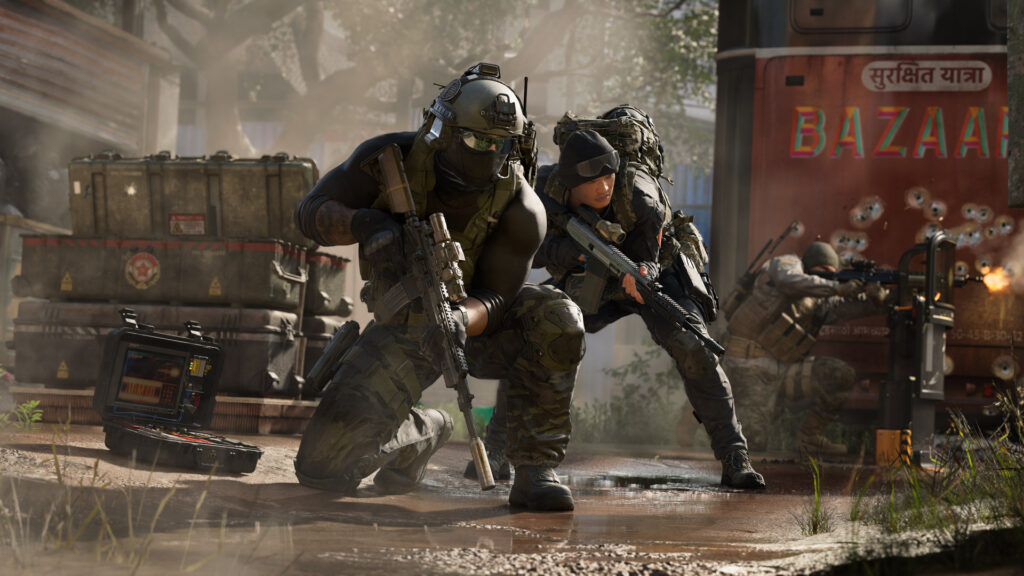
A 17-minute campaign gameplay slice in 4K60 confirms that the multiplayer combat stack isn’t siloed. High-fidelity ballistics, dense urban arenas, and synchronized squad maneuvers suggest a shared systems backbone across Campaign, Multiplayer, and Warzone.
Meanwhile, Warzone Resurgence on Zodiac is being folded directly into the beta test rotation. This gives designers a chance to:
- Validate how Apex attachment builds scale in larger, more chaotic spaces.
- Test TTK and visibility in a battle royale context.
- Measure how grounded movement plays in macro-rotation and repositioning scenarios.
Taken together, MW4’s ecosystem looks more systems-coherent than in previous cycles. Gunfeel, movement, and attachment logic are being validated across every major mode in near-real time.
Strategic Outlook: What to Watch Next Week
As MW4 rolls into its second beta weekend, three pressure points will define the conversation:
1. Kill Block Tuning
Does the community accept engagement-optimized matchmaking once the impact on streaks becomes widely understood? Expect vocal pushback from high-skill players unless the system is transparent and sparingly applied.
2. Apex Meta Formation
With modular ballistics now front and center, the race is on to identify baseline meta archetypes—low-recoil lasers, high-damage anchors, and hybrid flex builds. Watch for early consensus around a handful of “lab-approved” loadouts.
3. Map and Mode Iteration
Hijack and Arms Deal are likely to see parameter tweaks—objective timers, economy values, and scoring logic—as telemetry rolls in. This will be a litmus test for how agile the live team can be between beta phases.
For players, the takeaway is simple: this isn’t a passive preview. It’s a live systems negotiation between studio intent, telemetry realities, and community tolerance. For designers and #indiegame devs watching from the outside, call of duty: modern warfare 4 is currently one of the clearest large-scale case studies in data-driven FPS iteration on the market.
Sources and corrections
This archive entry does not have a verified article-source list. Images and video embeds alone are not evidence for every claim.
Found an error? Request a correction. Include the passage and a supporting source.
Your games, in one place
Keep up with Call of Duty: Modern Warfare 4
Follow this game to collect its posts in your personal feed. Come back to see what you missed.
More to read about Call of Duty: Modern Warfare 4
- Source-checked briefModern Warfare 4 outlines DMZ mode and deployment options
Call of Duty: Modern Warfare 4 is set to launch with DMZ on October 23 alongside Campaign and Multiplayer. The mode includes a Forward Operating Base that expands through Operations, plus three...