Automated archive / Apex Legends
Apex Legends Sector Intelligence: Buster Rifle Nerf, Fuse Rework, and Gundam Stability Ops
Apex Legends spent the week wrestling its Gundam crossover back under control—nerfing a 9,999-damage buster rifle, stabilizing wildcards, and quietly turning Fuse into a far more reliable zoner. Behind the patch notes is a sharp lesson in live-service triage, where stability, readability, and fantasy all collide.
AI-generated summary. This archive article does not have a current recorded source check. Check linked sources before relying on details. Editorial policy
Sector Intelligence Report: Apex Legends – Week of March 13, 2026
Respawn’s live-ops team just pushed through a dense week of crisis control in Apex Legends, tuning the headline Gundam crossover, stabilizing wildcards, and quietly handing Fuse a serious reliability buff. For players and #gamedev watchers alike, this seven‑day slice is a clean case study in how a live service shooter triages spectacle versus stability.
Buster Rifle: From Mini-Sun to Manageable Gun
The March 10 stability directive targeted the biggest outlier: the buster rifle wildcard.
Damage Exploit Contained
- Telemetry flagged the buster rifle spitting out 9,999 damage through bit stave shields, effectively turning it into a raid boss mechanic in a battle royale.
- The weapon has now been demoted from “mini sun” to “normal gun”, bringing its output back in line with standard time-to-kill expectations.
- A retroactive clean-up op is pending, which strongly suggests Respawn is auditing match logs and stat anomalies to prevent corrupted data from skewing progression, ranked integrity, and event tracking.
From a systems design standpoint, this is classic live balancing: preserve the fantasy of firing a beam cannon without letting it invalidate core gunplay. For competitive players, this should reduce outlier deaths that felt more like bugs than balance.
Gundam Frontlines: Wildcards Consolidated and Stabilized
The same patch consolidated wildcard ops into a single theater: Gundam frontlines, aligning the event with its original design intent.
- All wildcard operations now funnel into the Gundam-themed mode, tightening the experience and reducing edge-case interactions in standard playlists.
- This move simplifies QA coverage and lowers the risk of cross-mode bugs while keeping the crossover’s fantasy front-and-center.
Epyon’s Lash: From Crash Trigger to Safe Rotation
Initially, Epyon’s lash was pulled from rotation after it started triggering critical client crashes during frontline matches.
- The systems team quarantined the wildcard, dissected the crash, and ran it through combat-readiness checks.
- As of the March 11 patch, Epyon’s lash has been reinserted into the wildcard rotation without detonating client processes.
This is a textbook example of live-ops risk management: remove the unstable element fast, fix in isolation, then redeploy once telemetry confirms stability.
Visual & Audio Fixes: Cleaning the Comms
The March 11 field log also delivered key polish passes:
- Gundam badge visuals now render correctly when scanning squadmates, restoring cosmetic clarity and event prestige.
- The Firing Range announcer debrief no longer fires off false “buster rifle being fired” alerts.
These changes matter more than they appear: cosmetics and audio cues are critical UX signals. Misfires erode trust in the information layer that high‑level players rely on.
Fuse Gets a Reliability Upgrade
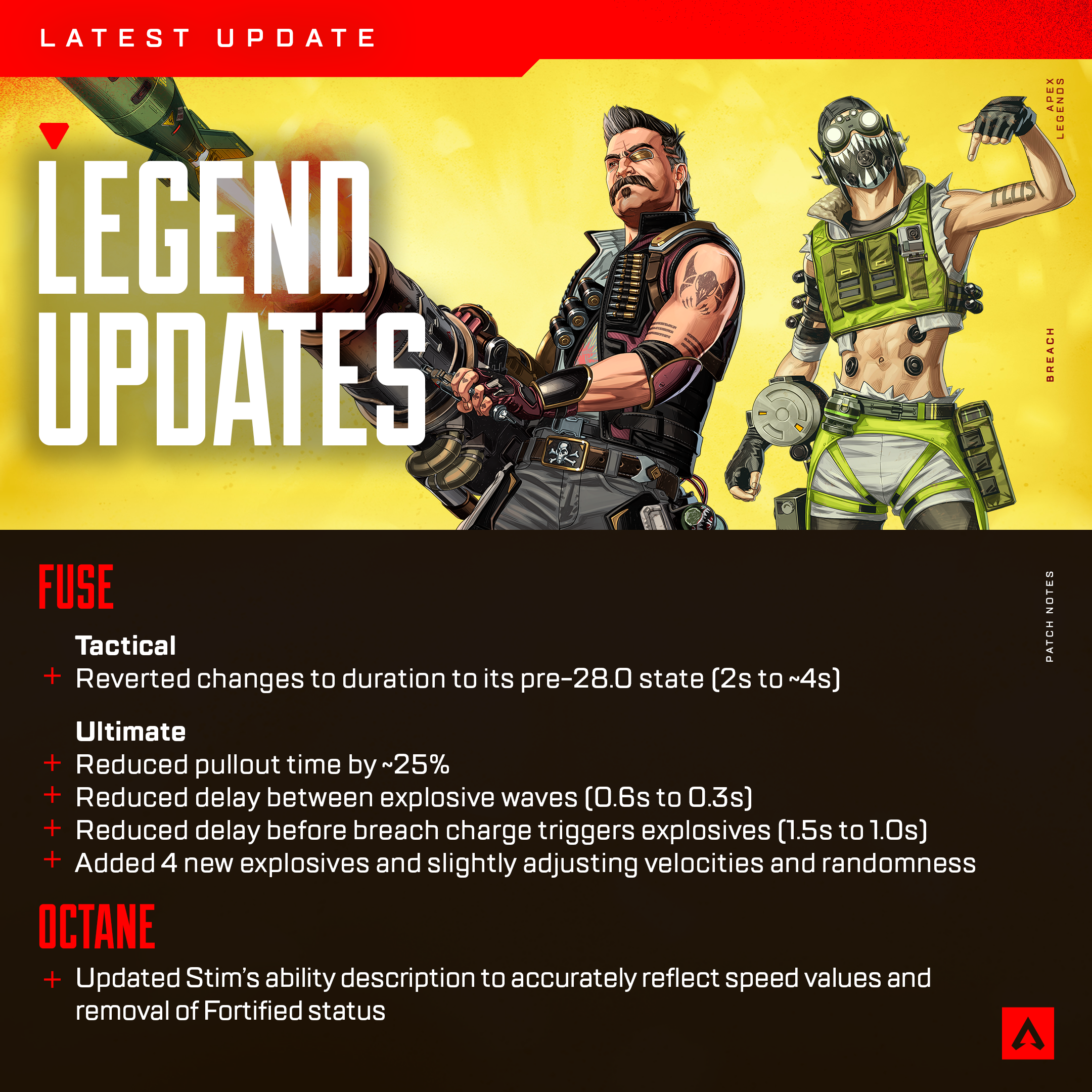
Outside the Gundam chaos, Respawn quietly pushed a targeted ordnance calibration for Fuse, and it’s arguably the most impactful competitive tweak of the week.
Ultimate: No More Dance Parties in the Fire
Telemetry flagged a critical issue: too many enemies were “vibing inside his ult with zero burn.” In other words, Fuse’s ultimate was failing its primary job as a denial tool.
- The blast zone has been recalibrated for more consistent damage registration.
- Enemies lingering inside the ring should now take reliable, punishing damage, restoring the expected threat profile of the ability.
For ranked and competitive play, this is huge. A zoning ultimate that only works sometimes is functionally unreliable. This fix realigns Fuse with his intended role as an area-denial and lane-control specialist.
Tactical: Duration Nerf Rolled Back
Respawn also reversed course on a previous tactical duration nerf:
- Tactical duration has been restored, extending denial time in tight corridors, chokes, and cramped sectors.
- Expect stronger lane hold and cleaner zone lock, particularly in late-ring scenarios where every second of space control matters.
This is a strong example of data-driven iteration: a prior nerf overcorrected, the team watched the metrics and player behavior, then rolled it back to keep Fuse viable without pushing him into oppressive territory.
Stability Grid Reinforced: What This Week Signals for Live Ops
Watch: Transmitting Gameplay footage from the field: Apex Legends Gundam Frontlines Event Trailer
Across all three updates, the theme is clear: stability first, spectacle second.
- Crash suppression protocols around Epyon’s lash show a zero-tolerance stance on client instability.
- Damage audits on the buster rifle guard against stat pollution and unfair deaths.
- UX-level fixes (announcer VO, badge rendering) protect the “readability” that high-skill players demand.
For #gamedev and #indiegame teams studying live-service shooters, this week in Apex Legends reads like a compact playbook:
- Move fast on catastrophic bugs (crashes, 9,999 damage exploits), even if it means temporarily shelving new content.
- Use telemetry to validate fantasy vs. fairness—big, anime-inspired weapons and ultimates are fine as long as they sit within predictable combat math.
- Protect information trust by fixing visual and audio desyncs quickly, especially in training environments like the Firing Range.
As the Gundam event continues, expect Respawn to keep iterating in this loop: push bold crossovers, monitor telemetry, and keep the stability grid reinforced while preserving just enough anime energy to make the chaos worth queuing for.
Sources and corrections
This archive entry does not have a verified article-source list. Images and video embeds alone are not evidence for every claim.
Found an error? Request a correction. Include the passage and a supporting source.
Your games, in one place
Keep up with Apex Legends
Follow this game to collect its posts in your personal feed. Come back to see what you missed.
More to read about Apex Legends
- Source-checked briefApex Legends Wildcard AMA set for October 14
A Wildcard-focused Apex Legends AMA is scheduled for October 14, 2026, from 10 a.m. to noon PT. Players can post questions ahead of time and return when responses begin. The Wildcard AMA is...
- Source-checked briefApex Legends tests longer Plat+ matchmaking queues
Apex Legends has begun a matchmaking test for Platinum-and-higher players that may lengthen queues while the system seeks closer-ranked lobbies. The test applies to Plat+ players across every...
- Source-checked briefApex Legends fixes weapon exploits
Apex Legends received fixes for multiple weapon exploits, including issues that could alter magazine firing, reload speed, and fire rate. The announcement says anti-cheat work and enforcement...