Automated archive / Monster Hunter Stories 3: Twisted Reflection
Monster Hunter Stories 3: Twisted Reflection Rewrites the Hunt as a Tactical RPG Campaign
Monster Hunter Stories 3: Twisted Reflection isn’t just another spin-off—it’s Capcom’s bid to turn the Stories line into a fully-fledged, tactics-driven RPG pillar. Branching timelines, corrupted mirrors, and synergy-heavy party builds reframe the hunt as a long-form campaign of pattern mastery and fate manipulation.
AI-generated summary. This archive article does not have a current recorded source check. Check linked sources before relying on details. Editorial policy
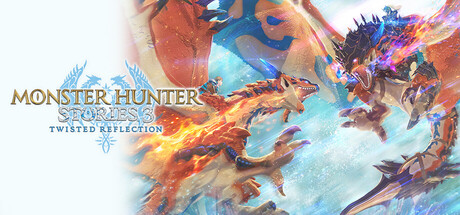
Sector Briefing: A New Hunting Theater Comes Online
Monster Hunter Stories 3: Twisted Reflection is no side-story detour—it’s Capcom formalizing a second, fully tactical front for the Monster Hunter IP. The latest launch transmissions frame Twisted Reflection as a turn-based hunting theater where riders and monsties don’t just battle monsters; they fracture fate itself through branching paths, corrupted mirrors, and tactical kinship combos.
From a #gamedev perspective, this is Capcom doubling down on the Stories sub-series as a long-tail RPG platform rather than a spin-off curiosity. The Activity Feed data points to a design mandate built around precise party construction, readable enemy patterns, and multi-phase boss scripting—all tuned for campaign-length optimization, not quick session hunts.
System Architecture: Turn-Based Combat as a Data-Rich Loop
Tactical Kinship Units and Buildcraft
The core loop in monster hunter stories 3: twisted reflection revolves around riders forming tactical kinship units with their monsties. Unlike the mainline series’ gear-centric progression, this branch leans into:
- Synchronized skills and elemental combo routing – Think of each rider–monstie pair as a modular build node. Synergies emerge not just from raw stats, but from sequencing skills to trigger combo conditions and kinship bursts.
- Pattern literacy over twitch skill – The Activity Feed emphasizes “reading enemy patterns” and “multi-phase boss encounters.” This implies bosses that evolve mechanics mid-fight, rewarding players who can decode tells and adjust rotations rather than simply grinding gear.
- Long-term progression loops – References to “campaign optimization” suggest a meta-game where genetic traits, skill inheritance, and party composition are tuned over dozens of hours. Expect a system closer to squad-based JRPGs than traditional loot-chasing.
These design choices reposition Stories 3 as a tactics-first RPG rather than a simplified Monster Hunter. For designers and #indiegame teams, it’s a case study in how to repurpose a high-action IP into a slower, more strategic format without losing identity.
Narrative Layer: Corrupted Mirrors and Branching Timelines
Fracturing Fate as a Core Pillar
The phrase “fracture fate itself” isn’t just marketing flourish. The feed calls out branching paths and corrupted mirrors, hinting at:
- Mirror-world variants of encounters – Reflections of familiar monsters and locations with twisted parameters, altered elemental affinities, or corrupted behaviors.
- Narrative branches tied to tactical decisions – Party composition and encounter outcomes may lock or unlock specific narrative routes, encouraging replays and experimentation.
- Thematic alignment between mechanics and story – Twisted reflections are an elegant metaphor for buildcraft: the same monstie, reconfigured genetics, different outcomes. It’s a narrative wrapper that justifies deep respec and iteration.
For narrative designers, this is a strong example of ludonarrative alignment: the idea of “reflection” manifests in both story structure and combat systems.
Combat Telemetry: Multi-Phase Bosses and Synergy-Driven Design
Boss Design as a Tactical Stress Test
The intel explicitly flags multi-phase boss encounters and party synergies. That points to bosses functioning as:
- Synergy checks – Certain phases likely hard-counter poorly built teams, forcing players to leverage elemental coverage, status control, and kinship bursts.
- Pattern escalation – Later phases may remix earlier mechanics instead of discarding them, testing the player’s pattern retention and adaptability.
- Resource pacing challenges – Turn-based formats allow for granular control of healing, buff windows, and cooldowns. Expect bosses that punish over-committing resources too early.
This aligns with a broader industry trend: RPG combat systems designed less around raw grind and more around expressive builds and informed decision-making.
Strategic Positioning: Stories as Capcom’s RPG Stronghold
Capcom Spotlight 2026 and IP Cross-Pollination
The Capcom Spotlight 2026 broadcast positions Monster Hunter Stories 3 alongside Pragmata and other high-profile titles, signaling internal confidence. For the sector, that means:
- Stories is now a pillar, not a side bet – Visibility in a flagship showcase elevates Stories 3 to core-franchise status.
- Cross-genre engagement strategy – Capcom is deliberately spanning real-time action (mainline MH), turn-based tactics (Stories), and sci-fi anomaly containment (Pragmata) to cover multiple player psychographics.
- Tech and pipeline reuse – While not detailed in the feed, expect shared tooling and asset pipelines between mainline MH and Stories, lowering production overhead while enabling rapid content iteration.
Development Update: What This Signals for Future Iterations
While the Activity Feed doesn’t disclose engine specifics, it does outline a clear design doctrine for future entries and updates:
- Iterative systems over one-off gimmicks – Genetic traits, kinship mechanics, and branching paths can all be expanded via post-launch content.
- Data-informed balancing – Turn-based combat is easier to instrument and tune, giving designers cleaner telemetry on skill usage, build viability, and boss difficulty curves.
- Franchise resilience – By anchoring Monster Hunter in both action and tactical RPG spaces, Capcom hedges against shifts in player preference and platform constraints.
For #gamedev teams, Monster Hunter Stories 3: Twisted Reflection reads like a blueprint: take a high-intensity action IP, reframe it through deliberate, information-dense combat, and let narrative structure mirror your core mechanics. The result is a hunting game that isn’t about faster reflexes—it’s about smarter reflections.
Sources and corrections
This archive entry does not have a verified article-source list. Images and video embeds alone are not evidence for every claim.
Found an error? Request a correction. Include the passage and a supporting source.
Your games, in one place
Keep up with Monster Hunter Stories 3: Twisted Reflection
Follow this game to collect its posts in your personal feed. Come back to see what you missed.
More to read about Monster Hunter Stories 3: Twisted Reflection
- Source-checked briefMonster Hunter Stories 3 comes to Xbox on PC November 18
Monster Hunter Stories 3: Twisted Reflection is scheduled for Xbox on PC on November 18, 2026. The announcement says Xbox Play Anywhere will support progress and content across eligible devices....