Automated archive / EA Sports FC 27
EA Sports FC 27 Rewires the Pitch, the Dugout, and the Streets
EA Sports FC 27 is quietly pivoting from annual refresh to long-horizon football platform, rebuilding its match engine, Career Mode, and social hub from the ground up. This week’s intel shows a project obsessed with closing systemic exploits, deepening tactical control, and wiring in future live-service...
AI-generated summary. This archive article does not have a current recorded source check. Check linked sources before relying on details. Editorial policy

Sector Overview: EA Sports FC 27 Enters Full-Stack Rebuild Mode
EA Sports FC 27’s latest transmissions point to a series of deep structural changes rather than a surface-level annual refresh. From a rebuilt Career Mode command stack to a more physically coherent match engine and a surprisingly restrained open-world hub, the project is quietly repositioning itself as a long-horizon football platform rather than a disposable season update. For #gamedev teams tracking systemic sports design—and even #indiegame studios experimenting with simulation loops—this week’s intel offers a clear window into how EA is iterating on live-service football at scale.
Tactical Systems: Match Engine, Physics, and Defensive AI
Watch: Transmitting Gameplay footage from the field: Official EA Sports FC 27 Gameplay Overview
Recalibrated Gameplay Architecture
The latest gameplay overview trailer frames ea sports fc 27 as a targeted rebuild of on-pitch systems rather than a wholesale revolution. Ball physics are tuned toward more believable momentum and contact resolution, with passes and shots carrying a clearer sense of weight and spin. Player responsiveness appears tightened—shorter input latency windows, faster recovery out of animations, and cleaner transitions between sprints, jockeys, and first touches.
From a design standpoint, this suggests a focus on broadcast-accurate tempo: fewer pinball ricochets, more readable build-up patterns, and a clearer risk–reward curve on every touch. For competitive players, that typically translates into higher skill expression in micro-moments—manual passes, timed tackles, and angle manipulation around the box.
Defensive Overhaul Protocol
The most significant structural change lands in defending. Hands-on reports describe a “huge AI defending re-code,” with backlines now reading space and pressure channels rather than simply locking onto the ball. Adaptive defenders track off-ball runners more intelligently, step into passing lanes with better anticipation, and react to player intent in a way that reduces legacy exploits like predictable cutbacks and spammed through-balls.
Corners and crossing have been recalibrated as well, with sharper crossing vectors and more granular targeting from wide areas. The net effect is a higher tactical ceiling at both ends of the pitch: attacking wide play becomes more viable and varied, while defending now demands deliberate shape management instead of pure button-mashing.
For #gamedev observers, this is a textbook example of using community telemetry (the “vast, noisy community grid”) to identify and close systemic exploits, then pushing the meta toward more diverse strategies.
Career Mode: From Menu Maze to Management Simulator
Watch: Transmitting Gameplay footage from the field: Official EA Sports FC 27 Career Mode Overview
Deeper Tactical and Structural Control
The EA Sports FC 27 Career Mode systems briefing describes what is effectively a “full-stack rebuild of the dugout command interface.” Instead of incremental tweaks, EA is leaning into:
- Deeper tactical controls: Expanded tactical presets, more granular instructions across all lines, and better linkage between team identity and on-pitch behavior.
- Staff management: Coaches and backroom staff now matter in shaping player development, match prep, and possibly even transfer outcomes, turning the club into a living organization rather than a static roster.
- Long-horizon squad planning: Tools and data surfaces are tuned for multi-season arcs—youth integration, succession planning, and wage structure balancing—rather than single-window quick fixes.
Data-Driven Decision Loops
Managerial progression, training cycles, and transfer logic are all being reframed around data-driven decision loops. Training is less about grinding arbitrary drills and more about aligning player archetypes with tactical blueprints. Transfer AI appears tuned to behave less chaotically, with clubs pursuing targets that fit their identity and financial reality.
For designers, the key takeaway is the integration of macro-planning into the core loop. Instead of Career Mode being a detached menu layer, EA is trying to synchronize:
- Tactical identity → 2. Squad building → 3. Training focus → 4. Match execution → 5. Progression feedback.
That closed loop is where many #indiegame sports sims struggle; EA’s approach here is a clear attempt to make Career Mode sticky over dozens of seasons, not just the first transfer window.
The Grounds: Street-Level Hub Without the Ad Overload (Yet)
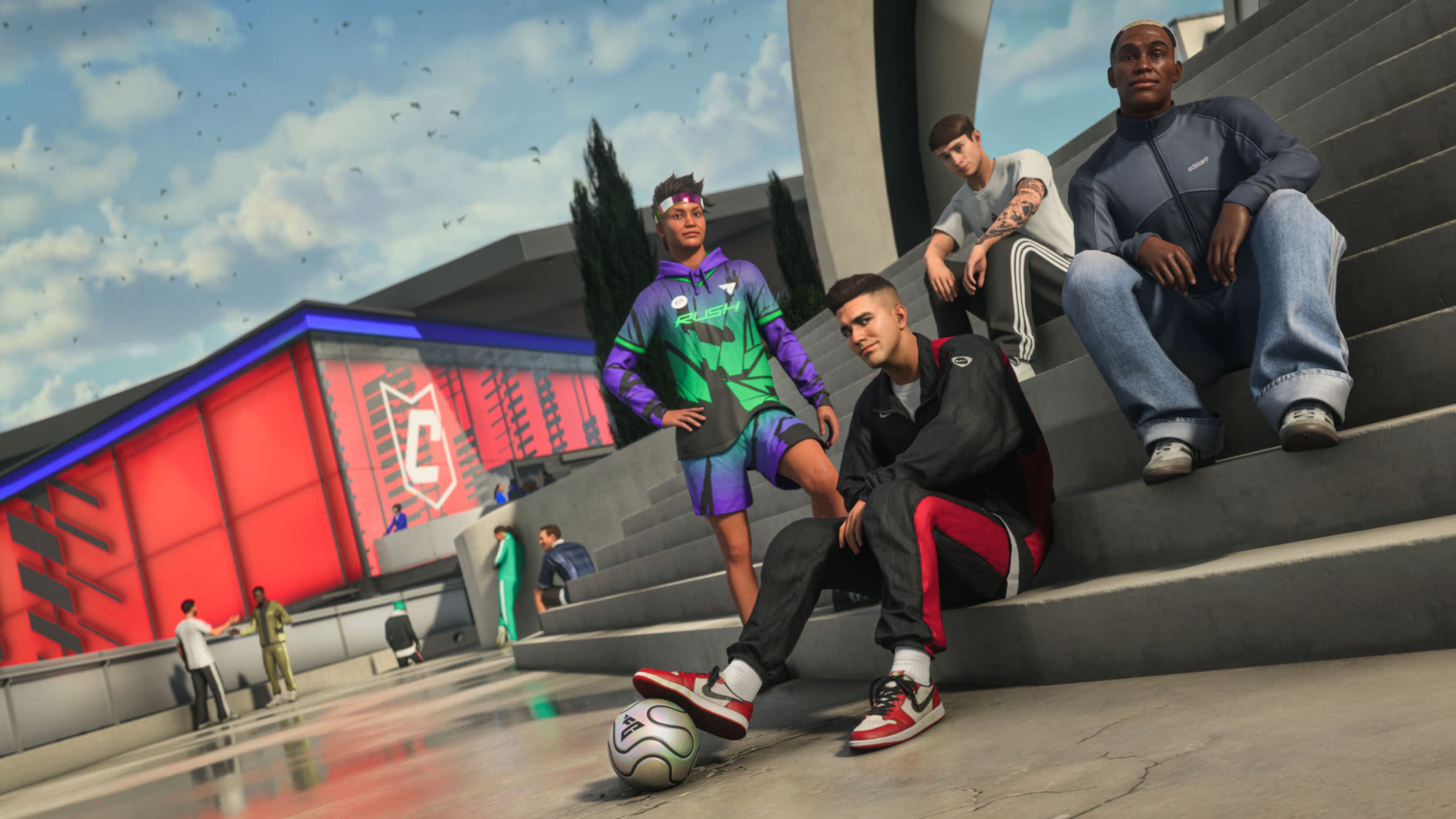
Open-World Football as Social Infrastructure
The introduction of The Grounds marks EA’s biggest structural bet away from the stadium. Framed as an open-world football hub, it leans into exploration, casual kickabouts, and social play. Early impressions stress that it feels more like a street circuit than an ad maze, which is a pointed contrast to the heavily monetised, billboard-dense spaces seen in other sports franchises.
Core loop indicators:
- Drop-in matches and mini-modes that encourage short-session play.
- Social clustering around pitches and landmarks, hinting at future event hooks.
- Clear vectors for personalization and cosmetic flexing without (yet) drowning players in brand integrations.
Monetisation Vectors Under Surveillance
The language around The Grounds—“for now,” “surveillance ongoing,” “no NBA 2K-style ad nightmare… yet”—signals that this space is being architected as a future monetisation overlay, not just a one-off playground. From a #gamedev economy design perspective, that likely means:
- Time-limited events anchored in The Grounds.
- Rotating cosmetic drops tethered to specific locations or activities.
- Potential brand partnerships layered in once player sentiment stabilizes.
How EA balances frictionless social play with monetisation pressure will define whether The Grounds becomes a beloved hangout or a tolerated lobby. For now, the early field intel is cautiously optimistic.
Competitive Structures and Live-Service Trajectory
Across gameplay, Career Mode, and The Grounds, ea sports fc 27 is clearly being tuned as a recurring competitive play loop. Online structures in the match engine overview hint at a live-service backbone designed for:
- Regular balance passes on defending, corners, and crossing.
- Seasonal tactical shifts driven by data and community feedback.
- Integrated progression that rewards time spent across modes, not just in the flagship competitive playlist.
For studios watching from the outside, EA’s approach underscores a key reality of modern sports development: the annual box product is now just the onboarding vehicle. The real game is in the evolving systems, telemetry-informed tuning, and social spaces that keep players locked into the ecosystem year-round.
In that context, this week’s EA Sports FC 27 intelligence reads like a deliberate move to shore up fundamentals—on the pitch, in the dugout, and out on the streets—before the live-service machine spins up at full speed.
Sources and corrections
This archive entry does not have a verified article-source list. Images and video embeds alone are not evidence for every claim.
Found an error? Request a correction. Include the passage and a supporting source.