Automated archive / Crimson Desert
Crimson Desert Shifts From Launch Shockwave to Long War
Crimson Desert is exiting its launch honeymoon and entering the hard phase of live operations, with Pearl Abyss juggling systems refinement, revenue stabilization, and a Switch 2 expansion. This week’s Sector Intelligence Report breaks down the combat sandbox, the cooling Q2, and what a 2027 handheld port really...
AI-generated summary. This archive article does not have a current recorded source check. Check linked sources before relying on details. Editorial policy
Sector Intelligence Report: Crimson Desert – Week of August 12, 2026
Crimson Desert is exiting its launch honeymoon and entering the hard phase of live operations. Pearl Abyss is now juggling three simultaneous fronts: refining its high-chaos open-world combat sandbox, stabilizing post-launch revenue after a cooling Q2, and quietly opening a new theater on Nintendo’s next-gen handheld. For #gamedev teams watching from the sidelines, this is a live case study in how a premium open-world RPG tries to secure a long-tail foothold.
Systems Update: Open-World Combat & Chaos as a Design Pillar
The latest official systems overview for crimson desert reframes the project less as a traditional story-first RPG and more as a full-spectrum sandbox. The signal from Pearl Abyss emphasizes three intertwined pillars that matter for both players and developers:
1. High-Mobility Melee and Grapple-Driven Verticality
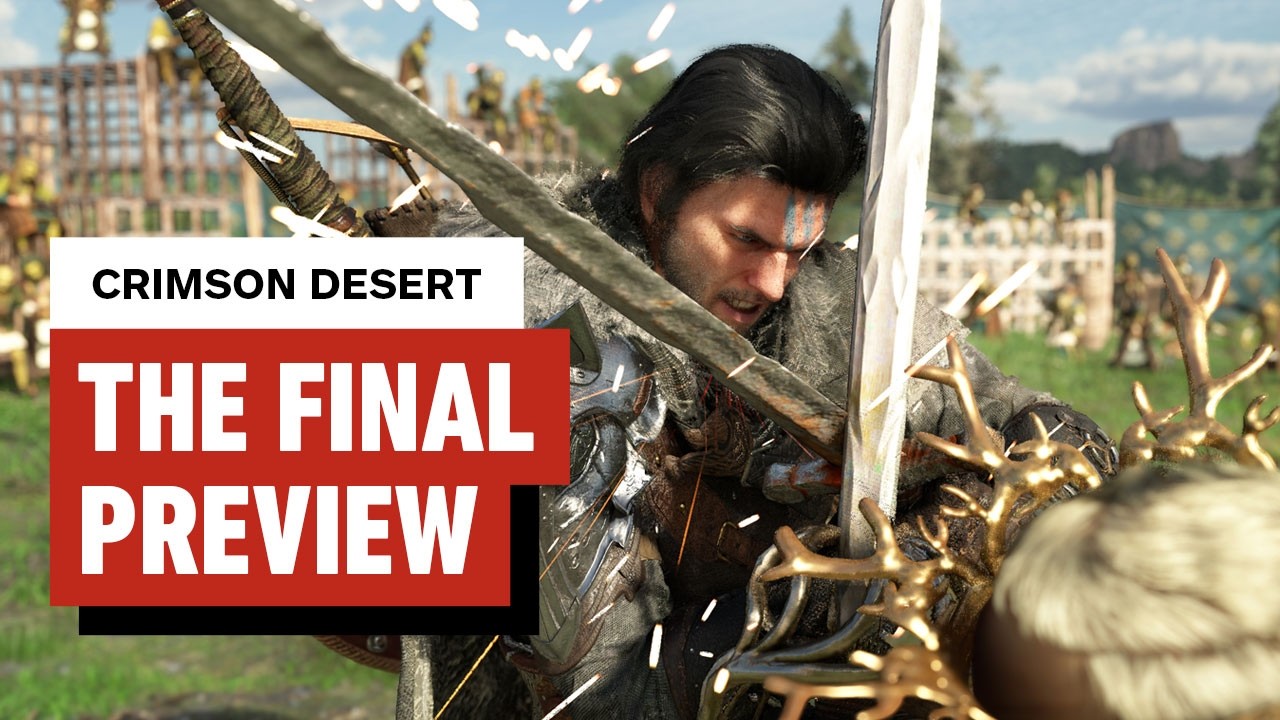
The combat loop is built around fast, high-commitment melee with strong movement baked into core actions. Grapple mechanics and vertical takedowns push encounters into three dimensions, turning rooftops, ledges, and environmental props into tactical resources. For #gamedev designers, this means encounter design must account for 360-degree threat vectors instead of simple front-facing aggro cones.
Key implications:
- Animation & navmesh complexity: Vertical grapples and cinematic finishers demand robust animation blending and generous navmesh coverage to prevent desyncs and jank.
- AI positioning pressure: Enemies need behaviors that react to being flanked from above and behind, or the fantasy collapses into easy abuse.
2. Crowd-Control Chaos Against Large Enemy Clusters
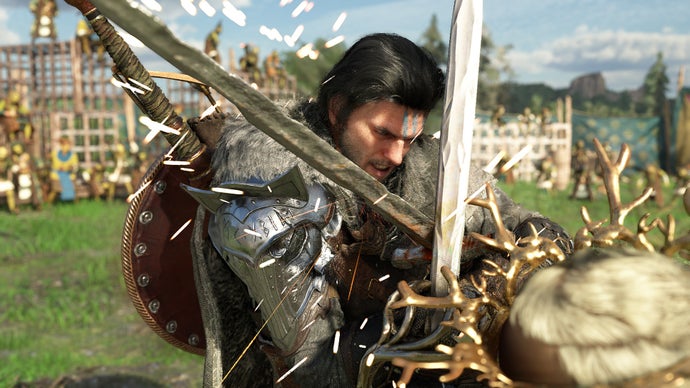
The briefing highlights large-group engagements where crowd-control, knockbacks, and physics-driven disruption are core to the spectacle. This leans into a power fantasy closer to musou-style brawlers, layered into an open-world RPG.
From a systems standpoint:
- Performance budgets must plan for dense crowds, VFX-heavy abilities, and destructible props firing simultaneously.
- Readability becomes a UX priority: telegraphs, enemy silhouettes, and hit reactions must stay legible amid particle spam.
3. Traversal as a Content Multiplier
Climbing, gliding, and animal handling are framed not as side systems, but as the connective tissue for exploration and emergent play. Traversal turns the open world into a puzzle board of approach vectors.
For developers, this means:
- Level design must bake in multiple valid traversal routes rather than a single golden path.
- Systemic synergy (e.g., grappling into a glide, then mounting an animal mid-escape) is where crimson desert can differentiate from more scripted peers.
Economic Intel: Pearl Abyss Revenue Cools After Launch Surge
Pearl Abyss’ Q2 report confirms what most premium RPGs face: the explosive March launch window for Crimson Desert has cooled, and revenue streams are normalizing. The initial shockwave of box sales and early monetization is giving way to the slower grind of retention and reactivation.
Strategically, this shifts priorities:
1. From Launch Spectacle to Sustained Operations
The “launch buff” is over. Now, content cadence and system depth must carry the weight. For live teams, this typically means:
- Targeted content drops that reinforce what players already love (combat chaos, traversal stunts, cinematic takedowns) instead of scattering focus.
- Retention-first design: events, challenge ladders, and progression hooks that justify logging in weekly even after the main story is done.
2. Monetization and Player Trust
As revenue normalizes, pressure mounts to extract more ARPU without eroding goodwill. Crimson Desert’s position as a premium, narrative-driven experience means Pearl Abyss must tread carefully:
- Cosmetic-forward monetization and optional boosts are safer than intrusive progression gates.
- Systems that celebrate experimentation (build diversity, combat toys, traversal tools) can support cosmetic economies without touching power.
For #indiegame studios studying this, the lesson is clear: a massive launch spike is not a strategy. Long-tail planning for content and monetization needs to be baked in well before release.
Platform Expansion: Switch 2 Port Opens a New Front for 2027
Pearl Abyss has confirmed a Switch 2 port of Crimson Desert is being targeted for the first half of 2027, with a “playable baseline” already running. This is more than a simple platform extension; it’s a design and engineering stress test.
1. Performance Budgets on Next-Gen Handheld Hardware
Crimson Desert’s identity—large crowds, heavy physics, vertical traversal, and dense side-objectives—pushes hardware even on high-end PCs and consoles. On a handheld:
- Aggressive LOD strategies and dynamic resolution scaling will be non-negotiable.
- AI and physics simplification in peripheral encounters may be necessary to keep the core fantasy intact without frame-time spikes.
For #gamedev engineers, this is a case study in prioritization: what elements of the chaos sandbox are sacred, and which can be scaled back without breaking the experience?
2. Input Schemes and UX for Portable Play
A Switch 2 deployment also forces UX decisions:
- Short-session loops: portable players favor 10–20 minute chunks. Side-objectives, contracts, and bite-sized encounters will need to feel satisfying in isolation.
- Controller ergonomics: complex grapple, traversal, and crowd-control inputs must map cleanly to a standard handheld layout without claw-grip gymnastics.
If Pearl Abyss can preserve the expressive combat and traversal on Switch 2, crimson desert gains access to a broader, more casual audience without sacrificing its core fantasy.
Outlook: Crimson Desert’s Next Phase
Crimson Desert is transitioning from a high-profile launch event into a long-term campaign. The current intel paints a studio doubling down on its chaos sandbox identity while recalibrating to post-launch economics and plotting a strategic handheld expansion.
For developers and analysts, the watch points over the coming quarters are clear:
- How the combat and traversal systems evolve to support replayability.
- Whether Pearl Abyss can maintain player trust while exploring new monetization layers.
- How aggressively the team optimizes and adapts crimson desert for Switch 2 without hollowing out its spectacle.
As the dust settles on launch, Crimson Desert’s true test begins: can this sandbox sustain a war of attrition in a crowded open-world market, or will the initial blast be remembered as its peak?
Sources and corrections
This archive entry does not have a verified article-source list. Images and video embeds alone are not evidence for every claim.
Found an error? Request a correction. Include the passage and a supporting source.
Your games, in one place
Keep up with Crimson Desert
Follow this game to collect its posts in your personal feed. Come back to see what you missed.