Automated archive / Crimson Desert
Crimson Desert Sector Intelligence: Combat Chaos, Revenue Cooldown, and a Switch 2 Flank in 2027
Crimson Desert has moved beyond its launch shockwave and into the hard grind of long-term operations, with Pearl Abyss leaning into systemic combat chaos while weathering a post-launch revenue cooldown. At the same time, a planned Switch 2 port for 2027 signals an ambitious push to bring the physics-heavy open...
AI-generated summary. This archive article does not have a current recorded source check. Check linked sources before relying on details. Editorial policy
Sector Overview: Crimson Desert Enters Its Post-Launch Phase
Crimson Desert has officially shifted from launch shock-and-awe to long-term occupation. Pearl Abyss is now navigating a crucial transition: sustaining engagement after the initial March surge while doubling down on the game’s most distinctive asset—its high-chaos, physics-driven open-world combat. At the same time, the studio is plotting a new front on Nintendo’s next hardware, targeting a Switch 2 deployment in the first half of 2027.
For #gamedev teams and #indiegame studios watching from the sidelines, Crimson Desert is rapidly turning into a live case study in how to evolve a premium open-world RPG into a sandbox ecosystem built for longevity.
Systems Intelligence: Open-World Combat as a Full-Spectrum Sandbox
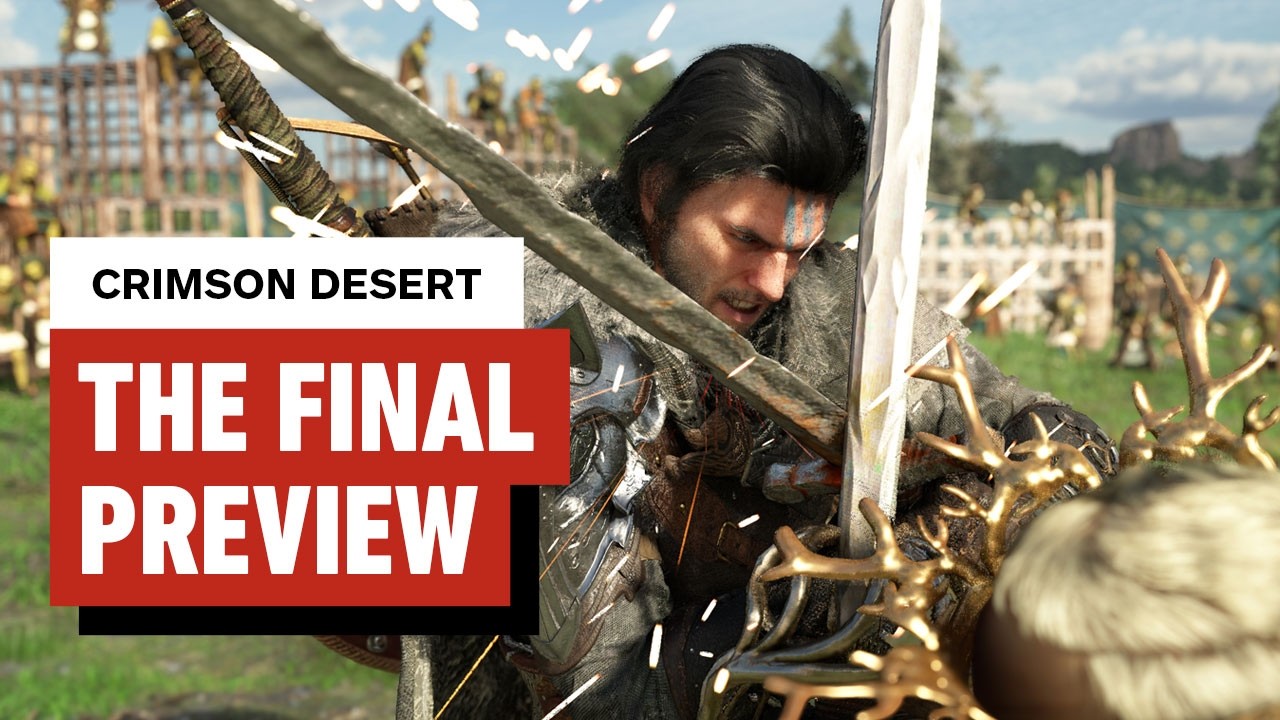
The latest Crimson Desert systems update reframes the project less as a standard open-world RPG and more as a full-spectrum sandbox operation. The new official highlights emphasize three core combat pillars:
1. High-Mobility Melee and Grapple-Driven Verticality
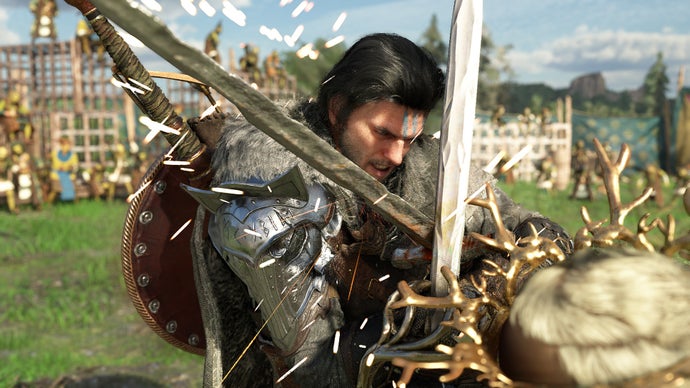
Crimson Desert’s melee loop is shifting from grounded duels to three-dimensional chaos. Grapple mechanics and vertical takedowns encourage players to weaponize elevation—cliffs, rooftops, siege structures—as active combat tools. This isn’t just flash; it’s a design statement that the battlefield is no longer flat.
For developers, this signals a commitment to level design that supports dynamic traversal: climbable surfaces, readable ledges, and arenas that reward improvisation. It’s the kind of systemic layering many #indiegame combat designers aim for but rarely execute at this scale.
2. Crowd-Control Chaos and Physics-Driven Mayhem
The briefing highlights large enemy clusters, crowd-control tools, and environmental interaction as primary levers of player expression. In practice, that means:
- AoE and CC tools built to scatter, stun, and reposition mobs.
- Physics hooks that turn props, structures, and even animals into emergent weapons.
- Cinematic finishers that punctuate battles with high-impact, shareable moments.
This approach pushes Crimson Desert closer to a systemic sandbox than a scripted spectacle. The more the physics layer is trusted to create unscripted outcomes, the more the game leans into replayability and highlight-reel potential—key for sustaining post-launch attention.
3. Traversal Ops: Climbing, Gliding, and Animal Handling
The traversal briefing expands the game’s design vocabulary beyond combat:
- Climbing supports multi-vector infiltration and escape.
- Gliding connects high-ground vantage points with fast repositioning.
- Animal handling (mounts and potentially more exotic interactions) folds mobility, identity, and world flavor into a single system.
From a #gamedev perspective, these aren’t just movement options—they’re pacing valves. Pearl Abyss is clearly using traversal to bridge dense side-objectives and emergent encounters, aiming for a flow where downtime is minimized and micro-objectives are always within reach.
Economic Intel: Pearl Abyss Revenue Cools After Launch Surge
On the business front, Pearl Abyss’ latest earnings transmission confirms what most live-service and premium hybrid projects eventually face: the launch window buff is over. Q2 numbers show a decline as the Crimson Desert launch spike fades and revenue streams normalize.
This cooling cycle forces a tactical pivot:
- Content cadence now becomes the primary retention driver.
- Monetization strategy must walk a tightrope between sustaining operations and avoiding player backlash.
- Long-tail engagement—events, expansions, and systemic updates—will determine whether Crimson Desert stabilizes as a durable franchise or experiences a steep attrition curve.
For studios tracking the title, Crimson Desert is entering the phase where systems depth, not marketing, must carry the operation.
Strategic Expansion: Switch 2 Port Targets First Half of 2027
The most forward-looking intel is Pearl Abyss’ confirmation of a Crimson Desert deployment on Nintendo’s next hardware. A Switch 2 port is being scoped for the first half of 2027, with a “playable baseline” already running on the handheld.
What This Means for Developers
For #gamedev teams, this move surfaces several key takeaways:
- Performance budgets are king. Translating a physics-heavy, crowd-dense open-world like Crimson Desert to a handheld-class device demands ruthless optimization of AI, animation, and destruction systems.
- Input schemes must adapt. Grapple-driven verticality and high-mobility melee need to feel responsive on a portable form factor, likely with fewer buttons and different ergonomics.
- Content parity vs. feature trimming. The existence of a playable baseline suggests Pearl Abyss is testing how much of the core Crimson Desert experience can be preserved without severe cuts to density or spectacle.
For #indiegame developers eyeing the same platform, Crimson Desert’s Switch 2 deployment will set expectations around what “AAA open-world” looks like on Nintendo’s next device—and what trade-offs are acceptable.
Sector Outlook: From Spectacle to Sustainability
Crimson Desert’s current trajectory can be summarized in three vectors:
- Systems-first evolution: Combat and traversal updates are clearly leaning into sandbox depth and replayable chaos.
- Revenue normalization: The post-launch comedown is here, and future success hinges on content cadence and smart monetization.
- Platform expansion: The planned Switch 2 port opens a new front, but also raises the technical bar for open-world RPGs on handheld-class hardware.
As the dust settles on the launch window, Crimson Desert is shifting from being judged on its trailers to being judged on its systems. That’s where its long-term fate—and its value as a live #gamedev case study—will be decided.
Sources and corrections
This archive entry does not have a verified article-source list. Images and video embeds alone are not evidence for every claim.
Found an error? Request a correction. Include the passage and a supporting source.
Your games, in one place
Keep up with Crimson Desert
Follow this game to collect its posts in your personal feed. Come back to see what you missed.