Automated archive / Crazy Taxi: World Tour
Crazy Taxi: World Tour Reboots Arcade Chaos for the Open-World Era
Crazy Taxi: World Tour is evolving from a simple nostalgia reboot into SEGA’s blueprint for modernizing arcade classics. A recompiled drift engine, systemic city redesign, and a global multiplayer grid are turning fare-chasing chaos into a live, competitive urban playground.
AI-generated summary. This archive article does not have a current recorded source check. Check linked sources before relying on details. Editorial policy
Sector Intelligence Report – Crazy Taxi: World Tour (Weekly Brief)
Crazy Taxi: World Tour is no longer just a nostalgia play; over the last week it has quietly positioned itself as SEGA’s reference design for how to modernize a legacy arcade IP without sanding off the chaos. The latest field reports point to three converging pillars: systemic modernization of the classic fare-chasing loop, a new drift-first handling model tuned for open-world traversal, and a global multiplayer grid that reframes the series as a live, competitive urban playground.
Systemic Modernization, Not a Resolution Pass
The gamescom 2026 intelligence packet is clear: Crazy Taxi: World Tour isn’t a remaster—it’s a systemic rebuild. City layouts are being reauthored, not just upscaled. Routes now encourage macro-level planning instead of pure muscle memory, forcing players to constantly weigh risk-reward: longer highways with higher speed ceilings versus dense downtown grids loaded with micro-fares.
Handling has reportedly been tightened around a modern physics baseline while preserving the exaggerated, arcade-first response curve. The original “earn-cash-fast” loop remains intact, but objectives have been updated to align with contemporary player expectations: chained combo scoring, time-attack micro-challenges embedded into the city, and dynamic fares that pivot based on in-world congestion and player density.
From a #gamedev and systems-design perspective, this is a textbook example of legacy arcade overhauls done right—preserve the economic loop, retool the spatial and mechanical context around it.

Drift Engine Recompile: From Boxed-In Arcade to Festival-Scale City
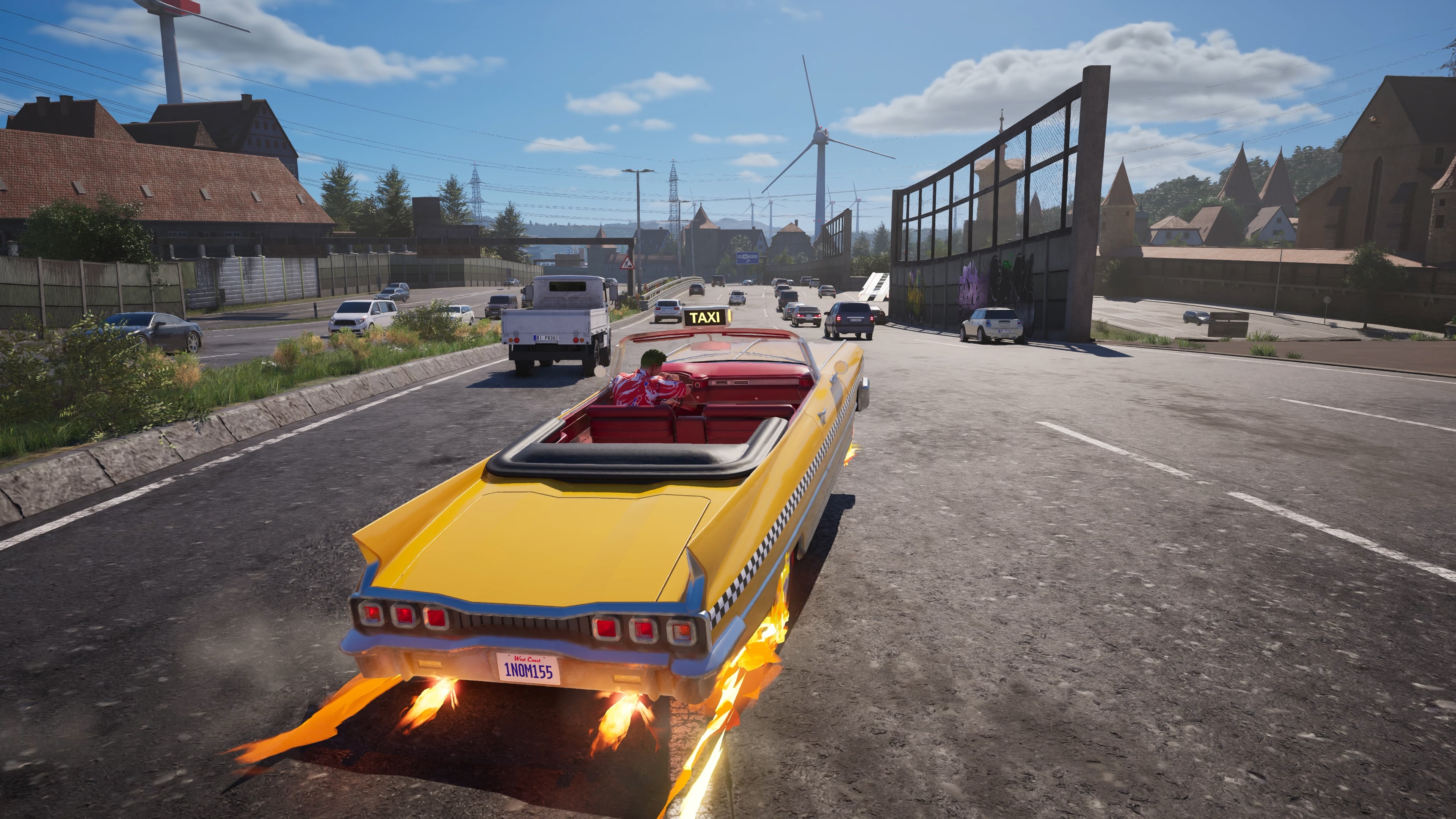
The new drift engine is the most significant mechanical pivot. Field agents describe Crazy Taxi: World Tour as feeling like the offspring of the original game and Forza Horizon—an aggressive comparison that speaks to scale and flow.
Drifting is no longer just a style flourish; it’s a throughput mechanic. Sustained drifts appear to feed into fare multipliers, boost states, and shortcut viability. The city is being built to accommodate this: wide-radius corners, multi-lane overpasses, and stacked vertical routes that reward players who can maintain lateral momentum while threading traffic.
This shift reframes the taxi not as a point-to-point courier, but as a continuous motion instrument. For designers and #indiegame teams studying traversal, Crazy Taxi: World Tour is shaping up as a case study in marrying exaggerated arcade physics with open-world readability—making every corner legible at speed while still leaving room for chaos.
Global Multiplayer Grid: Collision Economics and Shared Cities
The latest multiplayer first look reframes Crazy Taxi: World Tour as a networked service rather than a purely solo score-chaser. Players jack into shared cities, compete for high-value fares, and weaponize shortcuts in real time. This introduces a new layer: collision economics.
Every crash, block, or near-miss has potential economic implications—lost time, stolen fares, or emergent griefing countered by systemic safeguards. Leaderboard warfare now exists at multiple tiers: session-based rankings, city-wide seasonal ladders, and possibly global event rotations that remix traffic patterns or fare distributions.
For #gamedev teams, the interesting angle is how SEGA appears to be blending classic arcade clarity with persistent-world expectations. The city is persistent, but the runs are still bite-sized. The chaos is competitive, but the objectives remain legible within seconds. This is the tightrope many modern arcade reboots fail to walk.
Strategic Takeaways for Developers and Observers
- Modernization Blueprint: Crazy Taxi: World Tour is emerging as a benchmark for legacy IP overhauls—retain the economic DNA, rebuild the world and input model around contemporary expectations.
- Traversal-First Design: The recompiled drift engine and festival-like city framing underline how traversal systems can be the primary content, not just the glue between objectives.
- Live Arcade Identity: The global multiplayer grid suggests a future where “arcade” doesn’t mean offline or static. Expect live events, rotating city conditions, and evolving collision economies.
Crazy Taxi: World Tour is still in active development, but the last week’s intel signals a project that understands its heritage while aiming squarely at the open-world, systems-driven present. For anyone tracking #gamedev trends or building the next high-speed #indiegame, this is one to study closely.
Sources and corrections
This archive entry does not have a verified article-source list. Images and video embeds alone are not evidence for every claim.
Found an error? Request a correction. Include the passage and a supporting source.
Your games, in one place
Keep up with Crazy Taxi: World Tour
Follow this game to collect its posts in your personal feed. Come back to see what you missed.