Automated archive / Crazy Taxi: World Tour
Crazy Taxi: World Tour Goes Global With Germany, Drift Engine, and Net-Grid Warfare
Crazy Taxi: World Tour is shifting from a nostalgic revival to a fully systemic, multiplayer-first urban platform. This week’s intel tracks Germany’s deployment, a rebuilt drift engine, and a competitive fare-hunting grid that could redefine how arcade classics are modernized.
AI-generated summary. This archive article does not have a current recorded source check. Check linked sources before relying on details. Editorial policy
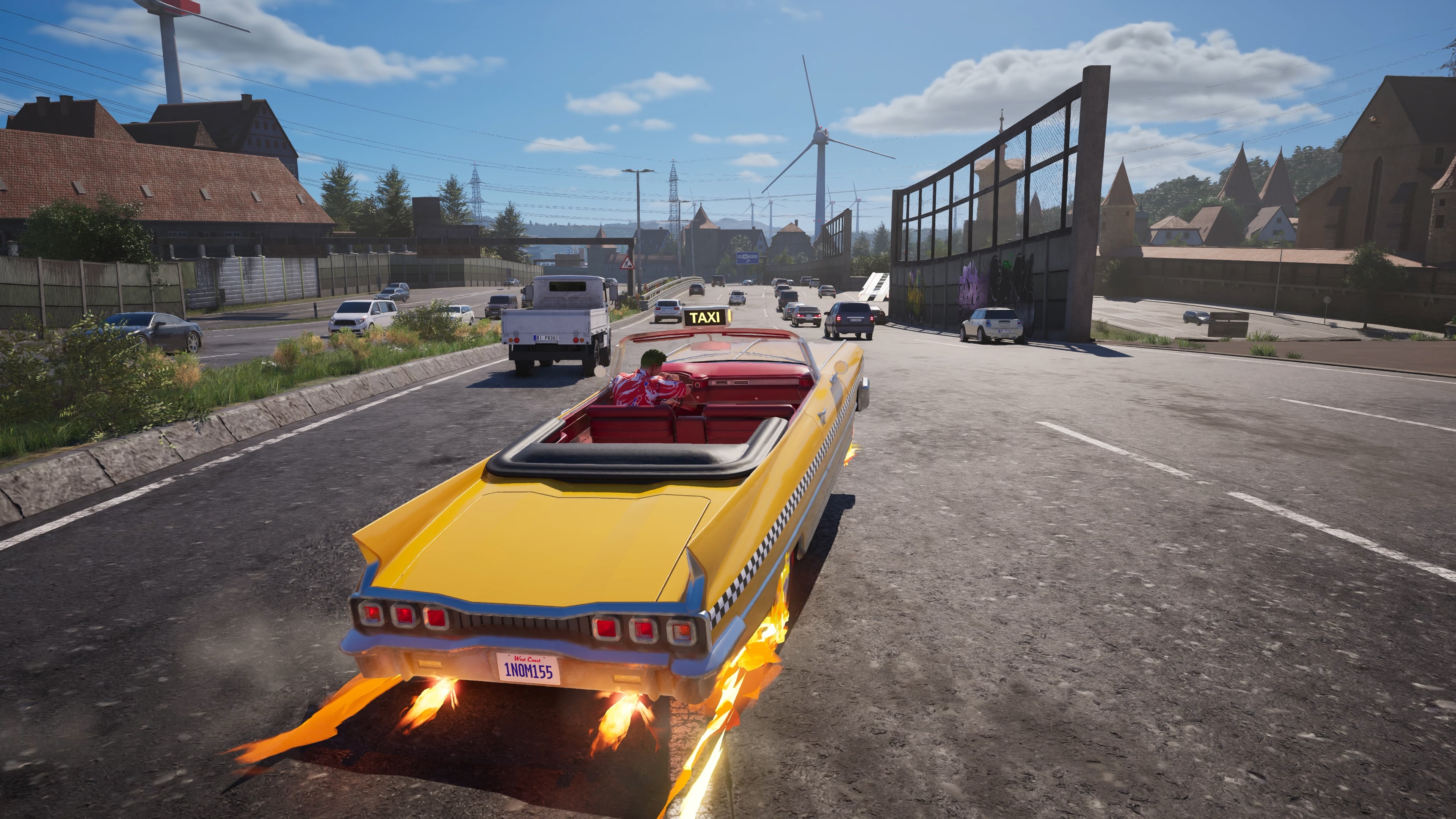
Watch: Transmitting Gameplay footage from the field: Crazy Taxi: World Tour – Multiplayer First Look
Sector Status: Crazy Taxi Reboots as a Global Systems Platform
Crazy Taxi: World Tour is no longer just a legacy revival; it’s evolving into a systemic, service-like arcade platform. Over the last seven days, SEGA has pushed three critical vectors: a new global multiplayer grid, the reveal of Germany as a fully realized international map, and a recompiled drift/handling model that reframes the original arcade DNA for modern open-world expectations.
This week’s signals position Crazy Taxi: World Tour as a reference case for how to modernize an arcade classic without losing its reckless, cash-first identity—vital intelligence for #gamedev teams studying reboot strategies and for #indiegame studios looking to scale arcade concepts into persistent ecosystems.
Multiplayer Net-Grid: Fare Hunting Becomes Competitive Extraction
Two separate transmissions from gamescom 2026 lock in one message: multiplayer isn’t a bolt-on mode, it’s the new backbone of Crazy Taxi: World Tour.
Shared City, Shared Prey
The Multiplayer First Look Trailer and subsequent ONL briefing describe a city grid where:
- Multiple cab pilots occupy the same urban instance, hunting the same pool of fares.
- Players race to passengers, weaponizing route knowledge and timing rather than just raw speed.
- Collision economics enter the loop: ramming, blocking, and traffic manipulation become tools to deny fares and control flow.
This reframes the original “solo chaos” loop into competitive extraction. Instead of a time attack against a static city, players are operating in a dynamic ecosystem where:
- Every fare is a contested resource.
- Optimal routes change based on rival positioning.
- Leaderboards now measure both cash efficiency and disruption potential.
For designers tracking #gamedev trends, this is a notable pivot: Crazy Taxi is effectively becoming an urban battle royale for fares, but without abandoning its arcade immediacy.
Germany Deployed: European Terrain as Live Systems Test
SEGA’s decision to make Germany the first international map is more than a cosmetic locale swap. The last 7 days of intel frame Germany as a systems stress test for the new world-tour structure.
Terrain Diversity as Design Tool
Field reports from the “Welcome to Germany” reveal and the Xbox gamescom segment highlight:
- Tight village streets that demand micro-corrections and precision drifting.
- Open fields and highway arteries tuned for sustained speed and risky overtakes.
- Iconic castles and real-world brands (PUMA, ZWILLING) anchoring navigation and monetization-friendly sightlines.
From a design standpoint, Germany functions as a modular proving ground:
- Narrow lanes pressure-test the new drift engine and collision models.
- Wide highways validate high-speed stability and traffic density.
- Landmarks provide visual anchors for player-made routes and speedrunning lines.
For #indiegame teams exploring multi-biome city design, Germany is a strong case study in how to blend recognizably local architecture with exaggerated, arcade-friendly readability.
Drift Engine Recompile: From Arcade Box to Open-World Festival
The “HIGHWAY RECOMPILE” intel frames Crazy Taxi: World Tour as the offspring of the original Crazy Taxi and Forza Horizon—and that’s not just marketing language.
Handling as a Systemic Upgrade, Not a Cosmetic One
Key takeaways from on-site impressions:
- The drift system is no longer a binary on/off slide; it’s tuned for graded control, allowing players to feather turns through dense traffic.
- The game leans into city-scale freedom, enabling festival-like roaming rather than rigid, repeated loops.
- The classic “earn-cash-fast” loop remains intact, but is now layered with:
- Optional objectives and challenges.
- Leaderboard-driven optimization.
- Multiplayer pressure to refine lines and cut seconds.
This is a textbook modernization move: preserve the core reward loop while rebuilding the surrounding systems to support long-term retention, replayability, and social competition.
Reboot Philosophy: A New Benchmark for Legacy Arcade Overhauls
Multiple reports from gamescom 2026 converge on one core thesis: Crazy Taxi: World Tour is setting a benchmark for legacy arcade overhauls.
What SEGA Is Doing Right (From a Development Lens)
-
Core Loop Preservation
The fundamental fantasy—pick up a fare, race the clock, cash out big—remains untouched. This protects brand identity and nostalgia while giving the team room to innovate around it. -
Systemic Modernization, Not Just Visual Remastering
Instead of a resolution bump, SEGA has:- Retooled city layouts for flow, readability, and multiplayer contention.
- Refined handling to support both casual play and high-skill routing.
- Updated objectives to plug into modern progression and competitive frameworks.
-
Globalization as Structure, Not Gimmick
The “World Tour” framing is backed by systemic design: each region (starting with Germany) is a distinct ruleset laboratory, not a reskin of the same streets.
For #gamedev professionals, Crazy Taxi: World Tour is emerging as a live case study in how to:
- Migrate an arcade IP into a multiplayer-first, systems-driven structure.
- Use geography and culture as mechanical differentiators, not just visual dressing.
- Balance nostalgia with the expectations of an always-connected player base.
Strategic Outlook: Watching the Grid Stabilize
In the coming months, the key metrics to watch will be:
- Multiplayer stability and matchmaking in dense urban instances.
- Map cadence beyond Germany—how fast new regions arrive and how distinct they feel.
- Economy tuning, especially around collision, fare values, and leaderboard incentives.
Crazy Taxi: World Tour is no longer just a curiosity in the reboot space; it’s positioning itself as a live urban arcade platform. For developers, publishers, and #indiegame studios alike, this week’s intel makes one thing clear: if you’re planning to modernize a classic, you’ll be measured against what SEGA is building here.
Sources and corrections
This archive entry does not have a verified article-source list. Images and video embeds alone are not evidence for every claim.
Found an error? Request a correction. Include the passage and a supporting source.
Your games, in one place
Keep up with Crazy Taxi: World Tour
Follow this game to collect its posts in your personal feed. Come back to see what you missed.