Automated archive / Crazy Taxi: World Tour
Crazy Taxi: World Tour Reboots the Grid with Multiplayer Chaos and a German Test Track
Crazy Taxi: World Tour is evolving from a nostalgia play into SEGA’s live arcade platform, blending open-world routing, a rebuilt drift engine, and competitive multiplayer grids. This week’s intel highlights Germany as the first international test track and positions the reboot as a new benchmark for legacy arcade...
AI-generated summary. This archive article does not have a current recorded source check. Check linked sources before relying on details. Editorial policy
Sector Snapshot: Arcade DNA, Open-World Ambition
Crazy Taxi: World Tour is no longer just a nostalgia play; it’s emerging as SEGA’s reference design for how to modernize a legacy arcade property without losing its pulse. Over the last week, a steady stream of intel has reframed the project as a systemic reboot rather than a simple remaster. The core “earn-cash-fast” loop remains intact, but it’s now wired into expanded city grids, an upgraded drift model, and a persistent multiplayer layer that turns fare-hunting into a live-service battleground.
From a #gamedev perspective, the key read is intent: this isn’t chasing realism, it’s chasing density—of decisions, of routes, of collisions. The design language feels closer to Forza Horizon’s festival-world structure than to the original’s contained arenas, while still centering the same 90-second micro-economy of risk, speed, and passenger satisfaction.
Multiplayer Grid: Collision Economics as Core Design
The latest multiplayer first-look transmission reframes the city as a shared resource. Multiple drivers jack into the same urban instance, racing not just the clock but each other for high-value fares. The activity feed repeatedly calls out “collision economics” and “territory,” hinting at a scoring model where:
- Physical contact and disruption matter – Shunting rivals off optimal routes likely has direct economic impact, not just cosmetic chaos.
- Fare density and routing become PvP levers – Optimal lines through the city are now contested lanes rather than personal puzzle solutions.
- Leaderboards are positioned as long-term retention tools – Expect seasonal or rotating grids, with players optimizing builds, routes, and risk profiles over time.
For designers, this is a notable pivot: Crazy Taxi’s original tension was strictly player vs. timer. World Tour is layering in player vs. player vs. system, effectively turning the city into a competitive extraction space where passengers are the resource and the clock is the extraction window.
Drift Engine Recompile: The New Handling Spec
Recent field reports describe Crazy Taxi: World Tour as “the offspring of the original Crazy Taxi and Forza Horizon,” and that’s less hyperbole than it sounds. The drift engine has been recompiled to support:
- City-scale freedom – Wider, more interconnected routes enable continuous flow instead of short, segmented sprints.
- High-speed cornering as expression – Drifting is no longer just a score multiplier; it’s a primary navigation tool at urban scale.
- Dual targeting of veterans and new drivers – Expect a forgiving baseline with a high skill ceiling, allowing mastery of drift timing, traffic threading, and fare chaining.
This handling revamp is the backbone of the modernization effort. It preserves the snap of the original while scaling the playground to open-world proportions, which is critical if SEGA wants World Tour to sustain long-term engagement rather than just deliver a nostalgia hit.
Germany: First International Testbed
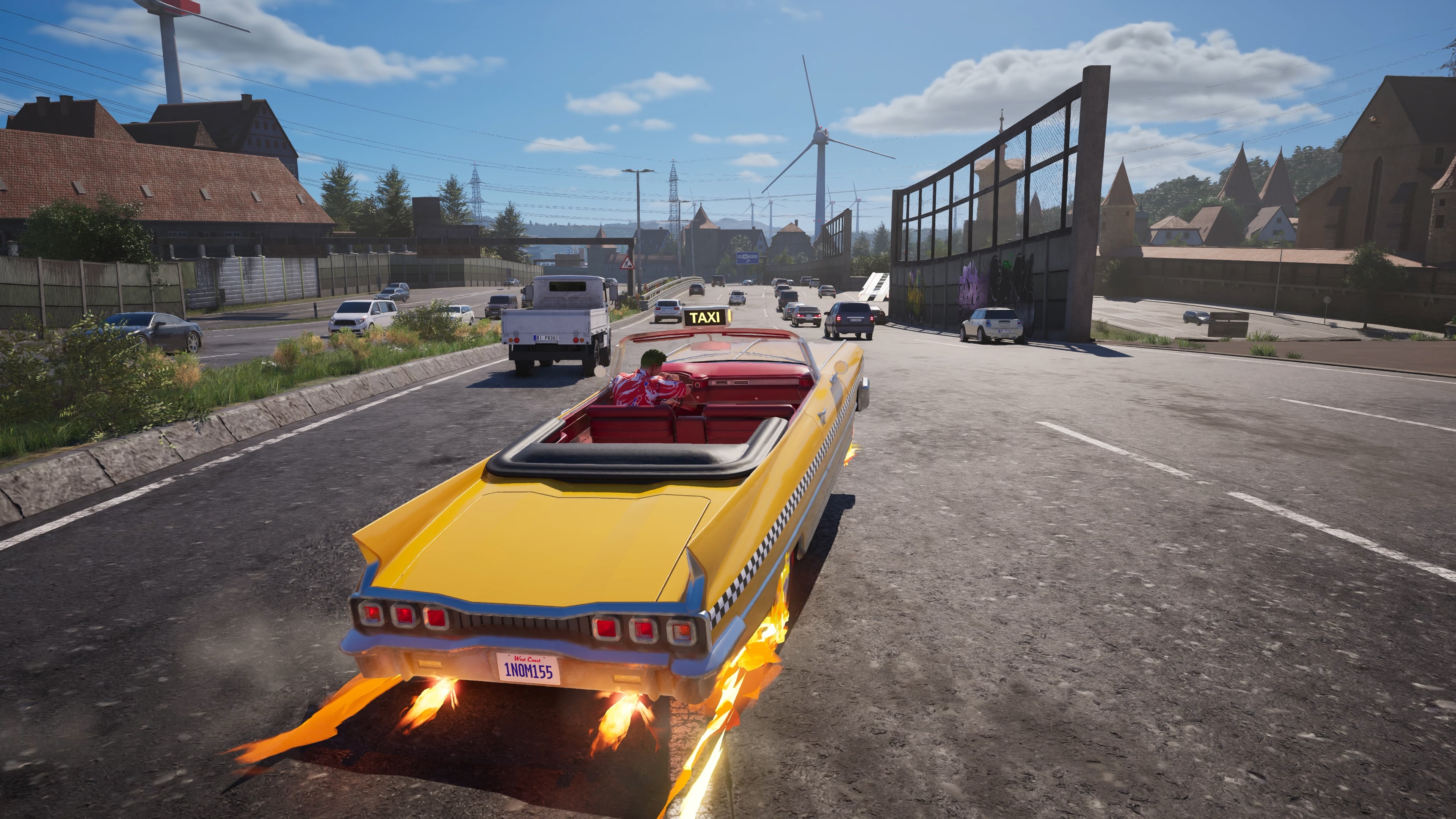
Germany has been deployed as the first international map, and it’s being framed as more than just a visual reskin. The layout leans into contrast: tight village streets, open countryside stretches, and iconic castle vistas stitched together by high-speed highway arteries. The design brief here is clear:
- Stress-test the drift engine with narrow corridors vs. open straights.
- Explore regional identity through traffic patterns, signage, and landmark placement.
- Leverage real-world brands like PUMA and ZWILLING as navigational anchors and monetization-friendly billboard space.
From a #gamedev angle, Germany reads as a systems test for international scalability. If this map proves players will embrace region-specific routing challenges and traffic behaviors, SEGA has a template for expanding World Tour into a true global circuit.
Modernization Without Corruption: Lessons for Legacy Reboots
Multiple gamescom 2026 field notes call Crazy Taxi: World Tour “the benchmark” for arcade overhauls, and there’s a clear pattern in how SEGA is approaching this reboot:
- Preserve the core verb – You still drive fast, grab fares, and cash out under pressure.
- Modernize the scaffolding – Open-world structure, systemic multiplayer, and a refined drift engine add contemporary framing without diluting the core loop.
- Update objectives, not identity – New modes, time-attack fares, and leaderboard warfare extend playstyles rather than replace them.
For studios eyeing their own legacy IP, this is a playbook worth dissecting: respect the original’s economic and mechanical heart, then expand horizontally with systems that amplify—not overwrite—that identity.
Character Continuity and Brand Signal

The return of classic drivers and a familiar visual tone is doing more than fan service. It’s brand continuity as UX: instantly legible silhouettes, color palettes, and cab shapes that anchor old players while onboarding new ones into the chaos. This is particularly important as World Tour leans further into live, competitive systems that might otherwise feel alien to arcade purists.
Strategic Outlook: From Nostalgia Play to Live Arcade Platform
Crazy Taxi: World Tour is positioning itself less as a one-off reboot and more as a live arcade platform—global maps, evolving leaderboards, and a multiplayer grid that can be tuned, balanced, and expanded over time. For #indiegame teams and larger studios alike, the key takeaway from this development update is that “arcade” in 2026 doesn’t have to mean “small” or “static.”
Instead, SEGA is arguing for a future where arcade design principles—clarity, intensity, replayability—are fused with open-world and live-service infrastructures. If Crazy Taxi: World Tour sticks the landing, it won’t just revive a cult classic; it will redraw the blueprint for how legacy arcade IP can thrive in a persistent, competitive era.
Sources and corrections
This archive entry does not have a verified article-source list. Images and video embeds alone are not evidence for every claim.
Found an error? Request a correction. Include the passage and a supporting source.
Your games, in one place
Keep up with Crazy Taxi: World Tour
Follow this game to collect its posts in your personal feed. Come back to see what you missed.