Automated archive / Control Resonant
Control Resonant Turns Defense Off and Pressure All the Way Up
Control Resonant is stripping out defensive crutches and rerouting an entire studio’s strategy around relentless, aggression-driven combat. The latest boss encounter intel and financial signals show Remedy committing fully to a high-pressure design thesis—and betting the brand on it.
AI-generated summary. This archive article does not have a current recorded source check. Check linked sources before relying on details. Editorial policy
Sector Intelligence Report // Control Resonant
Control Resonant’s latest signals paint a clear tactical picture: Remedy is hard-locking its new flagship into relentless forward momentum—both in combat design and in how it’s repositioning the studio’s business around the game. Over the last seven days, three key transmissions have come online: an IGN First boss encounter breakdown, confirmation of an aggression-only combat doctrine (no parries, no turtling), and financial data showing short-term revenue dips as Remedy reroutes power into pre-launch comms.
This isn’t just another sequel beat; it’s a full-system recalibration that designers, producers, and studio leads in #gamedev and #indiegame circles should be dissecting closely.
Combat Doctrine: No Parry, No Shelter, Only Pressure
The most disruptive design call in the current data set is explicit: Control Resonant removes parry mechanics entirely. There’s no perfect block safety net, no high-precision guard window to lean on. Instead, players are forced into a loop of:
- Pushes and dodges as primary survival tools
- Proactive offense to maintain tempo
- Arena control over reactive defense
For combat-system engineers, this is a deliberate rejection of the now-standard “Soulslike” defensive meta. Remedy is effectively saying: if you’re not advancing, you’re losing. That has several implications:
- Input economy shifts from timing windows to spatial decision-making—positioning, line-of-sight, and angle of attack become the core verbs.
- Enemy tuning must lean on pressure curves rather than one-shot punishments; if you deny players a hard defensive tool, you must build fairness into telegraphs, mobility, and recovery frames.
- Player readability becomes critical. With no parry buffer, visual and audio tells must shoulder more of the burden to keep deaths feeling “earned” rather than arbitrary.
For #gamedev teams, especially on an #indiegame scale, Control Resonant is a case study in committing fully to a combat thesis. Removing a genre-standard feature like parry is risky, but it also clarifies the experience: every system now has to serve aggression and control.
Boss Encounter Deconstruction: Layered Phases, Adaptive Pressure
Watch: Transmitting Gameplay footage from the field: Official Control Resonant gameplay reveal
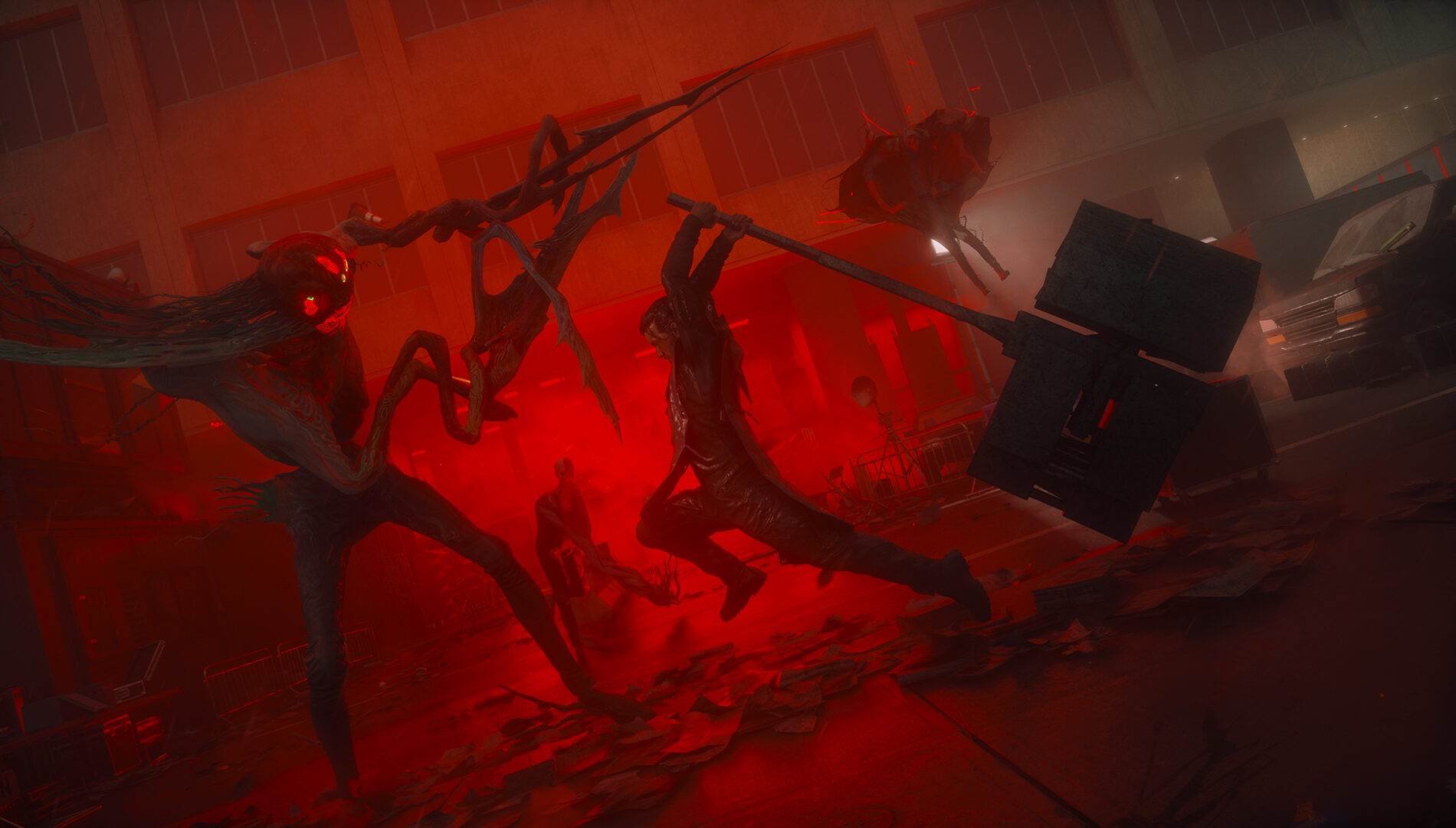
IGN First’s exclusive boss fight footage functions like a live-fire design whitepaper. The encounter showcases:
1. Environmental Manipulation as a Core Mechanic
The arena isn’t backdrop—it’s a weaponized system. Debris, shifting architecture, and telekinetic vectors echo the original Control, but with:
- Higher density of interactables, giving players more options to convert environment into offense.
- Faster material response, reducing the latency between intent (aim, lift, throw) and payoff.
- Phase-specific geometry shifts, forcing players to re-evaluate cover, angles, and traversal routes mid-fight.
For encounter designers, this is a template for dynamic arenas where layout is part of the boss script, not just a static container.
2. Phase Scripting with Adaptive Pressure
The enemy’s behavior suggests layered phases that escalate not just in damage output, but in cognitive load:
- Early phases test basic movement and projectile avoidance.
- Mid phases introduce pattern overlap—simultaneous environmental hazards plus direct attacks.
- Later phases appear to increase tempo and density rather than resorting to cheap one-shots.
The key is adaptive pressure: the boss seems tuned to keep the player just at the edge of capacity. In a system with no parry safety valve, this is exactly where frustration can spike—unless telegraphs, stamina-equivalent resources, and mobility are tuned with surgical precision.
For teams building high-intensity encounters, Control Resonant underlines a core principle: if you remove defensive options, you must design pressure as a curve, not a wall.
Visual and Technical Escalation Over Baseline Control
The footage and stills circulating this week highlight a clear visual step up from the original Control baseline:
- Elevated visual fidelity in particle effects and debris simulation reinforces the fantasy of reality-warping combat.
- Improved material response (glass, concrete, metal) makes every telekinetic impact more legible and satisfying.
- Lighting and volumetrics appear tuned to support readability in chaos—important when players are expected to stay constantly on the offensive.
From a production standpoint, this is Remedy doubling down on its identity: high-end visual spectacle in service of mechanical clarity, not just screenshot bait.
Strategic Reroute: Revenue Dip as Pre-Launch Repositioning
Remedy’s Q2 and H1 2026 reports show revenue declines, but the framing is explicit: resources are being redirected toward Control Resonant’s pre-launch communications and marketing.
For studio leads and producers, this is a notable play:
- Short-term softness in revenue is being traded for long-term IP reinforcement.
- The studio appears comfortable letting other revenue streams cool while it concentrates attention, budget, and messaging on a single flagship.
- This aligns with a “long game” AAA strategy: treat the launch not as a spike, but as the central node of a multi-year content and brand plan.
For #indiegame studios watching from the sidelines, the scale is different but the principle is transferable: there are moments where focus is a feature, not a risk. Concentrating narrative, marketing, and development effort around one clear thesis—here, aggressive, reality-warping combat in control resonant—can pay off more than scattering attention across multiple smaller beats.
Operational Takeaways for Developers
For practitioners in #gamedev, the last week of Control Resonant intel offers several concrete lessons:
- Commit to your combat philosophy. If your game is about aggression, remove or de-emphasize systems that encourage passivity, and then tune everything—AI, environments, animations—to support that choice.
- Treat arenas as systems, not stages. The boss encounter shows how environmental manipulation can be scripted to evolve with the fight, keeping players in a state of active re-evaluation.
- Align business strategy with design ambition. Remedy’s willingness to eat short-term revenue decline to amplify Control Resonant’s launch is a reminder that sometimes the boldest design moves need equally bold business moves behind them.
Control Resonant is positioning itself as a case study in unified intent—mechanical, visual, and strategic. As more transmissions come online, this will be a critical node to monitor for anyone tracking how modern action games are redefining player agency, pressure, and control.
Sources and corrections
This archive entry does not have a verified article-source list. Images and video embeds alone are not evidence for every claim.
Found an error? Request a correction. Include the passage and a supporting source.
Your games, in one place
Keep up with Control Resonant
Follow this game to collect its posts in your personal feed. Come back to see what you missed.
More to read about Control Resonant
- Source-checked briefControl Resonant launches on PS5 September 24
Control Resonant is scheduled to launch on PlayStation 5 on September 24. Players control Dylan across focused Manhattan areas, with main missions, side stories, and optional timed arcade...
- Source-checked briefControl Resonant is scheduled for Xbox on September 24
Xbox Wire lists Control Resonant for September 24, optimized for Xbox Series X|S and supporting Xbox Play Anywhere. The announcement describes Dylan Faden emerging into a warped Manhattan during a...
- Source-checked briefControl Resonant details PS5 and PS5 Pro display modes
Control Resonant is scheduled to release September 24. The announcement lists Performance and Quality targets for PS5, plus three PS5 Pro options including ray tracing in select modes. On PS5,...