Automated archive / Big Walk
Big Walk Turns a Million-Player Hike into a New Co‑Op Blueprint
Big Walk just turned a slow, social hike into a million-sale success story, proving that low-combat co-op can compete on the Steam top-seller grid. This week’s Sector Intelligence breaks down how its traversal-first design and social UX are rewriting the co-op playbook.
AI-generated summary. This archive article does not have a current recorded source check. Check linked sources before relying on details. Editorial policy
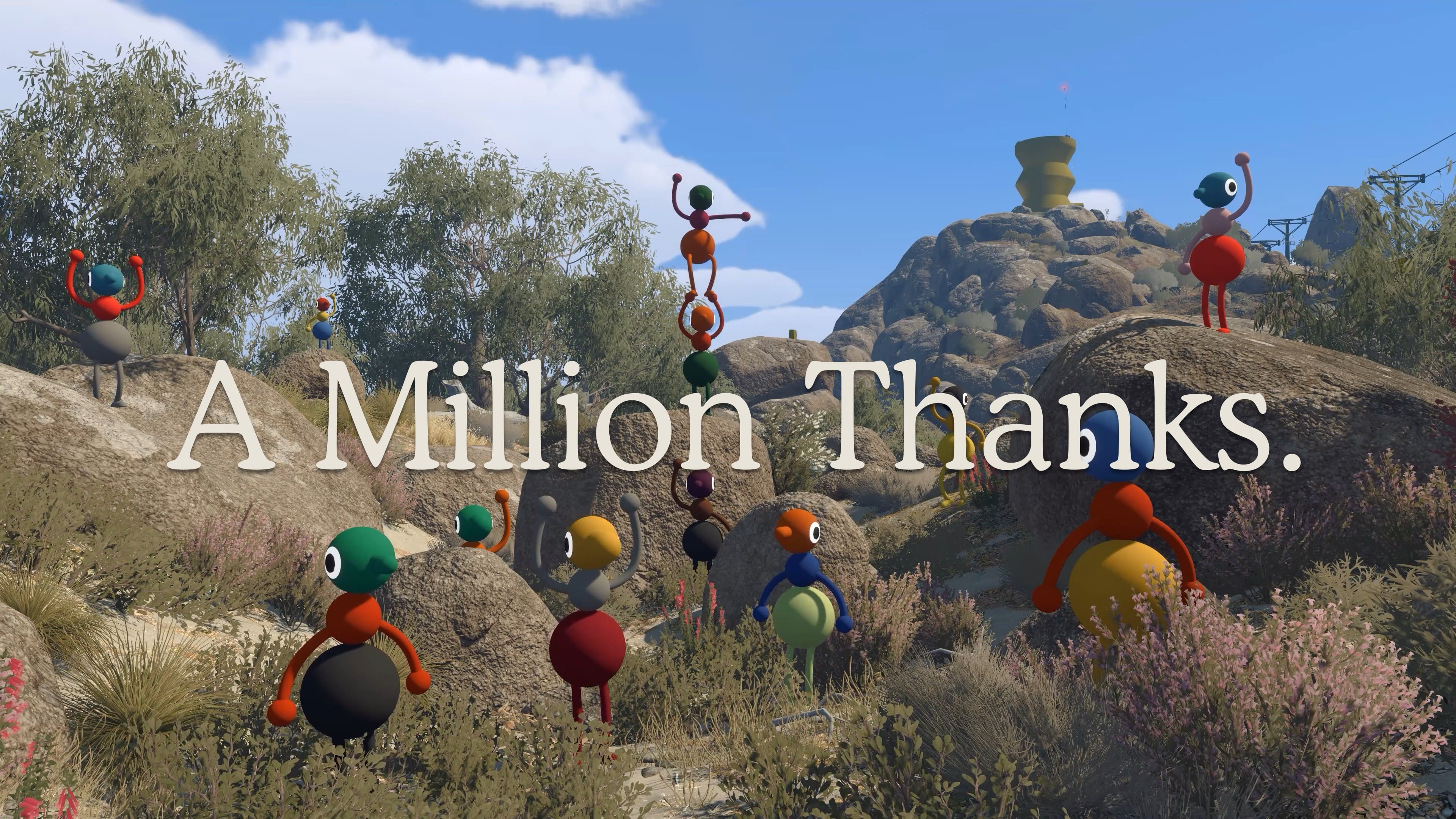
Watch: Transmitting Gameplay footage from the field: Official Big Walk launch reel
Sector Snapshot: Big Walk’s Slow Hike, Fast Climb
Big Walk just crossed the one million paid units mark before PlayStation Plus downloads are even counted, and it’s now marching onto the Steam top-seller grid for August 4–11, 2026. For a low-combat, social-first experience that deliberately sidelines urgency and spectacle, that’s a major signal flare for #gamedev and #indiegame teams watching the market.
The last seven days of telemetry paint a consistent picture: Big Walk is less a traditional “game” and more a controlled social experiment in long-range co-op traversal. Navigation friction, improvised communication, and shared discovery are the primary loops. Combat is effectively a non-factor. Yet commercial performance shows that this “cozy ops” model can still mobilize a massive audience.
Design Intel: Social Exploration as the Core Loop
A “Controlled Social Experiment” in Co‑Op
Recent review debriefs frame Big Walk as a slow-burn hike designed around:
- Long-range traversal: The core tension isn’t survival; it’s coordination over distance. Players must stay aligned on route, pacing, and micro-goals.
- Improvised communication: With limited traditional HUD noise and a focus on in-world signaling, players build their own language of pings, gestures, and movement.
- Shared discovery over mastery: Progress is measured less in skill expression and more in how well a squad can stay socially in sync while wandering.
This reframes co-op from “beat the encounter” to “maintain the vibe.” The design effectively swaps power fantasy for social presence fantasy—you’re not the hero, you’re the hiking buddy who doesn’t break the flow.
High Charm, Low Urgency
The report’s “high charm, low urgency” tag is crucial. Where typical co-op titles spike adrenaline, Big Walk intentionally flattens the intensity curve:
- No combat loop to escalate stakes.
- Ambient pacing that supports conversation, not interruption.
- Traversal friction that’s just enough to keep players engaged without tipping into frustration.
For developers, this is a case study in designing for long-session socialization rather than short-session challenge. It’s tuned for groups who enjoy meandering data collection—scanning the environment, trading observations, and testing routes—over high-intensity ops.
Market Signals: Cozy-Multiplayer as a Scalable Model
Watch: Transmitting Gameplay footage from the field: Big Walk official trailer signal
The million-sale milestone (with PlayStation Plus still off the ledger) confirms that low-combat social worlds can move serious numbers. Combined with its appearance on the Steam top-seller stack for the current week, Big Walk is no longer a curiosity—it’s a validated commercial template.
Key signals for market-watchers and dev tacticians:
- Platform synergy: Paid sales plus subscription exposure (PS Plus) create a hybrid funnel—direct revenue up front, long-tail community growth via service.
- Discoverability via differentiation: In a sea of combat-centric co-op, Big Walk’s non-violent, traversal-first identity is a clear market position, not a niche compromise.
- Retention through ritual: The game’s structure encourages recurring “hike nights,” positioning it closer to a social ritual than a content treadmill.
For #gamedev teams, this suggests a viable path where scope is constrained but social design is deep. You don’t need a massive content pipeline if your core loop is about players generating stories for each other across long walks.
Strategic Takeaways for Developers
1. Design for Conversation, Not Just Action
Big Walk’s success underlines a simple but underused principle: co-op games should leave room for talking. Systems that tolerate silence but reward chatter—like light navigation puzzles, branching paths, or shared map-reading—can be more powerful than another wave of enemies.
2. Embrace “Low-Intensity, High-Duration” Sessions
The game optimizes for long, relaxed sessions instead of short, high-stress bursts. This aligns with players looking for:
- Post-work decompression.
- Ongoing social touchpoints with friends.
- A sense of presence without constant mechanical pressure.
For #indiegame studios, this is a reachable design target: fewer bespoke set-pieces, more systemic spaces that stay interesting over time.
3. Treat Co‑Op as a Social UX Problem
Big Walk treats co-op like social UX design:
- Minimal UI clutter to keep focus on each other and the landscape.
- Tools that encourage non-verbal collaboration.
- Pacing that respects real-life interruptions and side conversations.
This is a pivot from “co-op as content multiplier” (more players, same enemies) to co-op as the content itself.
Sector Outlook: Expect More “Cozy Ops” Experiments
With Big Walk breaching the million-sale threshold and holding a position in the Steam top-seller grid, expect a wave of:
- Traversal-centric social sandboxes that de-emphasize combat.
- Hybrid monetization strategies mixing premium sales with subscription exposure.
- Design pitches framed as social experiments rather than traditional genre labels.
For developers, Big Walk’s current trajectory is a live case study in how to weaponize slowness: using pace, space, and shared exploration to build a commercially viable, socially sticky experience.
As this week’s Sector Intelligence shows, the industry isn’t just chasing higher frame rates and bigger explosions; it’s also quietly investing in long walks with friends—and Big Walk is leading that push up the trail.
Sources and corrections
This archive entry does not have a verified article-source list. Images and video embeds alone are not evidence for every claim.
Found an error? Request a correction. Include the passage and a supporting source.
Your games, in one place
Keep up with Big Walk
Follow this game to collect its posts in your personal feed. Come back to see what you missed.