Automated archive / Avatar Legends: The Fighting Game
Tagah Enters the Arena as Avatar Legends: The Fighting Game Hits a Turbulent Launch Window
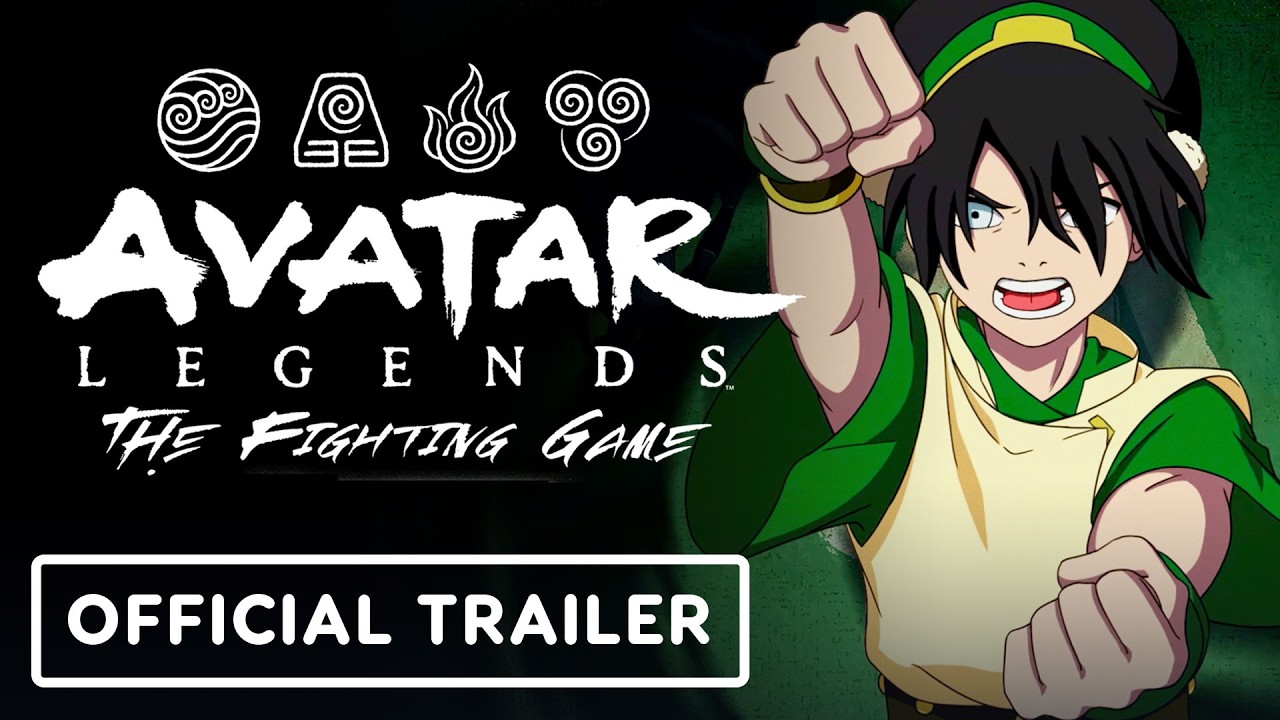
Avatar Legends: The Fighting Game enters a volatile week, with a last-minute platform delay colliding with the rollout of new tank-class brawler Tagah. Strong systems and full-featured modes are in place, but impact, pacing, and deployment must sharpen if this Avatar adaptation is going to secure a long-term...
AI-generated summary. This archive article does not have a current recorded source check. Check linked sources before relying on details. Editorial policy

Sector Overview
This week’s Sector Intelligence on avatar legends: the fighting game reads like a split stance: one foot planted in promising systems design, the other sliding on deployment turbulence. A surprise platform delay for Xbox Series X|S and the Switch Deluxe Edition has stalled full-market rollout just as a new earth-and-metal brawler, Tagah, is cleared for combat trials. For #gamedev observers and #indiegame combat designers, this is a fascinating case study in how solid mechanics, IP expectations, and platform realities collide.
Deployment Disruption: Launch Held on the Tarmac
The most immediate strategic development is the last-minute delay of the Xbox Series X|S version, with the Switch Deluxe Edition similarly grounded. Being pulled “hours before release” signals one of three likely scenarios from a production and publishing perspective:
- Certification or platform compliance friction – A late-surfacing TRC/XR issue, online services misfire, or build stability problem.
- Netcode or matchmaking instability – For a competitive fighter, a broken online layer is worse than a delayed launch; perception damage lingers.
- Content parity or monetization alignment – Ensuring feature/content sync across platforms to avoid community fragmentation.
From a market optics standpoint, this kind of hard brake hurts short-term momentum but can protect long-term trust if the team communicates clearly and uses the extra time to stabilize. For competitive fighters, especially those tied to a beloved license like Avatar, first-contact experience defines whether players stick around to lab or bounce after a weekend.
Systems Architecture: A Full-Fledged Combat Lab
Watch: Transmitting Gameplay footage from the field: Modes and Features Overview
The Modes and Features Overview confirms that avatar legends: the fighting game ships with a complete competitive framework:
- Story Missions – Narrative scaffolding that can double as a guided onboarding to bending archetypes.
- Arcade ladders – Traditional progression for solo mastery and difficulty scaling.
- Local & Online Versus – The core proving ground for matchup knowledge and community meta.
- Training & Tutorials – Crucial for onboarding players who know Avatar but not frame data.
From a #gamedev standpoint, this is the correct playbook: you create multiple laboratories for players to test frame data, counters, and team synergy. The emphasis on combo-centric design suggests the team is targeting a middle band between accessible arena brawler and lab-friendly fighter. The presence of robust training tools will be key to whether the game finds a long-tail competitive audience beyond the core IP fandom.
Combat Feel: Competent Systems, Underpowered Impact
The early systems review paints a picture of a fighter that is mechanically competent yet struggling to fully weaponize the Avatar license. On paper, that means:
- Combo routing and character kits: Solid enough to reward lab time, with room for optimization and tech discovery.
- Pacing and match flow: Currently lacking the explosive tempo and dramatic momentum shifts that define top-tier arena fighters.
- Impact feedback: Hit-stop, sound design, camera work, and VFX may not be selling the fantasy of elemental devastation.
For an Avatar title, this is a critical tension point. The franchise fantasy is spectacle-first—earth walls, lightning arcs, water whips, and air bursts that feel physically consequential. If the game’s inputs and systems are well-structured but the sensory reinforcement (visuals, SFX, camera shake, and environmental reaction) is subdued, players will feel a disconnect between what the IP promises and what the match actually delivers.
From a design lens, this is fixable post-launch: tuning hit-stop, buffing visual clarity on key moves, improving audio layering, and tightening round duration can dramatically shift perceived intensity without rewriting the engine.
New Combatant Online: Tagah and the Tank Meta Question
Watch: Transmitting Gameplay footage from the field: Official Tagah Reveal Teaser
The arrival of Tagah—an earth-and-metal specialist with close-quarters dominance—injects a fresh variable into the roster. The reveal materials flag several high-priority design reads:
- Class profile: Functionally a tank-class unit, suggesting high durability, armor-like properties, or strong defensive tools.
- Range identity: Close-quarters focus with earth/metal control implies powerful space denial, armored approaches, and punishing corner pressure.
- Synergy with arena-style duels: In a 3D or semi-3D arena, a tank with terrain-like control tools can dictate engagement angles and tempo.
The report’s expectation of “matchup re-calibration” is on point. Tank archetypes can warp the meta in several ways:
- For rushdown characters, Tagah becomes a stress test of approach options and safe pressure.
- For zoners, his metal and earth tools may counter projectile dominance, forcing more mid-range interaction.
- For team compositions (if applicable), he likely anchors squads as a frontline stabilizer or combo extender.
From a #gamedev perspective, dropping a tank early in the lifecycle is a statement: the team is willing to shake up the tier conversation and give analysts a reason to revisit the roster’s internal balance. The key risk is over-tuning his survivability or guard-breaking potential, which could flatten diversity if not monitored.
Franchise Alignment: Bending Rules vs. Player Expectation
The trailers and documentation emphasize that supers and combos are aligned with franchise bending rules, which is a double-edged design constraint:
- Pros: Movesets feel lore-consistent; fans recognize stances, motions, and elemental logic.
- Cons: Mechanical creativity is partially gated by canon, making it harder to design wildly exaggerated or abstract tools that often define iconic fighting game kits.
The current critique—that the game doesn’t fully weaponize its license—suggests the team might be leaning too conservatively into canon at the expense of mechanical drama. The opportunity space lies in:
- Stage interaction: More reactive arenas that respond dramatically to bending clashes.
- Cinematic supers: Shorter, more kinetic, and more disruptive to match momentum.
- Team synergy: Systems that reward cross-element setups in ways that feel uniquely “Avatar” rather than generically elemental.
Strategic Outlook: What to Watch Next
For developers, publishers, and competitive players tracking avatar legends: the fighting game as a live product, the next few beats are critical:
- Patch and platform roadmap – Clarity on the Xbox Series X|S and Switch Deluxe Edition timelines, plus any stability or netcode updates.
- Combat tuning passes – Adjustments to pacing, hit feedback, and Tagah’s balance will signal how responsive the team is to early critique.
- Community lab culture – Whether players embrace the training tools and start surfacing high-level tech, or fall off due to impact and flow concerns.
If the team can tighten the feel, stabilize deployment, and lean harder into the Avatar fantasy through post-launch iteration, avatar legends: the fighting game can evolve from “competent adaptation” to a more distinctive arena fighter with real staying power.
For now, the sector reads as cautiously optimistic: solid systemic foundations, a disruptive new tank-class entrant in Tagah, but a launch trajectory that needs recalibration before it can fully claim its spot in the competitive rotation.
Sources and corrections
This archive entry does not have a verified article-source list. Images and video embeds alone are not evidence for every claim.
Found an error? Request a correction. Include the passage and a supporting source.
Your games, in one place
Keep up with Avatar Legends: The Fighting Game
Follow this game to collect its posts in your personal feed. Come back to see what you missed.