Sector Intelligence: Black Flag Resynced Turns Low-Risk Remake Into High-Yield Live Ops Bet
Back to guides and news
Gaming
July 25, 2026

Sector Intelligence: Black Flag Resynced Turns Low-Risk Remake Into High-Yield Live Ops Bet

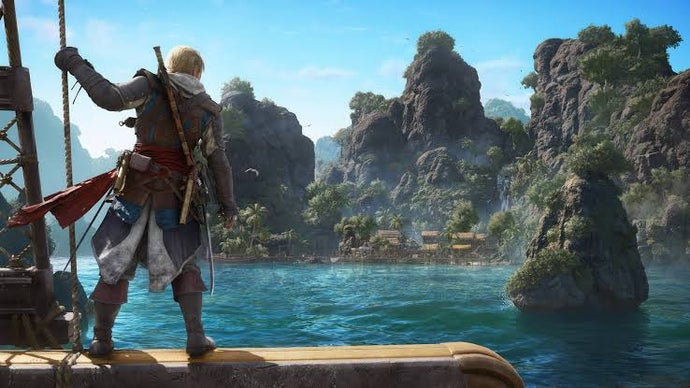
Edward Kenway returns to the Caribbean grid in Assassin's Creed Black Flag Resynced

Edward Kenway returns to the Caribbean grid in Assassin's Creed Black Flag Resynced

Sector Intelligence Report: Assassin's Creed Black Flag Resynced

Ubisoft’s latest operation in legacy IP mining, assassin's creed black flag resynced, is already rewriting the publisher’s internal forecasts. In under two weeks, the remake has exceeded its annual expectations, with the company signalling that full cost recovery is effectively locked in for the current quarter. For a project built on established tech, proven content, and a familiar design loop, that’s a textbook low-risk, high-yield maneuver—and a signal flare for the rest of the #gamedev sector.

Revenue Telemetry: High-Yield, No Guidance Uplift

According to the latest fiscal ghost signals, Ubisoft internally tags Black Flag Resynced as a “superior financial performance” play versus the 2013 original—largely due to:
  • Lower production costs than a full new entry.
  • Existing narrative, mission, and world design amortized over a second cycle.
  • A modernized pipeline that can reuse and upgrade assets instead of rebuilding from scratch.
Yet in the same breath, corporate command is refusing to raise annual guidance, citing a “strong competitive lineup” in the broader release window. Translation for sector observers:
  • Black Flag Resynced is overperforming at the title level, but
  • Ubisoft is sandbagging at the portfolio level, anticipating volatility from other launches and a crowded Q3–Q4 slate.
For studios and #indiegame teams watching from the sidelines, this is a live case study in remaster economics: a carefully scoped remake can behave like a mid-tier live-service title in terms of ROI, without the burn rate of a full AAA greenfield project.

Monetization & Live Ops: Expect Aggressive Tuning

The internal language around “aggressive monetization tuning” and “sharp ROI tracking” suggests Black Flag Resynced isn’t just a nostalgia trip—it’s a live telemetry lab for Ubisoft’s future content strategy.
Expect the following vectors to be under the microscope:
  • Cosmetic conversion: Outfits like the Deceased Crew / Skeleton Crew set are perfectly positioned as high-visibility cosmetics that drive player expression. Even when unlocked via gameplay, their engagement metrics will inform future pricing, bundles, and FOMO windows across the Assassin’s Creed ecosystem.
  • Engagement-linked progression: Weapon optimization—best swords and pistols, ideal naval loadouts—feeds into retention loops: players stay longer to min-max builds, which in turn increases the surface area for optional monetization.
  • Content cadence experiments: If Ubisoft layers in time-limited events or challenge ladders around naval combat and treasure hunts, Black Flag Resynced becomes a test bed for seasonal structures that can later be ported to new flagship entries.
This is less about turning Black Flag into a full live-service platform and more about instrumenting a legacy hit to gather modern behavioral data at scale.
Jackdaw under full sail: naval combat remains the core engagement driver in Black Flag Resynced

Jackdaw under full sail: naval combat remains the core engagement driver in Black Flag Resynced

Design Signals: Why the Caribbean Still Prints Engagement

From a design-intel standpoint, Black Flag Resynced is quietly reaffirming some fundamentals that matter to every #gamedev team:

1. Systemic Play Beats Script Density

The Caribbean sandbox—boarding actions, ship upgrades, open-sea encounters—remains a system-driven engagement engine. The latest weapon telemetry highlights:
  • High-synergy loadouts (fast parry swords + synchronized pistol volleys) dramatically increase combat pace.
  • Optimized builds turn boarding into a repeatable power fantasy, not a one-off set piece.
For smaller teams and #indiegame projects, the takeaway is clear: a few deeply interlocking systems can outlast a script-heavy, linear campaign in terms of player retention and replay value.

2. Cosmetics as Narrative Extension

The Skeleton Crew / Deceased Crew unlock route isn’t just a cosmetic chase; it’s lightweight narrative design:
  • Hidden routes and mission nodes create a meta-treasure hunt layered over existing content.
  • The final payoff—your ship literally sailing with the dead—delivers a strong identity shift without new cinematics or bespoke questlines.
This kind of cosmetic-driven micro-narrative is a scalable pattern for teams that can’t afford full story expansions but still want to refresh the fiction of their worlds.
Field capture from Assassin's Creed Black Flag Resynced: systemic combat and traversal in a modernized visual shell

Field capture from Assassin's Creed Black Flag Resynced: systemic combat and traversal in a modernized visual shell

Strategic Outlook: What This Signals for the Sector

For Ubisoft, assassin's creed black flag resynced is a proof-of-concept for legacy IP resynchronization:
  • It validates that remakes can be modeled as high-yield operations when scoped tightly and paired with modern monetization.
  • It provides live-service grade telemetry (engagement funnels, cosmetic conversion, progression friction) without the reputational risk of a brand-new, unproven design.
For the wider industry, including #indiegame and mid-tier publishers, the report reads like this:
  • Legacy back catalog is underexploited: smart remasters with clear systemic hooks and cosmetic layers can meaningfully move the revenue needle.
  • Data-first design is now the norm: even nostalgia projects are being treated as instrumented experiments, not just fan service.
  • Competitive density is the new constant: overperformance at the title level doesn’t automatically translate to raised guidance—portfolio-level risk management is now front and center.
As we move into the next quarter, expect Ubisoft to quietly compare Black Flag Resynced’s monetization and engagement curves against both older Assassin’s Creed entries and upcoming new releases. The better this remake performs as a low-risk, high-yield node, the more likely we are to see further resync operations across the catalog—and more publishers adopting similar strategies.
Keep following Assassin's Creed Black Flag Resynced

News, guides, posts, and game details in one place.

Open the game hub, then save it to build your personal Breach feed.

Open game hub

More images and video

Intel 1
Intel 2
Intel 3
Intel 4
Intel 5
Intel 6
Intel 7
Intel 8
Intel 9
Intel 10
Intel 11
Intel 12
Intel 13
Intel 14
Intel 15
Intel 16
Intel 17
Intel 18
About the game

Assassin's Creed Black Flag Resynced

Ubisoft

Mission Intelligence: Assassin’s Creed Black Flag Resynced reboots Ubisoft’s iconic open-world pirate saga with upgraded seas, sharper stealth, and modernized naval combat systems. Players infiltrate the Caribbean grid as Edward Kenway, juggling assassin protocols, pirate raids, and ship-to-ship warfare. This resynced edition targets fans of open-world exploration, tactical stealth, and high-risk loot runs. Optimized keywords: pirate RPG, naval combat, stealth action, open world Caribbean.

Open game page
Topics
assassin's creed black flag resynced
Assassin’s Creed Black Flag remake
Ubisoft financial performance
remaster economics
live-service monetization
legacy IP monetization
game development analysis
#gamedev
#indiegame
naval combat design
cosmetic monetization strategy