Automated archive / Apex Legends
Cyberware, Cyberpsychosis, and the Solo Queue Uprising in Apex Legends
Cyberware, cyberpsychosis, and a sanctioned strike against the solo queue grinder turned Apex Legends into a live-ops laboratory this week. Respawn is stress-testing extreme movement, self-inflicted risk, and social scaffolding without sacrificing visual clarity or competitive integrity.
AI-generated summary. This archive article does not have a current recorded source check. Check linked sources before relying on details. Editorial policy
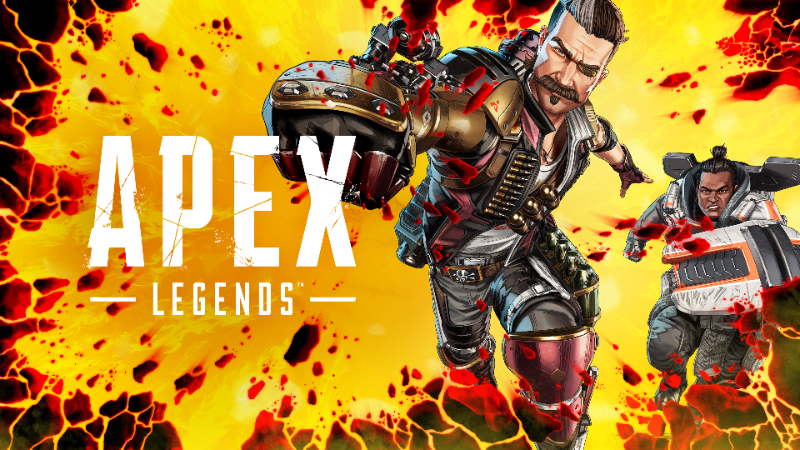
Outlands Status: High-Voltage Week in Apex Legends
Apex Legends just wrapped one of its most volatile weeks this split: a full cyberpunk incursion, a visual integrity clean-up pass, and a sanctioned response to the solo queue meat grinder. From a #gamedev and systems-design perspective, this seven-day window reads like a live-ops stress test in how far you can bend a live service without snapping its core identity.
Neon Contingency: Cyberpunk Event as Movement Sandbox
The Cyberpunk Event drops legends into a neon-drenched “night city e-district” where the skyline and sightlines are both rewired. Holographic koi, glitching signage, and dense verticality turn the map into a visibility puzzle: more cover, more clutter, and more chances to misread a push.
Wildcard is the test bed for the week’s most aggressive experiment: temporary cyberware mods that supercharge movement and risk.
Sandevistan: Movement as a Hard-Engage Lever
Sandevistan grants short-range burst dashes in any direction, chainable mid-air. In practice, this does three things:
- Engage Tool: Lets Wildcard force fights on their terms, instantly tightening the gap on snipers or pokers.
- Defensive Repositioning: Micro-dodges through angles and crossfires, effectively raising the skill ceiling for both Wildcard and anyone trying to track them.
- Traversal Tech: The dash-chaining mid-air behaves like a movement lab for high-skill players, echoing Titanfall roots without permanently rewriting Apex’s baseline ruleset.
From a #gamedev perspective, this is a classic limited-time sandbox: Respawn can safely overclock movement, gather telemetry on dash usage, and decide whether similar tech can be folded into future legends, modes, or LTMs without destabilizing ranked.
Blackwall Breach: Positioning and Denial in One Button
Blackwall Breach lets Wildcard phase into the net, reposition, then snap back with an AoE EMP that scrambles enemy utilities on re-entry. Design-wise, it’s a fusion of Wraith’s repositioning and Wattson/Crypto-style denial, but time-boxed within the event.
Key implications:
- Info Denial: EMP-style disruption tests how players respond when their gadgets are temporarily unreliable.
- Flank Incentivization: Encourages off-angle plays and delayed re-engages, rewarding map knowledge and timing.
- Spectacle vs. Clarity: In a neon-heavy biome, telegraphing phase-in/out states is a VFX and UX challenge—exactly the sort of problem live-ops events can safely prototype.
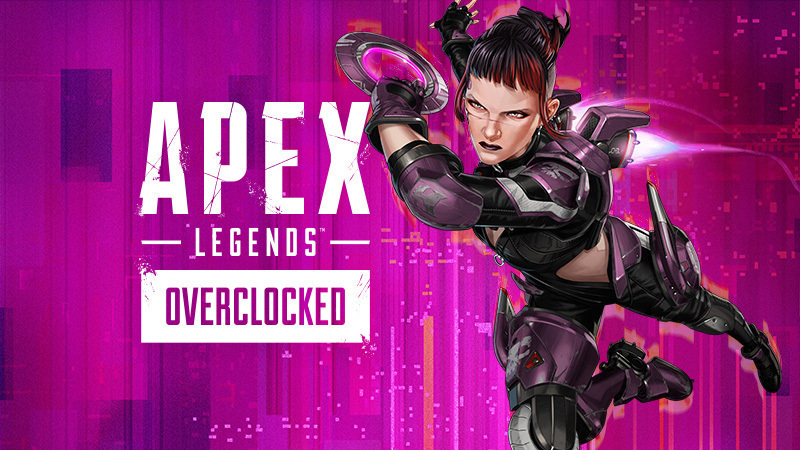
Cyberpsychosis: Risk Economy and Player Self-Regulation
Every cyberware activation feeds into a Cyberware Capacity meter. Overfill it and you flip into cyberpsycho mode:
- Turbo movement
- Melee-only
- No guns, no abilities, no shields, no ordnance
This is pure high-risk, high-agency design:
- Self-Inflicted Debuff: Players choose to push their luck for short-term movement spikes, then pay the price if they cross the threshold.
- Tempo Shock: Squads must adapt when their Wildcard suddenly becomes a glass-cannon berserker, forcing on-the-fly comp and positioning pivots.
- Map-Level Counterplay: Immunoblocker syringes and caches scattered across the e-district act as roaming safety valves, turning resource routes into mini-objectives.
From a #gamedev standpoint, cyberpsychosis is a live test of player-controlled corruption—a mechanic that could later be re-skinned into lore events, PvE modes, or future legends with self-buff/self-harm tradeoffs.
Visual Integrity Patch: Small Fixes, Big Signal
A quieter but important visual integrity sweep landed alongside the event:
- Wildcard death boxes no longer display rogue banners, cleaning up post-mortem visual noise.
- The mythic Alternator “Skippy” skin still shows mirrored glyph corruption; the art team has flagged it as unintended and a fix is in active QA.
This is a textbook example of how a mature live service balances spectacle with clarity. In a season already leaning hard into neon and glitch aesthetics, Respawn is clearly drawing a line: visual chaos is thematic, not systemic. Players get the vibe without losing the ability to parse fights.
Squad-Link Protocol: Social Systems vs. Solo Queue Attrition
The Squad-Link Protocol Online report is the most meta piece of the week. Respawn is openly acknowledging the “solo queue meat grinder” and pushing a sanctioned recruitment thread where players log:
- Region & platform
- Preferred modes and rank
- Legend mains
- Comms profile and discipline
The objective: pre-built fireteams that behave less like three randoms and more like “precision-calibrated units.”
From a systems-design lens, this is a lightweight social tool aimed at:
- Reducing churn from frustrated solo players
- Improving match quality without rewriting the matchmaking backend
- Collecting soft data on how players self-identify (aggression level, comms style, role preference)
For #indiegame and smaller #gamedev teams watching from the sidelines, this is a scalable lesson: you don’t always need a new in-client feature. Sometimes a curated, structured community thread can meaningfully shift player experience at minimal engineering cost.
Watch: Transmitting Gameplay footage from the field: Cyberpunk Event Deep Dive
Development Outlook: What This Week Signals for Apex Legends
Zooming out, this week in Apex Legends reads like a live-ops R&D sprint:
- The cyberware kit tests extreme mobility and self-risk mechanics without permanently warping the competitive ecosystem.
- Cyberpsychosis explores player-driven debuffs and tempo disruption, a design space ripe for future legends or LTMs.
- Visual fixes reinforce a commitment to readability over raw spectacle, crucial in a game already running at the edge of sensory overload.
- The Squad-Link initiative shows Respawn investing in social scaffolding as much as weapon tuning or map rotations.
For players, the message is clear: Apex is still willing to experiment aggressively while tightening the bolts on core readability and squad cohesion. For developers, this week is a case study in how to run a high-risk live event, mine it for design data, and still ship the unglamorous fixes that keep a competitive shooter viable long-term.
Sources and corrections
This archive entry does not have a verified article-source list. Images and video embeds alone are not evidence for every claim.
Found an error? Request a correction. Include the passage and a supporting source.
Your games, in one place
Keep up with Apex Legends
Follow this game to collect its posts in your personal feed. Come back to see what you missed.
More to read about Apex Legends
- Source-checked briefApex Legends Wildcard AMA set for October 14
A Wildcard-focused Apex Legends AMA is scheduled for October 14, 2026, from 10 a.m. to noon PT. Players can post questions ahead of time and return when responses begin. The Wildcard AMA is...
- Source-checked briefApex Legends tests longer Plat+ matchmaking queues
Apex Legends has begun a matchmaking test for Platinum-and-higher players that may lengthen queues while the system seeks closer-ranked lobbies. The test applies to Plat+ players across every...
- Source-checked briefApex Legends fixes weapon exploits
Apex Legends received fixes for multiple weapon exploits, including issues that could alter magazine firing, reload speed, and fire rate. The announcement says anti-cheat work and enforcement...