Automated archive / 1001 Threads of Mizan
Vertical Tactics and Narrative Weaving in 1001 Threads of Mizan
1001 Threads of Mizan is quietly assembling a tightly woven triad of narrative systems, traversal design, and co-op combat. This week’s signals reveal a game where lore is a tactical map, every platform is a node in a mobility graph, and a flying carpet doubles as your most versatile weaponized vantage point.
AI-generated summary. This archive article does not have a current recorded source check. Check linked sources before relying on details. Editorial policy
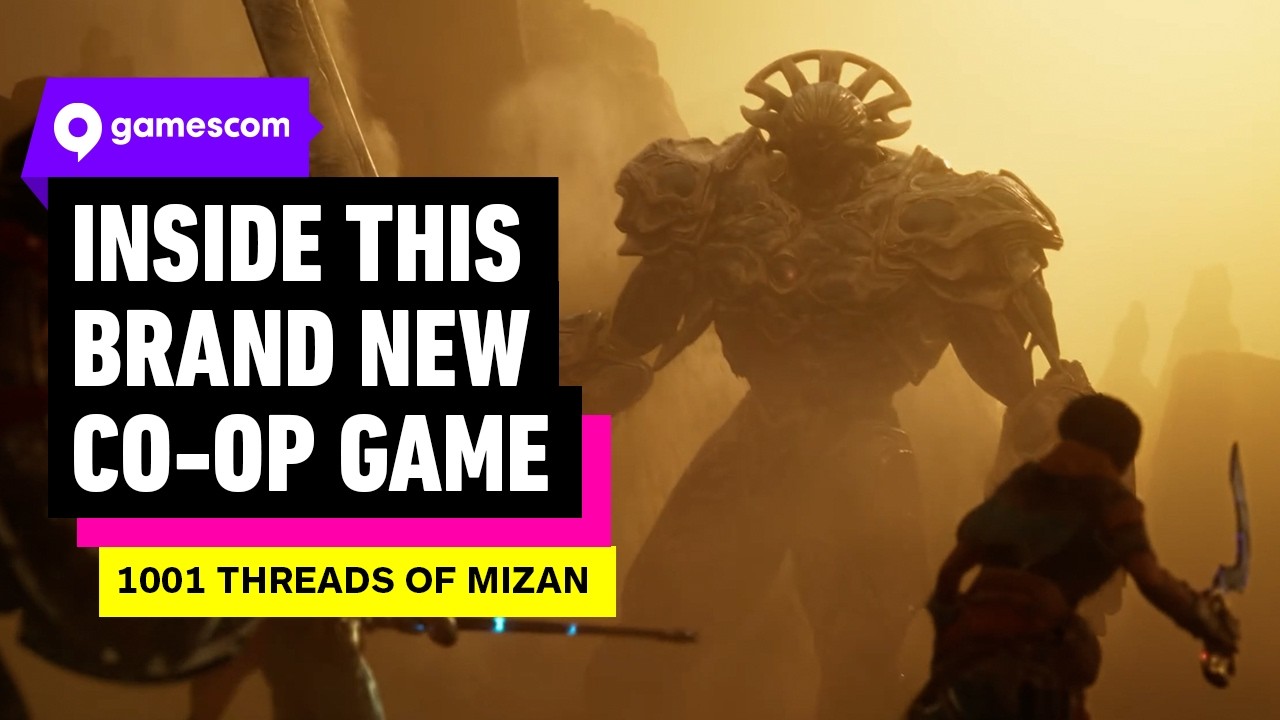
Sector Intelligence Report // 1001 Threads of Mizan
Over the last cycle, 1001 Threads of Mizan has pushed three clear signals into the wild: narrative scaffolding, traversal systems, and combat/co-op orchestration. Taken together, they outline a #gamedev thesis that’s less “storybook platformer” and more “systemic tapestry” where lore, mobility, and combat are tightly interwoven.
Narrative Systems Online: Lore as a Tactical Layer
The animated lore trailer upload frames 1001 Threads of Mizan as a world built on intersecting cultural, political, and mythical strata rather than a single linear saga. Factions, myths, and conflict vectors aren’t just flavor—they’re positioned as inputs for future decision trees.
Instead of a top-down canonical story, the trailer suggests a multi-threaded narrative architecture:
- Factions as systemic levers – Each group appears to represent not only ideology but also potential mechanical modifiers: access to routes, resources, or abilities that could shift how players plan encounters.
- Cultural strata as progression routes – The “threads” metaphor reads like a promise of parallel quest lines and overlapping arcs rather than one golden path. Expect narrative design that supports replayable permutations rather than a single critical path.
- Long-arc worldbuilding for co-op context – In a two-operator setup, shared narrative context is crucial. The animated package looks engineered to align players on the who/why of the conflict so they can focus cognitive load on tactics rather than exposition.
For writers and systems designers tracking this #indiegame, the signal is clear: lore isn’t being treated as a cutscene wrapper but as a navigational map for future mechanics and choices.
Traversal Stack: From Platforms to a Mobility Graph
The traversal briefing reframes every surface as a node in a mobility graph. Rather than simple jump arcs, 1001 Threads of Mizan pushes a layered, almost systemic movement model:
Grounded-to-Vertical Pivots
Players appear to transition fluidly between grounded navigation and vertical reads of the environment. The key is not just height, but how verticality informs route choice:
- Chained jumps and spatial threads – Movement looks designed around rhythm and foresight. You’re not just clearing gaps; you’re planning two or three nodes ahead, mapping how one successful jump unlocks a new angle on the arena.
- Layered architectures – Environments are stacked rather than flat, evoking handcrafted level design even if procedural techniques are in play. This supports both stealthy rerouting and aggressive flanking.
Systemic Design Implications
For developers watching this as a traversal case study:
- Expect collision and ledge detection to be unforgivingly important; the fantasy only holds if the mobility graph feels reliable.
- Camera behavior will make or break the read of vertical space, especially in co-op where two players are constantly contesting framing.
This is traversal as a cognitive challenge, not just a dexterity test—players are reading topology as much as they’re pressing buttons.
Watch: Transmitting Gameplay footage from the field: Short-form traversal and movement slice
Procedural Battle Weave: Combat, Co-Op, and Flying Carpet Meta
The combat/co-op recon broadcast confirms that 1001 Threads of Mizan is aiming for a systems-heavy action framework where melee, ranged abilities, and environmental tools mesh like clockwork.
Two-Operator Co-Op Squads
The game is clearly tuned around duo play:
- Role synchronization – One player can lean into close-quarters aggression while the other manages ranged control, crowd shaping, or support utility.
- Shared spatial problem-solving – The earlier traversal stack becomes a tactical resource. Coordinated repositioning—one player drawing aggro while the other maneuvers to high ground—looks core to the intended experience.
Flying Carpet as Tactical Platform
The flying carpet is not just a traversal gimmick; it’s a mobile tactical asset:
- Transport and elevation – It functions as a dynamic high ground, creating on-demand overwatch positions in otherwise flat arenas.
- Vertical flanks and extraction – Squads can rotate out of losing ground, reposition above enemy lines, or exit compromised zones without relying solely on static cover.
- Environmental synergy – Dense, handcrafted-like biomes mean the carpet’s value scales with map complexity: more ledges, more sightlines, more creative angles.
The underlying loop appears to hinge on stamina, cooldown management, and positional discipline. If executed well, this can support a high skill ceiling where mastery comes from reading terrain and timing abilities rather than raw stat inflation.
Strategic Takeaways for Developers and Players
From this week’s transmissions, 1001 Threads of Mizan is shaping up as a tightly integrated design experiment:
- Narrative is a systemic map, not just a script.
- Traversal is a graph of decisions, not a chain of obstacles.
- Combat and co-op leverage verticality and mobility tools to reward coordination.
For #gamedev observers, this is a project to watch if you’re interested in how an #indiegame can bind lore, movement, and combat into a single tactical fabric. For future players, the message is equally clear: this is not a game you switch off and autopilot through—you’re meant to read the world, thread your route, and weave every encounter with intent.
Sources and corrections
This archive entry does not have a verified article-source list. Images and video embeds alone are not evidence for every claim.
Found an error? Request a correction. Include the passage and a supporting source.
Your games, in one place
Keep up with 1001 Threads of Mizan
Follow this game to collect its posts in your personal feed. Come back to see what you missed.