Automated archive / 1001 Threads of Mizan
Mapping the Combat Weave and Vertical Traversal of 1001 Threads of Mizan
1001 Threads of Mizan just dropped a tightly linked trio of updates that reveal how its lore, traversal, and co-op combat are being woven into a single tactical fabric. This week’s signals point to a systems-heavy indiegame that treats narrative as infrastructure, not window dressing.
AI-generated summary. This archive article does not have a current recorded source check. Check linked sources before relying on details. Editorial policy
Sector Intelligence Report: 1001 Threads of Mizan – Week in Review
The last seven days of signals from 1001 Threads of Mizan sketch out a clear intent: this #indiegame isn’t just building a pretty mythic shell, it’s wiring a dense systems stack beneath a story-first surface. Between a formal lore upload, a traversal breakdown, and a first look at combat and co-op, we’re starting to see how narrative, movement, and battle interlock into a single procedural "weave"—and why this matters for #gamedev.
1. Tactical Lore Upload: Narrative Systems Come Online
The “Official Animated Lore Trailer” transmission frames Mizan less as a backdrop and more as an active narrative system. The report calls it an "animated lore recon package," but the subtext is that this is a systems map disguised as a trailer.
Key reads from the intel:
- Multi-threaded story routes: The world is presented as intersecting narrative vectors—factions, myths, and conflicts that feel designed to support branching decision trees rather than a single golden path.
- Cultural strata as design scaffolding: References to "cultural strata" and "long-arc worldbuilding" suggest the team is treating lore as a mechanical substrate. Expect reputation systems, factional alignment, or at least narrative gating that meaningfully changes playthroughs.
- Pre-design calibration: The note explicitly recommends "full viewing for context calibration before any design, writing, or system-balance operation." That’s the kind of directive you’d see on an internal wiki: narrative is the first constraint, not the last layer of polish.
For #gamedev teams tracking this project, the lesson is clear: centralize your lore as a reference object. Mizan’s approach implies that combat roles, traversal affordances, and even co-op synergies will be justified in-world, not bolted on top.
2. Procedural Traversal: The Environment as a Mobility Graph
The “Procedural Traversal Pipeline” update shifts the focus from story to spatial logic. The language here—"players pivot between grounded movement and vertical reads of the environment"—frames traversal as a continuous decision space, not just a set of jumps.
What stands out:
- Grounded ↔ Vertical duality: Players aren’t just running and jumping; they’re "reading" vertical layers of architecture. Think of each ledge, balcony, and rooftop as a node in a mobility graph.
- Chained movement as planning, not twitch: The intel highlights "chaining jumps and spatial threads"—a phrasing that implies route planning over pure reflex play. The best players will likely pre-visualize multi-step paths through complex layouts.
- Layered architectures, not flat arenas: The mention of "layered architectures" suggests level design that supports stacked combat and traversal loops. Verticality isn’t just flavor; it’s part of the core navigation puzzle.
From a #gamedev perspective, this reads like a traversal system that sits somewhere between Prince of Persia: The Lost Crown and Mirror’s Edge, but with a heavier emphasis on systemic readability—players parsing the environment as a graph of possibilities rather than a fixed parkour line.
3. Procedural Battle Weave: Combat, Co-Op, and Flying Carpets
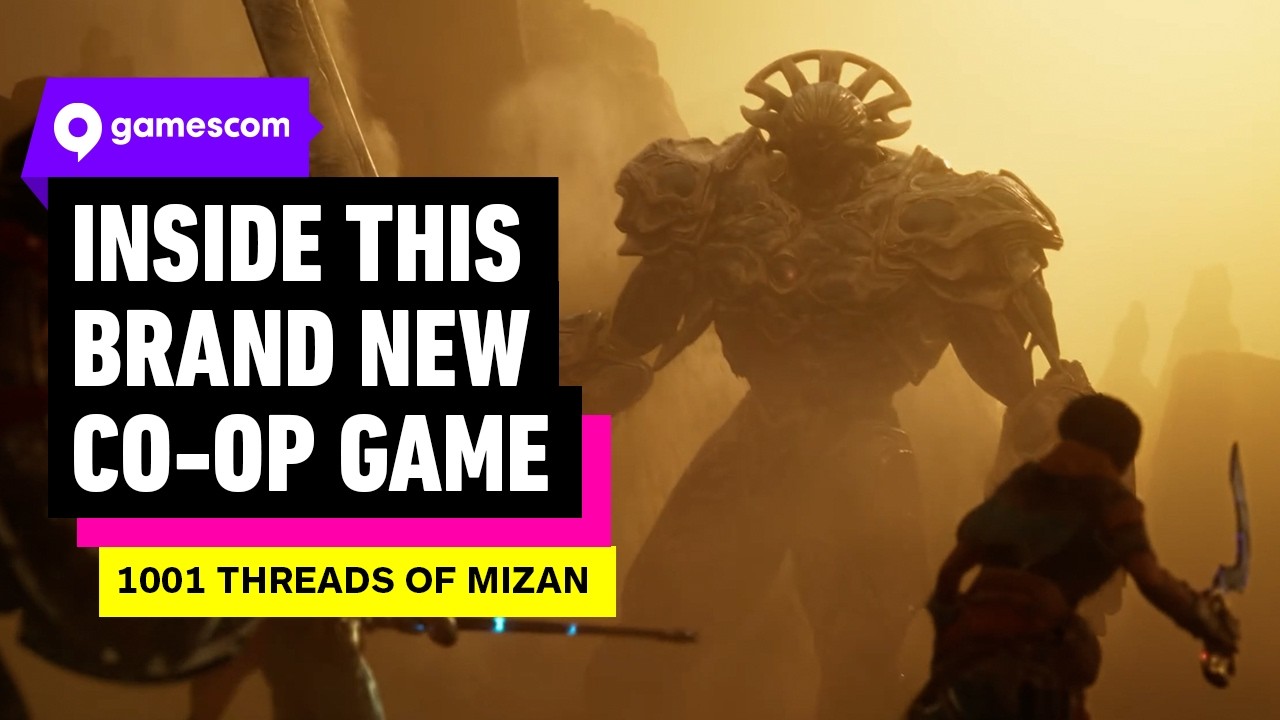
The most revealing drop is the “First Look at Combat, Co-Op, and Flying Carpet Exploration.” Here, the project’s design thesis comes into focus: combat, co-op, and traversal are not siloed—they form a single tactical fabric.
Key system notes:
- Interlocking combat roles: The report describes a "systems-heavy action framework" where melee, ranged abilities, and environmental tricks interlock "like clockwork." That phrasing suggests:
- Distinct yet complementary builds or loadouts.
- Environmental affordances (traps, vertical cover, destructibles) that meaningfully shape optimal play.
- Two-operator co-op squads: Co-op is tuned for two players, not a generic 1–4 spread. That’s a strong signal that encounters, enemy behaviors, and ability design are all calibrated around duo synergies—think one player controlling space while the other executes precision burst or mobility plays.
- Flying carpet as tactical platform: The flying carpet isn’t just a traversal gimmick. It’s explicitly framed as:
- Transport: Fast repositioning across complex biomes.
- Tactical elevation: Creating on-demand high ground for ranged pressure or overwatch.
- Extraction vector: A mobile escape or evac platform when fights collapse.
This turns the carpet into a shared resource that both players must negotiate—who pilots, who shoots, who drops off where? For designers, this is a smart way to bind co-op communication and positioning into a single, iconic mechanic.
4. The High-Skill Ceiling: Stamina, Cooldowns, and Positioning
The intel recommends further observation of stamina, cooldown, and positioning loops for "high-skill ceiling potential." That line is doing a lot of work:
- Stamina as a hard constraint: Stamina likely gates both mobility and offense, forcing players to balance aggression with repositioning.
- Cooldown-driven ability layering: Cooldowns imply a rhythm of burst windows and downtime, where players must leverage terrain and the flying carpet to survive between spikes.
- Positioning as the real resource: With vertical flanks, overwatch from the carpet, and dense biomes, the strongest players won’t just "do more DPS"—they’ll extract more value from the map.
For #gamedev observers, the interesting experiment here is how systemic combat is being fused with a mythic, culturally grounded aesthetic without diluting either side. 1001 Threads of Mizan is positioning itself as a case study in how #indiegame teams can chase depth without losing identity.
Closing Read: A World Built for Systems-Driven Storytelling
Across this week’s transmissions, 1001 Threads of Mizan is presenting a cohesive thesis:
- Lore is a systems bible, not a marketing afterthought.
- Traversal is a mobility graph, not just jump arcs.
- Combat and co-op form a procedural battle weave, anchored by a flying carpet that doubles as a tactical Swiss army knife.
If the final execution matches the intent outlined in these reports, Mizan could land as one of the more instructive #gamedev case studies in blending deep systemic design with strong narrative and cultural framing—a genuinely promising development update for anyone tracking the project’s trajectory.
Sources and corrections
This archive entry does not have a verified article-source list. Images and video embeds alone are not evidence for every claim.
Found an error? Request a correction. Include the passage and a supporting source.
Your games, in one place
Keep up with 1001 Threads of Mizan
Follow this game to collect its posts in your personal feed. Come back to see what you missed.