Back to guides and news
Gaming
March 9, 2026
Sector Intelligence Report: Pokopia’s Micro-Systems Are Quietly Redefining the Life-Sim Battlefield
Sector Intelligence Report: Pokopia
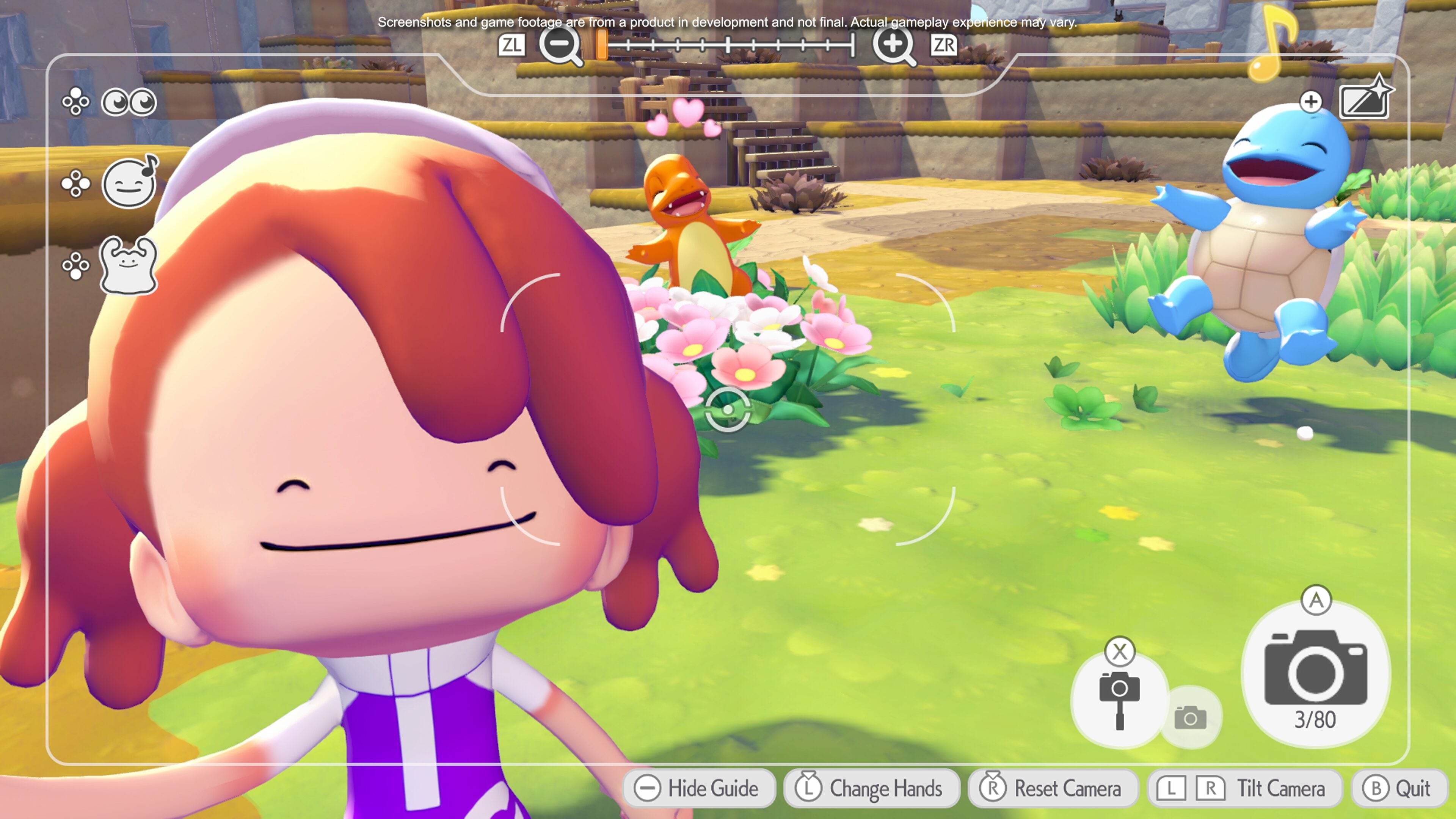
Pokopia has entered March not just as another cozy life-sim, but as a systems-first experiment in how tiny design decisions can compound into large-scale player engagement. This week’s field intel points to two dominant vectors: a micro-interaction doctrine that’s driving immersion far beyond genre baselines, and a daily-resource loop centered on Mysterious Feathers that quietly teaches players how to think like systems designers. For #gamedev and #indiegame teams watching from the perimeter, Pokopia is rapidly becoming a live case study in how to weaponize small details.
Pokopia’s systemic village life in motion
Micro-Interaction Doctrine: The Small Things Doing Heavy Lifting
A Fabric of Feedback, Not Isolated Features
Field observation highlights Pokopia’s core strength as its micro-interaction fabric—the way tiny responses, animations, and behaviors stitch together into a cohesive world simulation. Instead of relying on a few headline mechanics, Pokopia leans on a dense mesh of small feedback loops:
- Character reactions that subtly shift based on context and timing
- Environmental cues that respond to player presence and actions
- Micro-animations that turn routine tasks into tactile, readable moments
From a design-ops perspective, this is a deliberate doctrine: stack subtle feedback, achieve strategic engagement. Each interaction is low-cost in isolation, but their aggregate effect is a world that feels unusually responsive for a life-sim.
Beyond Cozy: Life-Sim as Systems Training
For developers tracking Pokopia as a reference project, the key signal is that these micro-interactions aren’t just about “vibes.” They:
- Increase state legibility, helping players understand what the simulation is doing
- Build trust in the system, because the world consistently acknowledges player input
- Encourage experimentation, as players probe for new reactions and edge cases
This is where Pokopia quietly diverges from traditional comfort-first life-sims. It’s using emotional texture as an on-ramp into systemic literacy—a pattern that #gamedev teams can repurpose even in non-sim genres.
Daily Systems Protocol: Mysterious Feathers as a Design Lens
The Feather Loop as a Resource-Routing Exercise
This week’s activity feed flags a recurring daily operation: locating and converting Mysterious Feathers into progression resources. On paper, it’s a standard daily challenge. In practice, it’s a compact resource-routing exercise that trains players to think in loops, not in isolated tasks.
Key operational beats:
- Spawn behavior tracking – Players are incentivized to map spawn locations and timings, essentially reverse-engineering the system.
- Route optimization – Efficient feather farming becomes a pathfinding and time-management puzzle.
- Turn-in timing – The optimal moment to convert feathers into progression rewards adds a light layer of risk/reward calculus.
Each daily reset reframes the same problem: how do you clear this loop with minimal wasted cycles? For designers, this is a textbook example of how to make dailies feel like systems puzzles instead of checklist chores.
Why This Matters for Developers
For #indiegame and #gamedev teams, Pokopia’s feather protocol offers a few actionable takeaways:
- Teach systems thinking through repetition – Recurrent challenges can onboard players into deeper systemic understanding if structured as optimization problems, not errands.
- Use small stakes, high clarity – Low-risk loops like Mysterious Feathers reduce frustration while still rewarding mastery.
- Tie dailies to world logic – Because feathers exist inside the broader simulation fabric, they feel diegetic rather than bolted-on.
March Launch Window: Pokopia on the Radar
March has become a dense launch corridor, with Pokopia sharing calendar space with Marathon, Monster Hunter Stories 3, and other high-profile releases. For players, that’s backlog pressure. For developers, it’s a stress test: can a life-sim with a softer aesthetic command attention in a month loaded with legacy IP and combat-forward experiences?
Pokopia’s answer is to compete not on spectacle, but on systemic stickiness. The micro-interaction doctrine keeps the world feeling alive minute-to-minute, while the Mysterious Feathers protocol introduces a repeatable, optimization-friendly loop that can quietly anchor daily engagement.
In a crowded March slate, Pokopia isn’t trying to shout the loudest. It’s playing the long game: building retention through dense, interlocking systems that reward curiosity and routine alike.
Strategic Takeaways for Observers
For studios, designers, and systems engineers monitoring Pokopia’s trajectory, this week’s intel resolves into a few clear signals:
- Micro beats macro – A high volume of small, consistent feedback loops can rival big-ticket features in perceived depth.
- Dailies as design classrooms – Properly structured daily challenges can onboard players into your systemic logic without explicit tutorials.
- Simulation as engagement engine – Pokopia’s world simulation isn’t just set dressing; it’s the backbone of its retention strategy.
As March’s release grid tightens, Pokopia is emerging as a quiet but sophisticated contender—less a cozy distraction, more a live case study in how to architect a life-sim that thinks like a systems game.
Keep following Pokopia
News, guides, posts, and game details in one place.
Open the game hub, then save it to build your personal Breach feed.
More images and video


About the game
Pokopia
Unknown Studio
Mission Intelligence: Pokopia is emerging as a new node in the gaming landscape, flagged for closer surveillance by players and developers alike. Current intel positions it at the intersection of accessible play and evolving live content, making it a potential hotspot for community engagement and retention strategies. Analysts are monitoring how Pokopia’s systems, pacing, and aesthetic identity could influence player behavior across casual and core sectors. Keywords: Pokopia, live service, community-driven gameplay, retention design, player engagement.
Open game pageTopics
Pokopia
Pokopia daily challenge
Mysterious Feathers guide
Pokopia world simulation
life sim game design
micro-interactions in games
#gamedev
#indiegame
March 2026 game releases
game systems design