Automated archive / Minecraft
Minecraft Breaches Real Space with ‘Minecraft World’ and Broadcast-Scale Expansion
Minecraft spent the week breaching real space, broadcast grids, and long-term roadmaps—anchored by a £50m UK theme park land and a fresh Minecraft Live broadcast. For developers, it’s a live case study in how a sandbox game evolves into a multi-channel platform without losing its design DNA.
AI-generated summary. This archive article does not have a current recorded source check. Check linked sources before relying on details. Editorial policy
Strategic Overview
Minecraft’s last seven days read like a franchise entering its next phase of empire-building. Mojang is pushing the IP on three fronts simultaneously:
- Physical-world expansion via a full-scale UK theme park land, Minecraft World.
- Broadcast and platform integration through Xbox’s live programming grid.
- Forward-facing feature roadmap delivered in the March 2026 Minecraft Live.
For #gamedev teams and #indiegame studios, this week’s moves show how a mature sandbox IP evolves beyond “just a game” into a multi-channel ecosystem—while still anchoring everything in core minecraft development updates and community touchpoints.
Voxel Frontiers: ‘Minecraft World’ Theme Park Intel
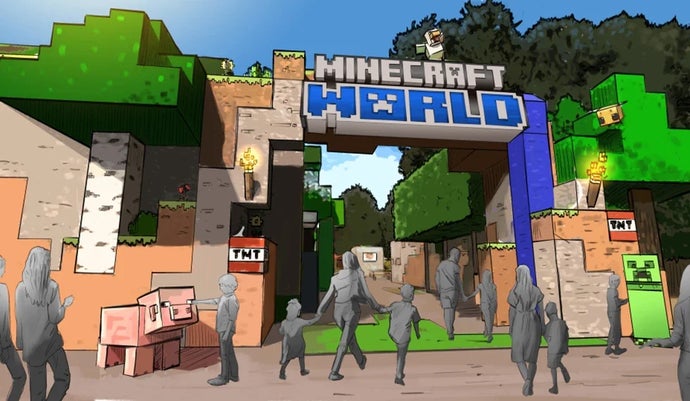
Mojang has confirmed a strategic alliance with Merlin Entertainments to build Minecraft World, billed as the first full-scale Minecraft theme park land on the planet. The site: Chessington World of Adventures in the UK, with a reported £50m investment and a projected 2027 opening window.
Design Signals for Developers
Early intel frames Minecraft World as a family-focused, exploration-led land rather than a pure thrill-ride zone. Key signals relevant to game designers:
-
IRL Block-Building & Exploration Circuits
The language around “real-world block-building” and “exploration circuits” suggests interactive zones where visitors construct, trigger, or route experiences—a direct translation of minecraft’s core verbs (build, explore, survive) into physical design. -
Throughput as a Design Constraint
Phrases like “tuned for maximum player throughput” are essentially theme-park difficulty curves. Instead of frame rate, the bottleneck is human flow. This mirrors live-service #gamedev thinking: design attractions as repeatable loops with minimal friction and clear feedback. -
Brand Fusion: Physical Rides x Digital Legend
Expect cross-channel storytelling: in-park quests that unlock digital cosmetics, time-limited challenges, or map seeds. For #indiegame creators, this is a high-profile case study in transmedia systems design—keeping mechanics coherent while crossing from voxel space to real space.
The broader takeaway: Minecraft is formalizing itself as an experiential platform, not just a sandbox game. That repositions expectations around long-term minecraft development updates: every feature tweak now lives in a wider IP strategy.
Broadcast-Scale Expansion: Minecraft Taps into Xbox Live Programming
Minecraft is also being wired deeper into the Xbox Live content grid, with the game entering Microsoft’s weekly live-feed rotation. This is less about a single patch and more about how the game is surfaced to audiences:
-
Curated Events & Spotlight Streams
Expect regular, scheduled appearances: themed weeks, creator showcases, seasonal events, and possibly synchronized in-game activities. -
Ecosystem Synergies
Tight integration with Xbox’s “This Week on Xbox” format means minecraft can be messaged like a live TV channel, not just a product listing. For developers, this is a reminder that distribution design—how and when your game is seen—is becoming as critical as level design.
For #indiegame teams watching from the sidelines, the lesson is clear: even without Minecraft’s scale, recurring, predictable broadcast beats (Dev Streams, patch breakdowns, event calendars) can transform a static release into an ongoing service.
March 2026 Minecraft Live: Roadmap and Systems Evolution
Watch: Transmitting Gameplay footage from the field: Minecraft Live – March 2026 Feature Broadcast
March 2026’s Minecraft Live broadcast served as the central uplink for future-facing changes across the ecosystem. While the granular patch notes sit outside this report’s scope, the strategic framing is clear:
1. Core Gameplay Refinements
Mojang continues to iterate on survival-sandbox infrastructure—the underlying systems that keep minecraft’s loop fresh: exploration incentives, progression pacing, and world-generation logic. For #gamedev practitioners, the key pattern is incremental, ecosystem-aware iteration rather than shock-value overhauls.
2. Community-Facing Initiatives
The broadcast positioning emphasized:
-
Creator and server ecosystem support
Expect tools, APIs, or guidelines that make it easier for creators to build persistent experiences. -
Education and accessibility hooks
With Minecraft Education and broader outreach, Mojang keeps the IP embedded in classrooms and learning environments—expanding the funnel of future builders, modders, and designers.
3. Long-Horizon Planning
Minecraft Live framed upcoming features not as isolated updates, but as steps in a multi-year evolution. The messaging syncs cleanly with the 2027 theme park target: on-screen systems, off-screen experiences, and broadcast beats converging into a unified roadmap.
Sector Takeaways for Developers
-
Minecraft as a Case Study in Platformization
Between the UK theme park, Xbox Live integration, and the Minecraft Live roadmap, the game is now a platform spanning physical, digital, and broadcast layers. -
Designing for Multiple Spaces
Mojang is designing mechanics and stories that can survive translation from voxel worlds to physical queues, from YouTube streams to classroom PCs. For #indiegame studios, this is a prompt: how portable are your game’s core verbs across mediums? -
Updates as Narrative, Not Just Patches
Each minecraft development update now feeds into a broader narrative of expansion. The lesson: treat your changelog as storytelling infrastructure, not just technical documentation.
Minecraft’s current trajectory shows a mature IP doubling down on coherent, multi-channel growth. For developers tracking sector intelligence, this week marks a clear inflection point: the block game isn’t just expanding—it’s standardizing what cross-medium game design looks like at industrial scale.
Sources and corrections
This archive entry does not have a verified article-source list. Images and video embeds alone are not evidence for every claim.
Found an error? Request a correction. Include the passage and a supporting source.
Your games, in one place
Keep up with Minecraft
Follow this game to collect its posts in your personal feed. Come back to see what you missed.