Automated archive / Metro 2039
Metro 2039 Locks in on Next‑Gen Underground Warfare
Metro 2039 is rearming the underground war with denser ruins, heavier atmosphere, and next‑gen radiation as 4A Games targets a systems‑forward Xbox First Look reveal. For developers and analysts, this isn’t just another sequel—it’s a live case study in how to sharpen linear shooters for a post‑cross‑gen era.
AI-generated summary. This archive article does not have a current recorded source check. Check linked sources before relying on details. Editorial policy
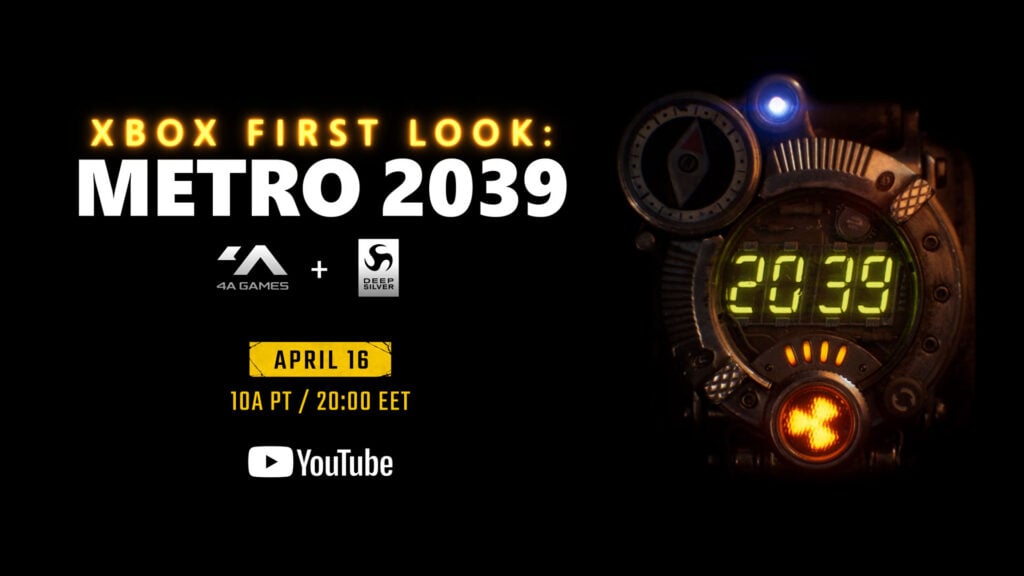

Sector Intelligence Report: Metro 2039
The Metro network is humming again. Over the last seven days, 4A Games and Deep Silver have quietly spun up a full-spectrum comms campaign for metro 2039, positioning it as the franchise’s first true next‑gen underground warfare deployment. The signals are still fragmentary, but the pattern is clear: denser ruin simulation, heavier atmosphere, and a renewed focus on systemic survival loops that push both hardware and design.
This week’s Xbox First Look: METRO 2039 broadcast is the primary data spike. For #gamedev and #indiegame teams watching from the sidelines, it’s less about the marketing beat and more about what it telegraphs: how a veteran AA/AAA hybrid studio like 4A is recalibrating its pipeline for a post‑cross‑gen landscape.
1. Xbox Showcase: First Look as Engine-Level Manifesto
The activity feed frames Thursday’s Xbox stream as a tactical briefing: expect visual overhauls, combat pacing intel, and narrative deployment protocols. That wording matters. It suggests the presentation won’t be a pure cinematic flex; it’s being pitched as a systems‑forward reveal.
Key inferred pillars:
- Next‑gen ruin density – “Denser ruins” and “next-gen radiation in every corridor” imply a move toward more granular environmental simulation: volumetric particulate, dynamic lighting in tight spaces, and likely more reactive destruction. For engine engineers, this is a test case for how far you can push fidelity in claustrophobic scenes without sacrificing frame pacing.
- Atmospheric load as a feature, not a byproduct – Metro has always been about mood, but calling out “heavier atmosphere” and “spectral lighting” indicates a deliberate investment in lighting pipelines and fog/volumetric stacks. Expect 4A to lean hard on hardware‑accelerated ray tracing or equivalent GI solutions to sell the underground as a living, suffocating entity.
- Combat pacing as a tunable system – The feed explicitly highlights “combat pacing.” That’s dev‑speak for encounter design and AI behavior tuned around tension curves, not just bullet counts. Look for segmented arenas, sound‑driven AI states, and more nuanced stealth‑to‑gunfight transitions.
For studios monitoring development update cycles, this Xbox slot is effectively Metro 2039’s thesis statement: this is how 4A intends to scale a linear, authored experience in an era obsessed with open‑world bloat.
Watch: Transmitting Gameplay footage from the field: Metro 2039 Official Announcement Teaser
2. Artyom’s Legacy and the Underground War’s New Ruleset
The “Deployment Teaser” language is careful: “Artyom’s legacy is reactivating” rather than simply “Artyom returns.” That framing opens multiple design doors.
From a narrative‑systems perspective, this suggests:
- Legacy as mechanic – Expect references to prior choices, factions, and scars of earlier conflicts to manifest in level layout, faction hostility, or equipment availability. Legacy may be more than lore; it could be a persistent modifier on the player’s tactical options.
- Claustrophobic corridors as core loop – The feed doubles down on “tactical stealth” and “high‑radiation firefights beneath a collapsing Moscow.” That’s a reaffirmation of Metro’s identity: tight, curated spaces where line of sight, sound propagation, and limited traversal vectors amplify every decision.
- Pre‑war tech as progression spine – The “Metro network hums with pre-war tech” line positions old‑world infrastructure as both narrative artifact and upgrade path. From a #gamedev standpoint, this is a clean way to justify bespoke gadgets and weapon mods while rooting them in diegetic logic.
For designers, Metro 2039 is shaping up as a case study in how to modernize a linear shooter without surrendering control over pacing. Instead of ballooning into open-world sprawl, 4A appears to be doubling down on layered corridors—vertical slices of systemic density rather than horizontal kilometers of map.
3. Next‑Gen Radiation: Tech, Tools, and Pipeline Signals
The repeated emphasis on “next-gen radiation” is more than a lore flourish; it’s likely shorthand for a cluster of rendering and simulation upgrades:
- Dynamic hazard fields – Radiation could shift from static, scripted zones to dynamic fields influenced by wind, open doors, or destroyed cover. That implies localized simulation layers interacting with level geometry.
- Diegetic UI and sensor design – Metro’s minimalist HUD tradition means Geiger counters, visors, and mask filters will again carry UI weight. Expect upgraded material shaders (condensation, cracking, particulate) and more granular mask damage states.
- Hardware-targeted optimization – The Xbox‑first messaging suggests 4A is treating current‑gen consoles as baseline rather than ceiling. For other studios, Metro 2039’s frame‑time profiles will be a useful benchmark for dense interior scenes built around heavy volumetrics and AI.
These elements collectively signal a pipeline tuned for fewer platforms, deeper features. That’s a critical development update for any team deciding when to finally drop cross‑gen constraints.
Watch: Transmitting Gameplay footage from the field: Xbox First Look – Metro 2039 Broadcast
4. Why Metro 2039 Matters Beyond AAA
Even if you’re a two‑person #indiegame outfit, Metro 2039’s rollout offers actionable intel:
- It demonstrates how strong thematic cohesion (radiation, underground war, spectral lighting) can guide both tech investment and marketing copy.
- It shows the value of staggered signals—teaser, confirmation, then a systems‑heavy platform showcase—as a way to keep a community engaged without over‑promising.
- It underlines that scope discipline is a strength: Metro 2039 is selling depth of corridor, not width of map.
As the Xbox First Look stream goes live, the key watchpoints for developers and analysts are clear: how far 4A pushes interior fidelity, how it balances stealth and firefights in constrained spaces, and how “legacy” is encoded into both story and systems.
The underground war is rearming. The question for the rest of the field is simple: do you chase Metro 2039’s density, or counter‑program with breadth?
Sources and corrections
This archive entry does not have a verified article-source list. Images and video embeds alone are not evidence for every claim.
Found an error? Request a correction. Include the passage and a supporting source.
Your games, in one place
Keep up with Metro 2039
Follow this game to collect its posts in your personal feed. Come back to see what you missed.