Automated archive / Marathon
Marathon’s Rogue Metropolis Sharpens Its Teeth
Marathon’s latest intel cycle trades comfort for clarity, tightening its extraction-PvP loop with roguelike runs, lethal drones, and ranked predators. Patch 1.0.5.3 and a new “Great Minds and Brave Souls” doctrine signal a shooter where knowledge, courage, and execution are inseparable.
AI-generated summary. This archive article does not have a current recorded source check. Check linked sources before relying on details. Editorial policy

Watch: Transmitting Gameplay footage from the field: Official Marathon Operations Briefing
Sector Intelligence Report // Marathon Weekly Briefing
Breach.gg Field Node // Reporting Window: Last 7 Days
Marathon’s latest telemetry paints a clear picture: Bungie is doubling down on lethal clarity. The extraction-PvP foundation is being pressure-tested on three fronts—narrative philosophy, procedural traversal, and ranked combat—while patch 1.0.5.3 quietly rewires the game’s competitive skeleton. This isn’t a content drop week; it’s a systems week, and the systems are getting meaner, faster, and smarter.
Great Minds, Brave Souls: Lore as a Lethality Multiplier
The new “Great Minds and Brave Souls” briefing reframes Marathon’s fiction as more than environmental dressing. The intel explicitly fuses narrative, philosophy, and mortal risk into a single operating principle: knowledge without courage is a failed build.
From a #gamedev standpoint, that’s a clear signal that Bungie wants cognitive load to matter as much as mechanical skill. Expect:
- Lore-heavy encounters where reading the environment, decoding terminals, or understanding faction doctrine directly informs survival choices.
- Risk-weighted intel: the best information may sit behind the loudest alarms—forcing squads to decide whether a data grab is worth aggroing half the map.
- Narrative as meta-progression: the more you understand Marathon’s world, the better you can route, predict spawns, and anticipate extraction choke points.
This is a sharp pivot away from lore as optional flavor text. In Marathon’s emerging design thesis, story is a weapon—and only brave operators get to wield it.
Procedural Sprint Protocol: Roguelike DNA in a PvP Extraction Shell
Field logs highlight an autonomous runner threading a procedurally shifting metropolis, vaulting micro-gaps at terminal speed. The language here is deliberate: roguelike run cycles, escalating difficulty curves, and precision-tuned hitboxes.
In practice, that suggests Marathon is leaning into:
- Run-based variability: routes, hazards, and possibly certain loot nodes adjust between incursions, preserving replayability and sabotaging static “perfect runs.”
- Speedrunner-friendly readability: clean silhouettes, predictable collision, and consistent hitboxes tuned for players who live in frame-perfect inputs.
- Escalating pressure: the longer a run goes, the more intense the environment and AI responses become—mirroring roguelike tension ramps inside a shared PvP space.
For #indiegame devs watching from the sidelines, this is a high-budget case study in blending roguelike structure with competitive extraction. Successful implementation here could set a new bar for how procedural systems support—not just decorate—PvP.
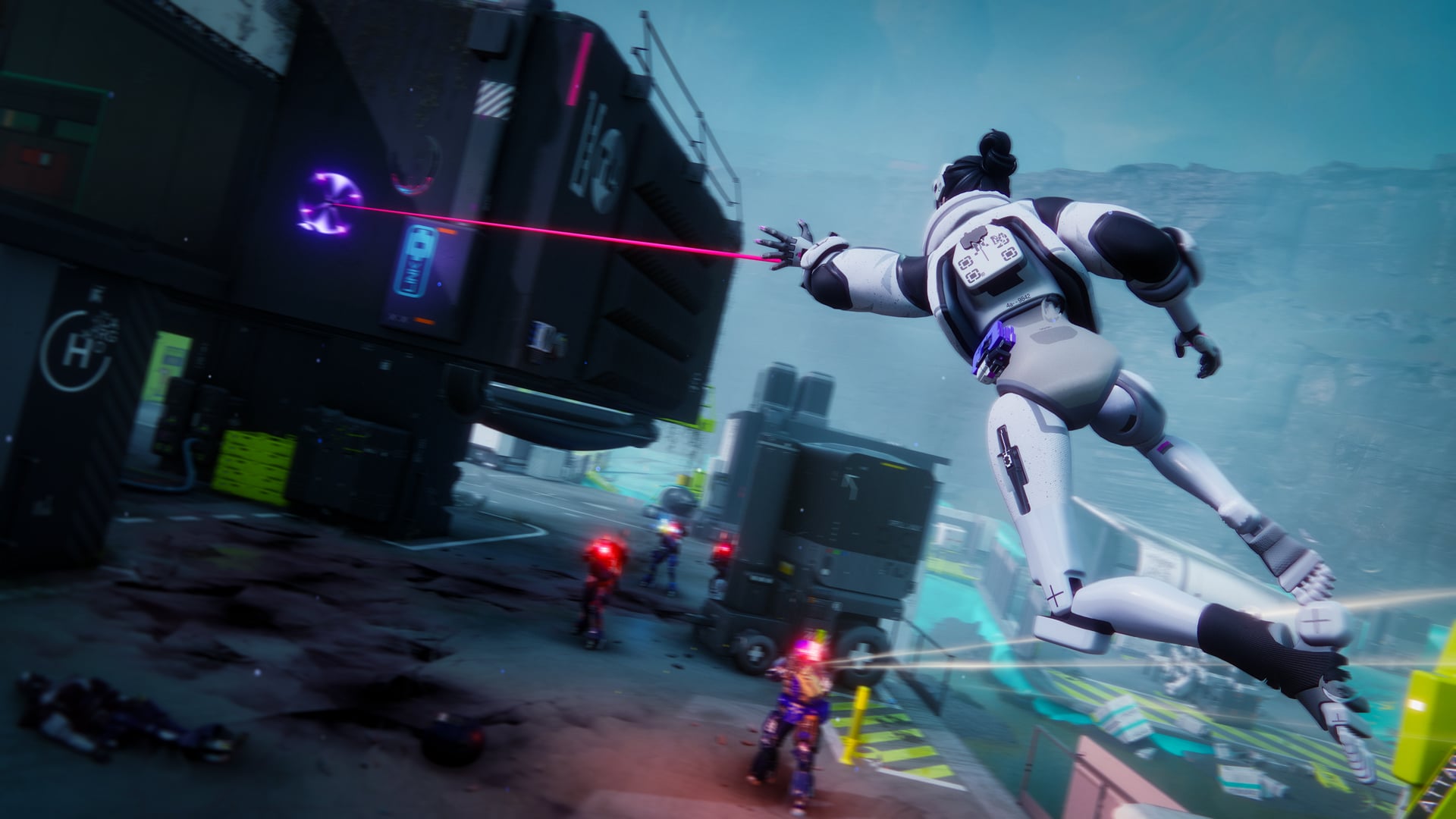
Med-Drone Barrage: Vertical Threats and Moving Turrets
Incident Report #7468 flags a specific pain point: hostile med-drones saturating lanes with precision barrages. The directive is blunt—treat every drone as a mobile turret node.
Design-wise, this does a few important things:
- Verticalizes the fight: drones force players to track threats above and around them, not just down corridors.
- Breaks safe habits: any assumption of “cleared” lanes becomes unstable if drones can pivot into sightlines mid-rotation.
- Creates soft objectives: shutting down spawn funnels for these drones becomes a tactical priority, adding mini-objectives within the larger extraction run.
For competitive players, this means your map knowledge must now include airspace and spawn logic, not just ground-level cover.
Ranked Destroyer: Extraction-PvP for Predators Only
Bungie’s Ranked Destroyer showcase is the clearest articulation yet of Marathon’s intended skill ceiling. The footage and field notes emphasize:
- Lethal time-to-kill that punishes hesitation.
- Tight arena control, where holding angles and predicting rotations matter more than raw aim alone.
- Vertical flanks that reward players who can chain slides, mantles, and wall interactions to out-position their targets.
This is extraction-PvP tuned for high-agency, high-punishment play. Misposition once, and you’re not just losing a duel—you’re potentially losing the entire run’s haul. For the ranked ladder, that kind of stakes-driven design is exactly what keeps a competitive ecosystem sharp.
Watch: Transmitting Gameplay footage from the field: Ranked Destroyer and high-velocity incursions
Patch 1.0.5.3: Quiet Fixes, Loud Implications
Marathon 1.0.5.3 is framed as a stability and balance pass, but the language gives away its competitive ambition:
- Refined combat feedback loops: expect clearer hit confirmation, more readable damage states, and better audio-visual cues for threat detection.
- Smoother network behavior: essential for a game where a single frame of desync can flip a high-value extraction.
- Iterative weapon and ability tuning: ongoing telemetry-driven balance suggests Bungie is watching the meta closely and isn’t afraid to sand down outliers quickly.
For #gamedev observers, 1.0.5.3 is a classic example of live-ops as sport maintenance—small public patch notes masking significant internal data work to keep the ladder honest.
Strategic Outlook: Where Marathon Is Heading Next
Across this week’s intel, a throughline emerges:
- Cognitive risk is being formalized: the “Great Minds and Brave Souls” pillar means lore, intel, and philosophy are now core to survival, not optional reading.
- Runs are getting sharper, not safer: procedural sprint protocols and med-drone barrages collectively increase unpredictability and demand adaptive routing.
- Competitive clarity is the priority: Ranked Destroyer showcases and 1.0.5.3’s tuning reinforce Marathon’s identity as a precision PvP extraction shooter, not a casual looter.
For players, the message is simple: if you want to thrive in Marathon’s neon killbox, you’ll need fast hands, a faster brain, and a squad willing to gamble on high-risk intel grabs. For developers, Marathon continues to be a live case study in how to weld roguelike structure, narrative stakes, and esport-grade PvP into a single, unforgiving loop.
The race isn’t getting shorter. It’s just getting sharper.
Sources and corrections
This archive entry does not have a verified article-source list. Images and video embeds alone are not evidence for every claim.
Found an error? Request a correction. Include the passage and a supporting source.
Your games, in one place
Keep up with Marathon
Follow this game to collect its posts in your personal feed. Come back to see what you missed.