Automated archive / Helldivers 2
Helldivers 2 Dials in Performance Firepower with May 27 Optimization Strike
Helldivers 2 is shifting into a new phase of technical refinement, with a May 27 optimization strike targeting stability, latency, and advanced upscaling across PC and consoles. Paired with an audio hotfix and backend refit, Super Earth’s war machine is being tuned for long-term, high-pressure performance.
AI-generated summary. This archive article does not have a current recorded source check. Check linked sources before relying on details. Editorial policy

Sector Intelligence Report – Week of May 25: Stability, Latency, and the Sound of War
Helldivers 2 command is pivoting hard into technical refinement this week. After months of live-ops chaos, the latest intel points to a clear priority: make every frame, every sound cue, and every connection as lethal and reliable as a well-placed Eagle airstrike.
Across PC, PS5, PS5 Pro, and Xbox, Arrowhead and Nixxes are rolling out a focused performance offensive: a major optimization patch on May 27, an audio pipeline hotfix, and a brief but important backend maintenance window. For players, this is less about flashy new stratagems and more about making the existing arsenal feel razor sharp.
May 27 “Liberty Firmware” Optimization Strike: Frames Are Now Ammunition
The headline move is the Liberty Firmware: Precision Performance Patch landing on May 27. Built with Nixxes, this update targets three clear pillars:
1. Stability Under Maximum Pressure
The patch is explicitly framed around stability when the battlefield is at its worst: dense enemy waves, overlapping explosives, and full squads spamming stratagems. Frame pacing is being tightened and GPU load streamlined, aiming to reduce micro-stutter and hard dips during the exact moments where Helldivers 2 usually buckles.
For a game that thrives on chaos, this is critical. The most punishing moments are where performance regression is felt most acutely—and where deaths feel least fair. A more consistent frame delivery directly raises the skill ceiling and lowers frustration.
2. Latency and Competitive Responsiveness
Command is calling out lower latency as a core pillar, which is notable. Even though Helldivers 2 isn’t a traditional PvP shooter, input latency and network responsiveness are central to its identity as a high-lethality co-op tactics shooter. Cleaner input timing means more reliable dives, rolls, and clutch stratagem calls when a Charger is already mid-sprint.
Expect this to be felt most by veteran players on higher difficulties where milliseconds separate a heroic save from a friendly-fire disaster.
3. Advanced Upscaling: FSR 4.0.3, DLSS 4.5, XeSS 3.0, and PSSR
On the PC front, the patch is a substantial #gamedev and rendering pipeline story:
- FSR 4.0.3 (high-end) for sharper reconstruction and better stability at higher resolutions.
- FSR 3.1.5, DLSS 4.5, and XeSS 3.0 all join the arsenal, giving players a full spread of modern upscalers.
This is a big win for the tech-focused audience and PC performance enthusiasts. It suggests Arrowhead and Nixxes are investing in a flexible, vendor-agnostic rendering strategy—particularly important as Helldivers 2 continues to scale across a diverse hardware base.
On consoles:
- PS5 Pro locks in with PSSR 1, Sony’s in-house upscaling solution, aligning Helldivers 2 with the latest platform-level tech.
- PS5 and Xbox standardize on FSR 3.1, giving both ecosystems a consistent, modern reconstruction baseline.
The messaging is blunt: “No excuse. No stutter.” From a helldivers 2 development update perspective, that’s a strong statement of intent about long-term performance support.
Visual & VRR Enhancements: Smoothing the Chaos
Beyond raw upscaling, the patch introduces VRR support and broader visual optimizations. This is less about peak FPS and more about consistency:
- VRR (Variable Refresh Rate) should significantly reduce perceived judder when frame rates fluctuate, especially during heavy firefights.
- Frame pacing improvements will help ensure that even when the game can’t hold a locked target, frame delivery remains smooth and predictable.
This is the kind of under-the-hood work that doesn’t headline a trailer but fundamentally changes how the game feels in motion—especially on modern displays.
Watch: Transmitting Gameplay footage from the field: Official Helldivers 2 Operations Briefing
From a #indiegame and #gamedev lens, this shows a studio pushing beyond content drops and into long-tail technical stewardship, a necessity for live-service titles trying to maintain momentum beyond launch year.
Audio Front: Machinery of Oppression 6.2.4 Targets Wwise Glitches
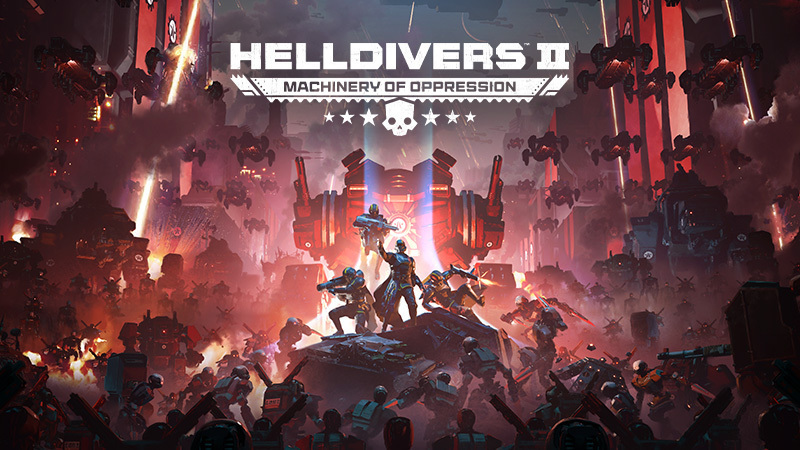
Alongside the visual and performance push, Patch 6.2.4 – Machinery of Oppression quietly tackles a less glamorous but equally important front: audio stability.
The update specifically calls out a Wwise audio fix aimed at:
- Eliminating glitches and dropouts.
- Cleaning up rogue sound channels.
For Helldivers 2, audio is more than atmosphere. It’s a tactical signal layer—hearing a Charger’s roar, a bug breach, or incoming orbital fire is often the first and only warning a squad gets. Restoring clarity here is not just immersion; it’s survivability.
Command acknowledges that known issues remain under surveillance, which suggests an iterative approach to the audio pipeline. Expect more granular sound and mixing passes in subsequent updates as telemetry and player reports continue to roll in.
Backend Maintenance: Super Destroyer Systems Lockdown
On May 19, from 10:00–12:00 CEST, the Super Destroyer network underwent a planned backend refit:
- Core services went offline for a limited window.
- Super Credit purchases and spending were disabled.
- Login friction and delayed reward payouts were expected and communicated upfront.
For a live co-op title, transparent maintenance windows are crucial. The language here—“Hold the line. Adapt. Execute.”—leans into the in-universe military framing while still clearly signaling real-world service disruption.
From a service health standpoint, this refit likely supports the incoming May 27 optimization patch and ongoing account, progression, and store stability. As Helldivers 2 continues to operate at scale, these backend passes are as vital as any front-facing feature.
Strategic Read: A Pivot to Long-Term Technical Maturity
This week’s intel paints a clear picture of Helldivers 2’s current development phase:
- Less about new toys, more about sharpening the existing arsenal.
- Deep investment in cross-platform performance parity via FSR, DLSS, XeSS, and PSSR.
- Iterative clean-up of core systems—audio, backend, and latency—rather than headline-grabbing content.
For players, the next few weeks should feel like the game is simply more reliable under pressure: fewer stutters in four-player chaos, more consistent audio cues, and smoother visual output across PC and console.
For the #gamedev audience, this is a textbook example of a live-service title moving from launch volatility into a more mature, infrastructure-focused cadence—one where technical debt is actively paid down while still expanding platform-level support.
Sector conclusion: the war for Super Earth is still loud, chaotic, and lethal—but under the hood, the machinery is getting leaner, faster, and more disciplined with every patch.
Sources and corrections
This archive entry does not have a verified article-source list. Images and video embeds alone are not evidence for every claim.
Found an error? Request a correction. Include the passage and a supporting source.
Your games, in one place
Keep up with Helldivers 2
Follow this game to collect its posts in your personal feed. Come back to see what you missed.
More to read about Helldivers 2
- Source-checked briefHelldivers 2 team outlines Devoid of Liberty stability work
A Helldivers 2 retrospective says the Devoid of Liberty launch had crash and ultrawide-monitor issues, addressed through two follow-up patches. The team says stability remains its priority between...
- Source-checked briefHelldivers 2 update 7.1.0 revises evacuation missions
Helldivers 2 patch 7.1.0 adjusts enemy spawning for separated players and changes the pacing of Evacuate High-Value Assets missions. It also includes a reinforcement fix and mission UI addition....
- Source-checked briefHelldivers 2 Ironclad Democracy Warbond due September 22
Helldivers 2’s Ironclad Democracy Warbond is scheduled for September 22. The announcement says its unlocks require the base game, Super Credits, and game progression. The Ironclad Democracy...