Automated archive / Helldivers 2
Cyberstan Ignites, Cyborgs Return, and Ranked Dropships Go Lethal in Helldivers 2
Cyberstan is burning, cyborgs are back, and ranked-mode dropships are officially not your loot piñatas. This week, Helldivers 2 doubles down on lethal design, tactical friction, and data-driven balancing in its ongoing war for Super Earth.
AI-generated summary. This archive article does not have a current recorded source check. Check linked sources before relying on details. Editorial policy
Watch: Transmitting Gameplay footage from the field: Official Helldivers 2 Operations Briefing
Weekly Strategic Overview
Helldivers 2 has spent the last week turning the dial from “chaotic” to “catastrophic.” Between the full-scale assault on Cyberstan, the return of the cyborg menace, and a contentious developer clarification on ranked-mode dropships, Arrowhead’s live-ops cadence continues to feel more like an ongoing campaign than a standard patch cycle. For players, that means new fronts to liberate. For #gamedev watchers, it’s a clear case study in how to escalate a live-service war without losing the tactical identity of the game.
This Sector Intelligence Report breaks down the Cyberstan offensive, the design implications of the cyborg revival, and why the ranked dropship debate matters far beyond one balance tweak.
Operation Cyberstan: Machinery of Oppression Goes Live
The current headline operation is the multi-stage push into Cyberstan, framed around the "Machinery of Oppression" update. Narratively, Super Earth is selling it as a liberation campaign; mechanically, it’s a testbed for denser encounters, more layered defensive lines, and higher lethality across the board.
Key design beats emerging from the activity feed:
1. Denser Waves, Layered Killzones
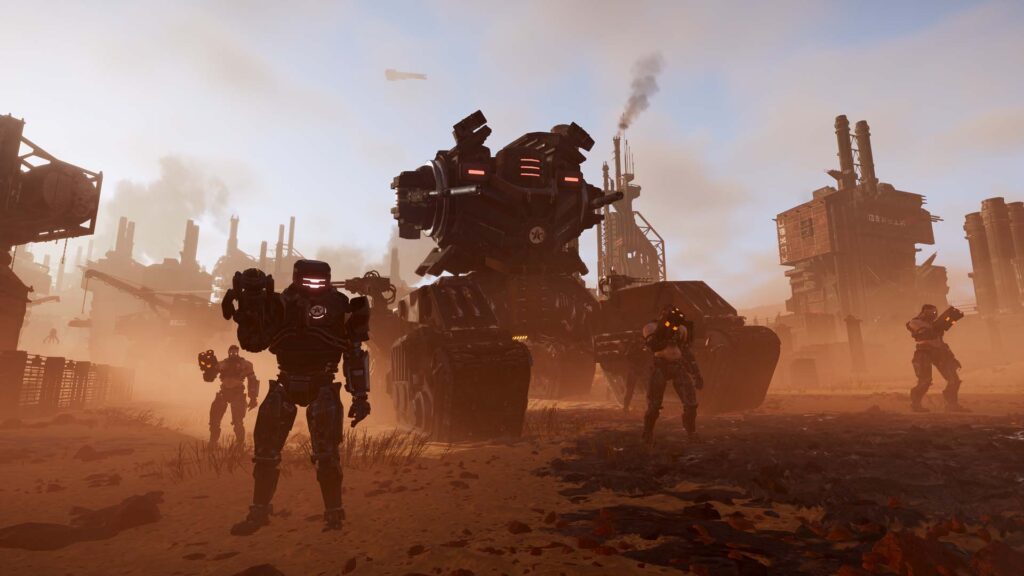
Reports describe Cyberstan as a “mechanized hellscape” — not just more enemies, but better-structured combat spaces. Fortified positions, overlapping fields of fire, and tighter approach corridors suggest the level design team is leaning harder into battlefield readability and intentional chokepoints rather than pure spawn spam. For co-op squads, this pushes Helldivers 2 closer to a tactical horde shooter where pre-planned stratagem sequencing matters as much as twitch aim.
2. Objective Pressure and Friendly Fire as a Feature
The Cyberstan operation emphasizes objective-based missions under constant pressure. Orbital bombardments, stratagem spam, and cramped defensive holds all reinforce one of Helldivers 2’s core pillars: friendly fire isn’t a bug, it’s the combat grammar. From a #gamedev perspective, this is Arrowhead doubling down on friction as a feature — the chaos is curated, not accidental.
3. Tools, Not Power Creep
The language around “upgraded stratagems” and “expanded support options” signals more horizontal growth than raw power creep. New toys appear to broaden tactical expression: better crowd control, more precise takedowns, and deeper squad synergies rather than simply inflating damage numbers. For #indiegame and mid-size studios studying live balance, this is a textbook approach: deepen the sandbox before you widen the stat curves.
Return of the Cyborgs: Legacy Faction, Modern Threat
The re-emergence of the cyborg faction — now framed as a “metal menace” with upgraded war machines — is more than just fan-service. It’s a smart reuse of IP history to diversify encounter design without fragmenting the player base.
1. Heavier Armor, Tactical Variety
The updated cyborgs bring heavier armor and nastier battlefield tech, which implicitly pushes players toward more specialized loadouts and coordinated roles. Anti-armor tools, stagger mechanics, and focused fire become mandatory in a way that softens the risk of any single “meta” stratagem set dominating every mission type.
2. Faction Identity as Design Anchor
By positioning the cyborgs as a distinct flavor of threat compared to Automatons, Arrowhead preserves faction identity as a tuning lever. Automatons can emphasize volume and suppression; cyborgs can lean into armor, attrition, and brutal close-quarters engagements. For live balancing, that gives designers more dials than just global difficulty sliders.
Ranked Mode Dropships: High-Risk Design, High-Salt Feedback
The most revealing intel this week isn’t a trailer, but a developer follow-up on ranked-mode dropships — and the community backlash around them. Players have been vocal about getting deleted by dropships they “barely saw,” with complaints centering on visibility, counterplay, and perceived unfairness.
Arrowhead’s response is blunt: ranked is not meant to be a mindless farming simulator.
1. Dropships as Pacing and Positioning Tools
In the dev commentary, dropships are framed as high-risk, high-reward threats that shape how squads move and hold ground. Rather than functioning as free loot balloons, they’re designed to:
- Punish static, spawn-camp behavior.
- Force repositioning and map awareness.
- Create spikes in tension that break up otherwise predictable combat rhythms.
From a systems-design lens, this aligns ranked mode with a more competitive, mastery-first philosophy: survival is about reading telegraphs and controlling space, not just stacking DPS.
2. Fairness vs. Identity
The studio acknowledges pain points around clarity — unclear telegraphs, tight reaction windows, and oppressive spawn patterns. Crucially, they’re willing to tweak those variables (visual/audio cues, spawn timing, approach vectors) without undercutting the core fantasy: if you stand in the open under a hostile gunship in ranked, that’s on you.
This is a key #gamedev lesson: they’re separating perception of fairness (legible threats, consistent rules) from difficulty (lethal consequences). The promise is to improve the former without gutting the latter.
3. Data-Driven, Not Forum-Driven
The devs emphasize they’re monitoring player behavior and performance data before making sweeping changes. That’s notable in a climate where many live-service titles hotfix aggressively in response to social sentiment. Helldivers 2’s team is signaling a slower, more analytical approach: balance changes should preserve the ranked skill curve, not flatten it for short-term goodwill.
Strategic Takeaways for Players and Devs
For Helldivers 2 players, the message this week is clear: the war is escalating, not softening. Cyberstan’s Machinery of Oppression, the cyborg resurgence, and lethal ranked dropships all point toward a design philosophy that values coordination, map literacy, and deliberate loadout planning over pure stat inflation.
For developers and #indiegame teams watching from the sidelines, Helldivers 2 continues to be a strong case study in:
- Using live events (Cyberstan, cyborg returns) as both narrative and mechanical escalators.
- Treating friction — friendly fire, lethal dropships, dense killzones — as brand identity, not a bug to be patched out.
- Balancing community feedback with hard data to avoid erasing the very edges that make the game stand out.
Democracy may be managed from orbit, but the design here is anything but hands-off.
Sources and corrections
This archive entry does not have a verified article-source list. Images and video embeds alone are not evidence for every claim.
Found an error? Request a correction. Include the passage and a supporting source.
Your games, in one place
Keep up with Helldivers 2
Follow this game to collect its posts in your personal feed. Come back to see what you missed.
More to read about Helldivers 2
- Source-checked briefHelldivers 2 team outlines Devoid of Liberty stability work
A Helldivers 2 retrospective says the Devoid of Liberty launch had crash and ultrawide-monitor issues, addressed through two follow-up patches. The team says stability remains its priority between...
- Source-checked briefHelldivers 2 update 7.1.0 revises evacuation missions
Helldivers 2 patch 7.1.0 adjusts enemy spawning for separated players and changes the pacing of Evacuate High-Value Assets missions. It also includes a reinforcement fix and mission UI addition....
- Source-checked briefHelldivers 2 Ironclad Democracy Warbond due September 22
Helldivers 2’s Ironclad Democracy Warbond is scheduled for September 22. The announcement says its unlocks require the base game, Super Credits, and game progression. The Ironclad Democracy...