Automated archive / Helldivers 2
Cyberstan Ignites as Helldivers 2 Escalates the Machinery of Oppression
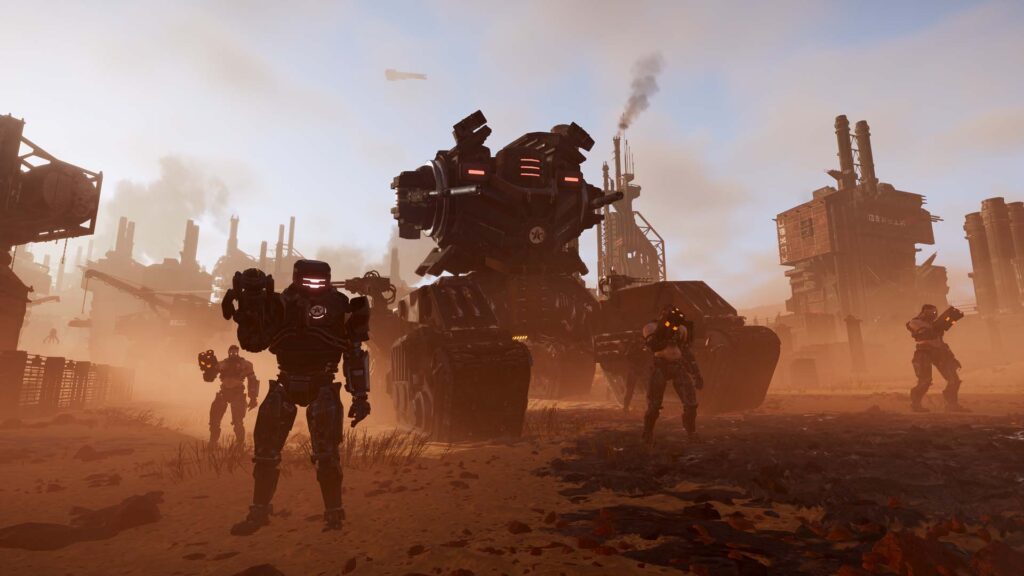
Cyberstan has become Helldivers 2’s new crucible, with the Machinery of Oppression update turning the planet into a dense, mechanized killzone. Between the return of the cyborg faction and escalating Automaton fortifications, Arrowhead is using this front to stress-test the game’s co-op systems and live-ops...
AI-generated summary. This archive article does not have a current recorded source check. Check linked sources before relying on details. Editorial policy

Strategic Overview: Cyberstan Becomes the New Front Line
Helldivers 2 has locked its sights on Cyberstan, turning a single planet into the focal point of a multi-layered campaign that blends narrative escalation with systemic gameplay tweaks. Across this week’s transmissions, the message from Super Earth is clear: the Machinery of Oppression update is not just new content, it’s a structural stress test for the game’s co-op design, enemy pacing, and long-term campaign cadence.
The language in the latest official drops leans heavily on liberation rhetoric—“dismantle treason,” “liberate Cyberstan,” “reclaim sovereignty”—but underneath the propaganda is a set of design moves aimed squarely at raising the skill ceiling while preserving the trademark chaos. For #gamedev watchers, this week is a strong signal of how Arrowhead intends to scale Helldivers 2 as a live service without diluting its brutal, slapstick co-op identity.
Operation: Attack on Cyberstan – Density as a Design Weapon
The "Attack on Cyberstan" operation is framed as a mechanized hellscape: denser enemy waves, fortified positions, and layered defensive lines. That reads like a deliberate pivot from wide-open bug-hunting to more curated, killzone-heavy encounters.
From a systems perspective, this suggests:
- Higher encounter density to force squads into tight communication and overlapping fields of fire.
- Objective-based mission variants that demand holding ground under pressure rather than hit-and-run extraction.
- Friendly fire as a feature, not a bug, with stratagem spam and orbital bombardments intentionally colliding with cramped layouts.
For co-op design, that’s a big lever. Instead of just scaling HP or spawn rates, the team is experimenting with positional pressure—chokepoints, overlapping turret arcs, and entrenched Automaton lines that punish disorganized squads. It’s a clear evolution of the first game’s philosophy, tuned for modern co-op expectations.
Watch: Transmitting Gameplay footage from the field: Official Machinery of Oppression briefing
Machinery of Oppression: New Tools, New Pain
The “Machinery of Oppression” update messaging emphasizes enhanced gameplay mechanics and “upgraded stratagems” for both crowd control and precision takedowns. While the transmissions are light on raw numbers, the design intent is easy to read:
- Expanded support options: More ways to specialize roles—air support, suppression, armor cracking—rather than everyone running the same meta loadout.
- Sharper mission identity: Objectives tuned to specific tools (e.g., anti-armor stratagems for fortified Automaton bunkers) to keep squads iterating on builds.
- Higher lethality on both sides: Heavier armor and nastier battlefield tech for enemies means a shorter time-to-fail, which paradoxically increases replayability as squads chase that one clean run.
For #gamedev and #indiegame teams studying co-op balance, Helldivers 2 is showcasing a live example of how to escalate complexity without just inflating stats: make players more powerful, then design enemies and spaces that punish misuse of that power.
Return of the Cyborgs: Legacy Faction, Modernized Threat
The most interesting narrative beat this week is the return of the classic cyborg faction. The intercepted signal describes them as a "metal menace" with upgraded war machines and brutal firepower, explicitly distinct from the current Automaton threat.
Design-wise, this opens several doors:
- Asymmetric AI behavior: Cyborgs can lean into slower, heavier, more telegraphed aggression compared to the more clinical Automatons.
- Silhouette and readability: Veteran players instantly recognize cyborg silhouettes, lowering onboarding friction for new mechanics layered on top.
- Live-ops nostalgia play: Reintroducing a known faction with modern tuning is a cost-effective way to expand the sandbox while tapping into Helldivers 1 memory.
The lore snippet about Automatons trying to replicate the "Star of Peace" also hints at a longer arc: factions aren’t just reskins, they’re part of a technological arms race that can justify future mechanical escalations.
Watch: Transmitting Gameplay footage from the field: Attack on Cyberstan operation showcase
Squad-Level Impact: How the Meta Is Likely to Shift
For players on the ground, the Cyberstan push and Machinery of Oppression update will likely reshape the short-term meta:
- Loadouts will skew toward mixed-range squads: one or two heavy armor counters, one crowd control specialist, and one flexible support.
- Stratagem discipline becomes a survival skill. In dense killzones, poorly timed orbital strikes are more dangerous than the enemy.
- Defensive play gains value. Holding lines, overlapping suppression, and building kill funnels will matter more than pure aggression.
From a development update standpoint, this is Arrowhead doubling down on Helldivers 2 as a communication-driven co-op game, not just a looter-shooter with matchmaking. The systems are converging around one thesis: victory isn’t about raw power, it’s about how well four people can weaponize chaos together.
Sector Intelligence: What to Watch Next
For the coming weeks, key watchpoints for both players and developers tracking Helldivers 2’s evolution:
- Difficulty curve telemetry: Does Cyberstan spike failure rates, or does the community adapt faster than expected?
- Faction rotation cadence: How quickly do cyborg operations rotate in and out of the galactic war map, and how does that affect engagement?
- Stratagem balance passes: Expect rapid tuning as the community stress-tests new tools against the densest battlefields yet.
Helldivers 2’s latest push shows a studio confident enough to raise the stakes early in its lifecycle. Cyberstan isn’t just another planet—it’s a proving ground for how far this brand of cooperative, democracy-by-ordnance gameplay can be pushed without collapsing under its own glorious chaos.
Sources and corrections
This archive entry does not have a verified article-source list. Images and video embeds alone are not evidence for every claim.
Found an error? Request a correction. Include the passage and a supporting source.