Automated archive / Hades II
Hades II Breaches Game Pass and Next‑Gen Consoles in a Coordinated Underworld Offensive
Hades II has broken containment, executing a coordinated push onto PS5, Xbox Series X|S, and Xbox Game Pass day one. This cross-platform surge turns Supergiant’s underworld sequel into a live data lab for second-generation roguelike and narrative design.
AI-generated summary. This archive article does not have a current recorded source check. Check linked sources before relying on details. Editorial policy
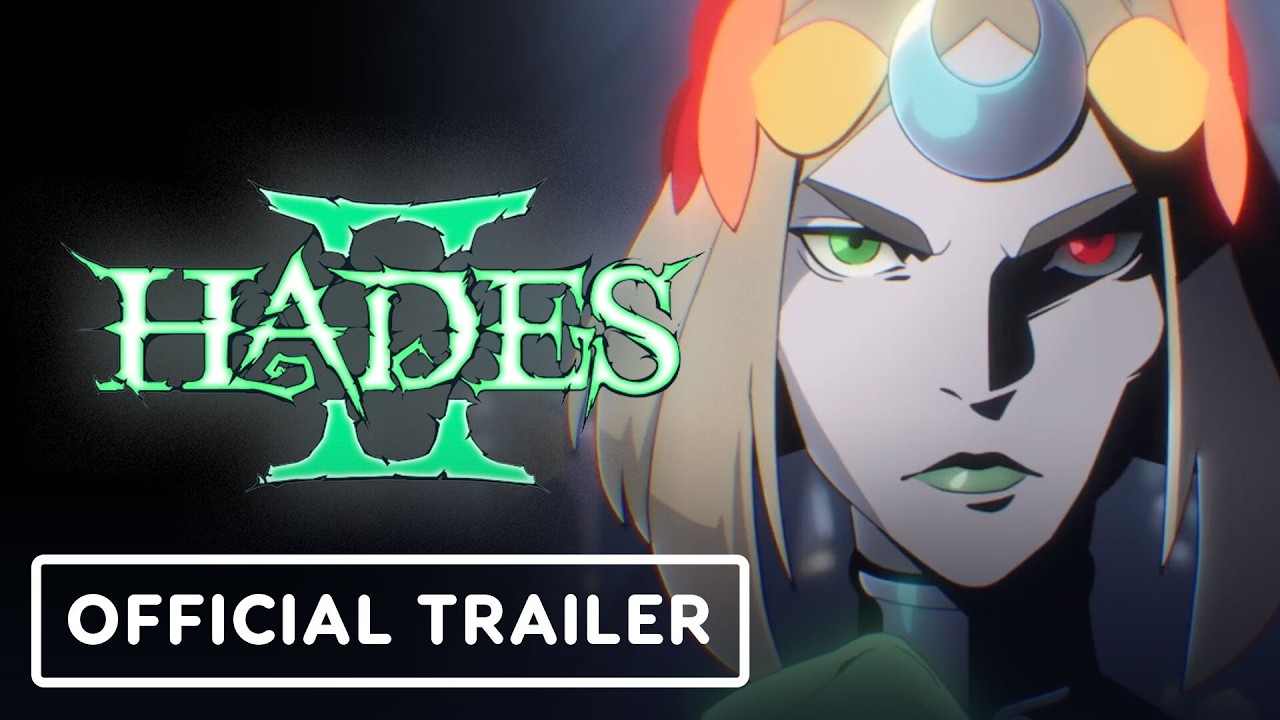
Sector Overview: Hades II Expands Its Warfront
Hades II just executed its broadest deployment maneuver yet, breaking out of its prior Nintendo Switch 2–centric narrative and formally breaching the PlayStation, Xbox, and Xbox Game Pass grids. For #gamedev watchers and players alike, this is less a simple platform announcement and more a strategic escalation of Supergiant’s most ambitious #indiegame to date.
Within a single week, multiple coordinated transmissions confirmed three key moves:
- Day‑one Xbox Game Pass deployment (April 14)
- Native PS5 and Xbox Series X|S release window locked in
- Cross‑platform alignment that dramatically widens the underworld’s player funnel
The result: Hades ii is no longer a contained myth-lab on a single platform. It’s a multi-system live data experiment in run-based design, meta-progression, and systemic narrative.
Game Pass Incursion: Why Day One Matters
The most significant intel packet is clear: Hades II hits Xbox Game Pass on day one, April 14. This is not just distribution convenience; it’s a deliberate design-aligned decision.
From a systems perspective, a roguelike thrives on high-frequency iteration. Game Pass immediately injects a massive volume of players into the loop:
- More runs, faster: Higher concurrency means more real-time data on clear rates, build viability, and falloff points.
- Balance telemetry at scale: Supergiant can observe which Olympian boons, weapons, and meta-upgrades dominate the meta and which are being ignored.
- Narrative pacing validation: With a larger sample size, the studio can tune how often new story beats surface across repeated failures.
The activity feed explicitly calls out that “prior data from the original Hades is leveraged to optimize pacing, meta-progression, and narrative cadence across each escape attempt.” That suggests an internal analytics-driven design loop where Hades 1’s completion curves and drop-off moments are being used as baselines to pre-tune Hades II’s early and midgame.
For #gamedev teams, this is a case study in using a subscription platform as a live balancing lab, not just a marketing megaphone.
Next‑Gen Lock-In: PS5 and Xbox Series X|S as Primary Battlefields
Watch: Transmitting Gameplay footage from the field: Official Hades II platform reveal signal
The intel confirms Hades II is now officially slotted for PS5 and Xbox Series X|S, with messaging that emphasizes:
- “Precision combat loops” – signaling frame-tight responsiveness tuned for 60fps+ standards.
- “Weaponized roguelike runs” – a focus on buildcraft, risk-reward, and repeatedly iterated encounters.
- “Data-rich failure cycles” – acknowledging that failure is not just narrative flavor but a core design resource.
Locking to current-gen hardware (rather than stretching to older consoles) gives Supergiant more consistent performance targets. That matters for:
- Input latency: Crucial for a dodge-heavy, read-the-room combat system.
- Visual clarity during chaos: Hades’ signature combat readability scales better when GPU budgets aren’t split across generations.
- Loading and iteration speed: Faster restarts keep the psychological loop tight—die, learn, re-engage.
From a production standpoint, this narrower hardware matrix simplifies QA and allows the team to push harder on effects, density of projectiles, and UI legibility at speed.
Procedural Myth Engine 2.0: Design Signals from the Field
The feed references a “Procedural Myth Engine Upgrade”—a sharp phrase that actually tracks with how Hades II is evolving its systemic storytelling.
Key signals:
- “Denser run-based loops” – Expect shorter time-to-interest: boons, story snippets, and build-defining decisions surfacing earlier in each run.
- “Expanded Olympian roster” – More gods means more combinatorial build space and more narrative permutations.
- “Refined combat telemetry” – Suggests internal tooling to track what players are doing per room, per boon, per death.
For Hades ii, this likely manifests as:
- Sharper early-game differentiation: First 10–15 minutes of a run should feel more distinct across attempts.
- Meta-progression tuned to perceived fairness: Enough long-term unlocks to reward persistence without trivializing late-game skill checks.
- Narrative cadence that respects repetition: Higher variety in incidental dialogue and conditional story triggers keyed to player behavior.
In #gamedev terms, Hades II is operating as a second-generation narrative roguelike, using Hades 1’s data to preempt fatigue points and narrative dead air.
Cross‑Platform Offensive: From Niche Lab to Mass Market Myth
Initially framed around a Nintendo Switch 2-first narrative, Hades II is now clearly positioned as a cross-platform flagship. The latest transmissions confirm a “console offensive on PlayStation and Xbox next month,” dissolving what had looked like a more constrained deployment.
Strategically, this does three things:
- Maximizes cultural penetration – More platforms mean more streaming, more builds shared, more emergent meta discussion.
- Stabilizes long-tail sales – Game Pass can drive early adoption while PS5 and Xbox Series X|S retail/digital sales support ongoing revenue.
- Strengthens Supergiant’s brand as a top-tier #indiegame studio – This is no longer a “surprise breakout” like the original Hades; it’s a planned tentpole.
For players, the signal is simple: wherever you play modern games, the underworld will meet you there.
Operational Outlook: What to Watch Next
Watch: Transmitting Gameplay footage from the field: Early combat and underworld incursion footage
As Hades II moves into this expanded deployment phase, key watchpoints for the coming weeks include:
- Balance patches in the first 30 days: Expect rapid iteration as Game Pass telemetry starts flowing.
- Build meta stabilization: Which boons, weapons, and arcana rise to the top—and how quickly they get adjusted.
- Narrative density feedback: Community sentiment around repetition, fresh dialogue, and how often new story beats surface.
From a sector intelligence standpoint, Hades II is shaping up as a live case study in data-informed design for narrative roguelikes—leveraging prior-game analytics, subscription platforms, and next-gen hardware to refine a second-generation underworld.
The breach has begun; now we watch how the myth engine adapts under real player fire.
Sources and corrections
This archive entry does not have a verified article-source list. Images and video embeds alone are not evidence for every claim.
Found an error? Request a correction. Include the passage and a supporting source.
Your games, in one place
Keep up with Hades II
Follow this game to collect its posts in your personal feed. Come back to see what you missed.