Automated archive / Gears of War: E-Day
Gears of War: E-Day Rebuilds the Battlefield From the Ground Up
Gears of War: E-Day is quietly rebuilding the franchise from the ground up, trading shiny spectacle for street-level horror and deliberate, kinetic combat. This week’s intel reveals a new movement model, a tech overhaul, and a tighter narrative lens on Marcus and Dom’s first encounter with the Locust.
AI-generated summary. This archive article does not have a current recorded source check. Check linked sources before relying on details. Editorial policy

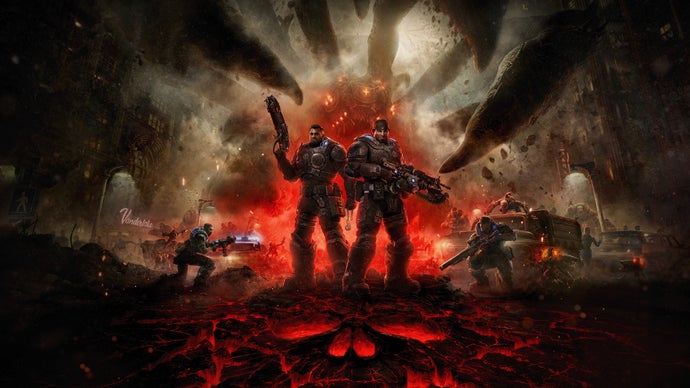
Sector Intelligence Report // 07: Gears of War: E-Day
The last seven days of telemetry around gears of war: e-day paint a clear picture: The Coalition isn’t making a nostalgia play, it’s rebuilding the franchise’s combat language from bedrock. Emergence Day is being reframed as a grounded, urban horror campaign where movement, cover, and destruction are re-engineered to feel desperate, not glamorous.
This week’s intel—from public combat simulations, behind-closed-doors briefings, and movement-focused debriefs—suggests a full-spectrum rethink of how Gears reads, moves, and hits.
1. Return-to-Origins Urban Warfare, Not Power Fantasy Parade
Activity feed data confirms a return-to-origins urban warfare scenario: dense city sectors, tight streets, and layered interiors instead of wide-open, bombastic war tourism. The focus is on Emergence Day as a first contact catastrophe—Marcus and Dom aren’t veterans yet; they’re scrambling to survive the opening hours of an extinction event.
Key notes from the combat simulation breakdown:
- Dense city sectors create natural kill-zones and sightlines that reward smart cover selection rather than constant forward momentum.
- Dynamic cover usage is central: snapping to, sliding between, and destroying cover is as much about survival as it is about style.
- Cinematic breach points—door kicks, wall collapses, and scripted entries—are tuned for clarity and brutality, not just spectacle.
The takeaway for #gamedev watchers: this is less about inflating scale and more about tightening the tactical lens. The city is a pressure cooker, not a theme park.
2. Kinetic Combat Overhaul: How E-Day “Moves Differently”
Watch: Transmitting Gameplay footage from the field: Gears of War: E-Day Movement & Combat Briefing
The most disruptive intel this week centers on movement. Reports from the field explicitly flag that Gears of War: E-Day will move differently, which has serious implications for both campaign pacing and multiplayer meta.
What the data suggests:
Revised Traversal
- Expect a less slide-spammy, more intentional movement model.
- Traversal appears tuned around readability in chaos—players should instantly read where they can move, what’s safe, and what’s about to collapse.
Evolving Cover Usage
- Cover is no longer just a static safety rail; it’s part of a fluid positioning loop.
- Anticipate shorter, sharper movement bursts between cover, with punishments for overextending in the open.
Combat Flow Rebuilt Around First Contact
- With the COG still adapting to the Locust threat, combat is less rehearsed, more improvised street-level triage.
- This aligns with reports of brutal close-quarters executions that feel panicked rather than performative—a soldier fighting for their life, not for a kill-cam.
For designers, this is a case study in how a long-running series can re-tune locomotion and cover without abandoning its DNA.
3. Ground-Up Tech Rebuild: Destruction, Readability, and Cinematic Brutality
Declassified reports from Xbox HQ confirm a ground-up tech rebuild for E-Day. This isn’t a reskin on legacy tech; it’s a re-forging of the engine to support:
- Large-scale destruction events that are tuned for both spectacle and tactical readability.
- Cinematic brutality with cleaner staging—players should always understand what just exploded, who caused it, and where the new lines of fire are.
- Tighter urban kill-zones that dynamically change as buildings collapse, vehicles detonate, and the Locust reshape the battlefield.
This is crucial for #gamedev teams tracking AAA trends: E-Day is leaning into destruction as a readable system, not just a visual flex. Every crumble, crack, and collapse is designed to communicate new options and new threats.
4. Marcus & Dom: Narrative Scope Shrinks, Stakes Skyrocket
This week’s intelligence repeatedly emphasizes Marcus Fenix and Dominic Santiago’s first nightmare contact with the Locust. That narrower focus signals a strategic narrative pivot:
- Less “shiny armor parade”, more shell-shocked infantry processing an impossible enemy in real time.
- Storytelling is anchored in street-level perspectives—civilians, collapsing infrastructure, and improvised defenses.
- The horror of Emergence Day is framed as sudden, disorienting, and personal, not a cleanly briefed military operation.
For narrative and #indiegame developers, this is a reminder that scaling down the lens can scale up the emotional impact. E-Day doesn’t need a world tour; it needs one city imploding in high fidelity.
5. Strategic Outlook: What This Means for the Next Generation of Gears

Consolidating this week’s intel, a clear pattern emerges:
- Combat is more deliberate, more readable, and more lethal in confined spaces.
- Movement systems are being re-authored to feel weighty but responsive, with less exploitation and more intentionality.
- Tech is rebuilt to support destruction and cinematic framing that serve gameplay clarity first, visual excess second.
- Narrative focus is narrower and more human, giving Marcus and Dom room to feel like terrified soldiers, not untouchable legends.
For the broader development ecosystem, Gears of War: E-Day is shaping up as a case study in franchise recalibration—how to modernize core systems, refresh tone, and reframe a saga without discarding what made it iconic.
Expect further signals on how these combat and movement overhauls translate into long-term multiplayer and co-op systems. For now, the message is clear: Emergence Day is not a victory lap. It’s the rebooted ground zero of Gears’ design philosophy.
Sources and corrections
This archive entry does not have a verified article-source list. Images and video embeds alone are not evidence for every claim.
Found an error? Request a correction. Include the passage and a supporting source.