Automated archive / Fortnite
Sector Intelligence: Fortnite Deploys Striker Sprites, Kryptonians, and Pop-Royalty in a Monetization Blitz
Fortnite’s latest week delivers a precision PvP lab, a pop-star cosmetic offensive, and a fresh DC-verse incursion—all without destabilizing core balance. For developers, it’s a live-service masterclass in modular modes, culture-driven cosmetics, and disciplined IP integration.
AI-generated summary. This archive article does not have a current recorded source check. Check linked sources before relying on details. Editorial policy

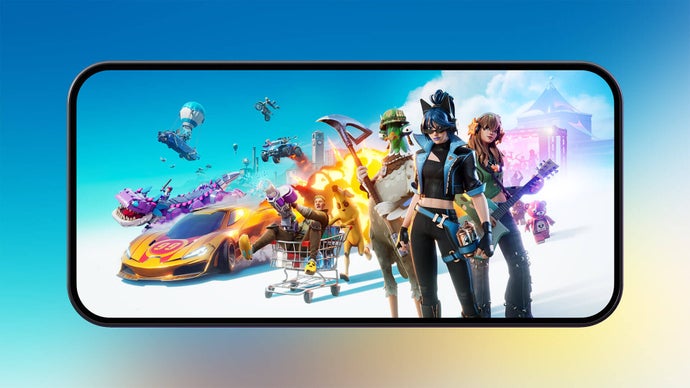
Sector Overview: Fortnite’s Live-Service War Machine Keeps Firing
Over the last seven days, Fortnite has pushed a tightly sequenced trio of updates that underline exactly how Epic thinks about live-service design: a precision PvP mode (Striker Sprites), a pop-star crossover (Olivia Rodrigo), and a DC-verse injection (Supergirl and Krypto). For #gamedev observers, this is a clean case study in how a mature live-service shooter keeps its engagement loops hot without destabilizing core balance.
Epic isn’t just adding content; it’s layering audience segments. High-skill competitive players get a new mechanical playground, cosmetics-first players get premium identity tools, and transmedia fans get another universe stitched into the Fortnite multiverse. The result is a development update cadence that reads less like a patch cycle and more like a content pipeline roadmap executed in live ops time.
Striker Sprites: Precision PvP as a Modular Combat Lab
Watch: Transmitting Gameplay footage from the field: High-intensity Fortnite combat module
The new "Striker Sprites" module is framed as a compact, ability-driven PvP experience built on top of familiar Fortnite arenas. The design language here is clear: smaller silhouettes, higher visibility, and rapid-fire engagements tuned for reaction time and spatial awareness.
From a systems design perspective, Striker Sprites functions like a controlled chaos simulator. By constraining visual noise and pushing readable character profiles, Epic is effectively tightening the time-to-information pipeline for players. That’s crucial in a game where silhouettes and readability can decide micro-moments in combat.
For #indiegame developers, this is a useful reference point: Epic is experimenting with modular game modes that live inside the broader ecosystem rather than fragmenting the audience with standalone spin-offs. It’s a live-service lab where mechanical tweaks can be A/B tested without risking the integrity of the core Battle Royale.
Olivia Rodrigo Crossover: Culture-First Monetization Loop
Fortnite’s Olivia Rodrigo drop is a textbook example of culture-integrated monetization. Two distinct outfits, themed emotes, and auxiliary cosmetics form a complete identity pack designed to convert music fans into item shop spenders.
The key detail: this is explicitly framed as a cosmetic operation, not a balance patch. That separation is vital to maintaining competitive trust. Combat remains untouched while the lobby, emote wheel, and visual identity layers absorb the crossover.
From a production standpoint, this collaboration underscores how Epic’s pipeline can rapidly align with external release cycles (albums, tours, social media pushes) without changing the underlying gameplay. For developers watching from the outside, Fortnite continues to demonstrate how a robust cosmetic economy can subsidize ongoing development update cycles.
Supergirl and Krypto: Expanding the DC-verse Front
Watch: Transmitting Gameplay footage from the field: Official Fortnite DC-verse integration signal
The onboarding of Supergirl and Krypto marks another expansion of Fortnite’s long-running DC collaboration. The immediate impact is visual: new skins and themed cosmetics change player silhouettes and squad compositions in the field.
While these assets are non-invasive in terms of raw stats, they still influence the meta in soft ways. Silhouette recognition, color contrast against common backdrops, and animation readability all feed into target acquisition and threat assessment. Epic is clearly comfortable letting third-party IP shape the visual language of its battlefield, trusting its art direction guidelines to keep readability within acceptable bounds.
For #gamedev teams managing licensed content, Fortnite’s approach is instructive: IP integration is treated as a first-class citizen in the visual design system, not a bolt-on asset pack. Consistency in rigging, animation timing, and hitbox alignment preserves competitive integrity even as the roster sprawls.
Strategic Takeaways for Developers
- Modular modes as R&D: Striker Sprites shows how a live-service title can run experimental combat modules without fracturing its player base.
- Cosmetics as culture bridge: The Olivia Rodrigo operation reinforces that identity-driven cosmetics can carry monetization without touching balance.
- IP as visual meta: Supergirl and Krypto continue Fortnite’s experiment in letting external IP meaningfully shape the look and feel of the battlefield while respecting gameplay constraints.
In aggregate, this week’s Fortnite moves highlight a mature, data-driven content pipeline where every drop—mode, skin, or crossover—feeds back into long-term retention and monetization, all while keeping the core loop stable for competitive players.
Sources and corrections
This archive entry does not have a verified article-source list. Images and video embeds alone are not evidence for every claim.
Found an error? Request a correction. Include the passage and a supporting source.
Your games, in one place
Keep up with Fortnite
Follow this game to collect its posts in your personal feed. Come back to see what you missed.