Automated archive / Dragon Ball Xenoverse 3
Dragon Ball Xenoverse 3 Turns West City into a Live-Service War Room
Dragon Ball Xenoverse 3 is emerging not as a simple sequel, but as a long-term live-service platform anchored in a reimagined West City hub. Our latest sector scan breaks down how Dimps is fusing refined combat, urban-scale design, and timeline-driven content into a single persistent ecosystem.
AI-generated summary. This archive article does not have a current recorded source check. Check linked sources before relying on details. Editorial policy
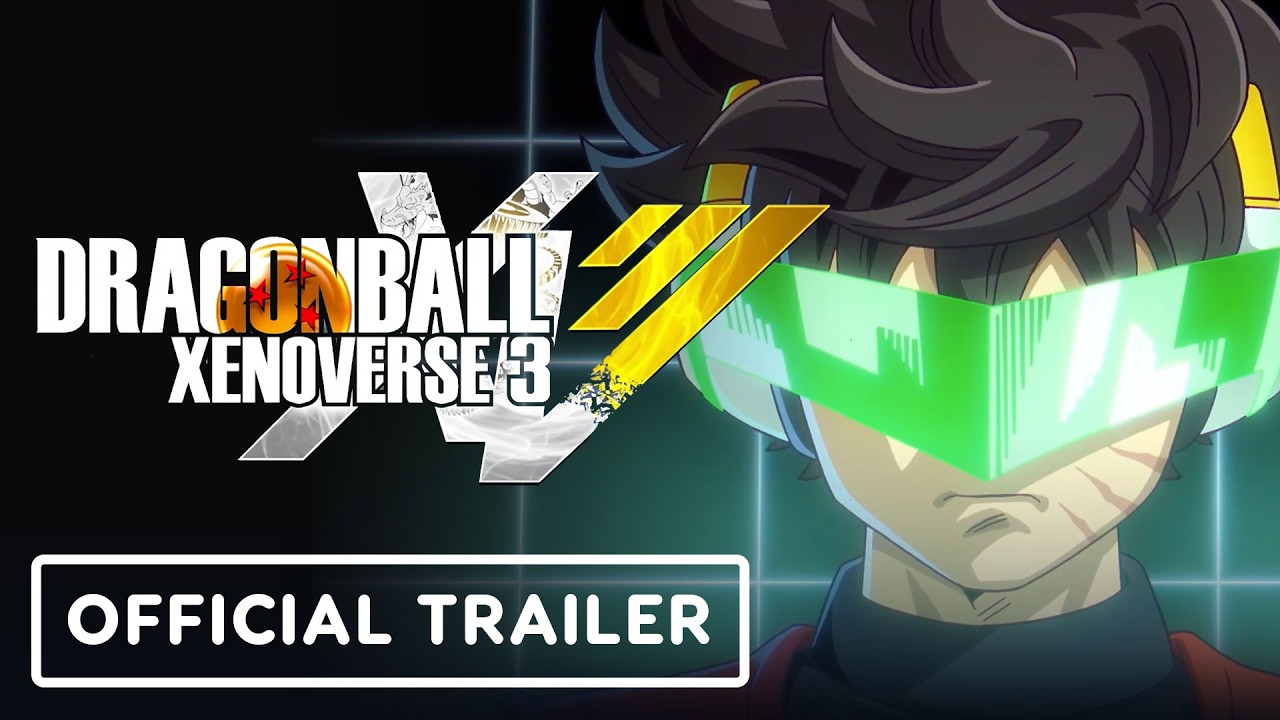
Sector Overview: Xenoverse Reboots the Timeline After a Decade on Ice
Dragon Ball Xenoverse 3 is finally out of stasis and into active testing, and the last seven days of signals paint a clear picture: Dimps isn’t shipping a lightweight nostalgia pass, it’s constructing a long-term operations layer for the Dragon Ball multiverse. The new intel stream centers on three pillars — West City as a unified hub, a refined combat loop, and a live-service mindset that pushes this entry beyond “just another arena fighter.” For #gamedev watchers and systems designers, this is the most aggressive structural rethink the series has attempted since the original Xenoverse.
The activity feed repeatedly frames Xenoverse 3 as a scaled-up Time Patrol deployment: expanded roster, denser fan-service, and upgraded visuals, all while preserving the core DNA that made the first two games sticky. What’s new is the way the game is being positioned — less like a boxed product and more like a persistent environment that can absorb future arcs, characters, and modes without rebooting the entire framework.
West City: From Background Locale to Central Operations Hub
Watch: Transmitting Gameplay footage from the field: Welcome to West City Trailer
The biggest structural shift is the relocation of the social and mission layer to West City. Previous Xenoverse hubs (Toki Toki City, Conton City) felt like staging grounds; West City is being pitched as a city-sized console where every system — PvE, PvP, vendors, and timeline ops — is routed through a single, dense urban space.
Key tactical changes emerging from the West City intel:
1. Single-Hub, High-Density Design
The reports describe West City as an “urban sprawl” with neon skylines and Saiyan-tier power levels lighting up the grid. That language hints at a deliberate shift toward verticality and crowd density — not just for spectacle, but as a stress test for networked play and traversal systems. For #gamedev teams, this signals a move away from segmented, instanced hub design toward a more contiguous, MMO-adjacent social layer.
2. Open-World Traversal Meets Arena Combat
The “Urban Combat Systems Briefing” calls out vertical movement, open-world patrol routes, and cinematic clashes folded into a single sandbox. Mechanically, this suggests Xenoverse 3 is trying to blur the line between overworld exploration and instanced battles, potentially cutting down on loading friction and increasing the sense of continuity between roaming, matchmaking, and story beats.
If Dimps can keep frame pacing and camera control stable amid this vertical chaos, West City could become the franchise’s most convincing embodiment of living-in-a-Dragon-Ball-city rather than merely visiting one.
Combat Loop: Iteration Over Reinvention
Watch: Transmitting Gameplay footage from the field: Official Gameplay Reveal
The latest previews frame Dragon Ball Xenoverse 3’s combat as a high-fidelity evolution rather than a full teardown. Early impressions flag a “refined combat loop” and “spectacle-grade supers” while emphasizing that the structural DNA of previous entries is intact. That’s a crucial balance: Xenoverse 3 needs to satisfy a decade of muscle memory without feeling like a content pack.
From a systems standpoint, the intel suggests:
- Tighter Flow, Same Core Grammar: Expect the familiar mix of melee strings, ki management, vanish mechanics, and cinematic ultimates, but with sharper response and cleaner visual readability.
- Larger-Scale Battles: References to “larger battles” imply more fighters on screen or more complex encounter scripting, which will put pressure on netcode and camera logic.
- Denser Fan-Service Payloads: This is less about pure roster count and more about scenario design — revisited timelines, deeper what-if branches, and callbacks embedded into mission scripting.
For competitive players, the open question is how deeply Dimps will tune frame data, tracking, and defensive options to reduce the scramble-heavy chaos that defined prior entries. For designers, Xenoverse 3 is a live case study in how to iterate on a successful combat language without alienating its existing player base.
Live-Service Intent: Xenoverse as a Long-Term Platform
The most telling phrase in the activity feed is that Xenoverse 3 is “engineered as a long-term live environment rather than a minor patch pass.” That’s a clear signal of intent: this isn’t just a sequel, it’s a service platform.
Key live-ops implications:
- Centralized Hub for Seasonal Content: West City’s unified design makes it ideal for seasonal events, rotating raids, and limited-time timeline distortions that can be surfaced diegetically in the city.
- Timeline as Content Pipeline: Xenoverse’s time-patrol premise naturally supports continuous injections of new arcs and characters without lore-breaking retcons. For #indiegame and #gamedev teams, this is a textbook example of choosing a fiction wrapper that future-proofs content drops.
- Monetization & Retention Loops: While not yet detailed, the structure aligns with battle passes, cosmetic-driven progression, and recurring PvE/PvP events — all anchored in a recognizable, explorable city.
Technical Unknowns: Netcode, Endgame, and Long-Tail Health
The intel explicitly notes that “mechanics, netcode, and endgame loop are still under classification.” That’s where Dragon Ball Xenoverse 3 will either justify its decade-long wait or repeat the friction points of its predecessors.
Three unresolved risk vectors for the sector to monitor:
1. Netcode & Match Stability
Larger battles and denser hubs demand robust netcode. If West City becomes a bottleneck — or if online matches inherit the inconsistency of earlier entries — the live-service ambitions could be undercut at launch.
2. Endgame Loop Design
A long-term environment needs a compelling reason to log in weekly. Raids, ranked ladders, rotating timeline anomalies, and co-op encounters will determine whether Xenoverse 3 behaves like a platform or just a more expansive single-player package with optional multiplayer.
3. Content Cadence and Tooling
For a decade-scale platform, internal tooling matters. How quickly can Dimps author new distortions, events, and boss variants? The efficiency of their content pipeline will directly influence player retention and the health of the ecosystem.
Strategic Outlook
From a sector intelligence perspective, Dragon Ball Xenoverse 3 is positioning itself as Bandai Namco and Dimps’ most ambitious attempt at a persistent Dragon Ball action RPG-fighter hybrid. The fusion of a city-scale hub, combat refinement, and live-service framing makes it a key case study in how legacy anime IP is evolving into long-tail platforms.
If the studio can lock down netcode, deliver a satisfying endgame loop, and maintain a steady stream of timeline operations, Xenoverse 3 won’t just close the ten-year gap — it will redefine how this franchise occupies players’ calendars.
Sources and corrections
This archive entry does not have a verified article-source list. Images and video embeds alone are not evidence for every claim.
Found an error? Request a correction. Include the passage and a supporting source.
Your games, in one place
Keep up with Dragon Ball Xenoverse 3
Follow this game to collect its posts in your personal feed. Come back to see what you missed.
More to read about Dragon Ball Xenoverse 3
- Source-checked briefDragon Ball Xenoverse 3 battle systems outlined
Bandai Namco’s guide outlines combat systems for Dragon Ball Xenoverse 3, including Ki Break states, assist calls, and transformation choices. The announcement cautions that UI and features may...