Automated archive
How ‘Disclosure Day’ Turns Spielberg Grammar into Playable Tension
Disclosure Day’s latest intel drop plays like a cross-media GDC talk, turning Spielberg-grade cinema into a template for playable tension. From a no-cut "oner" to a cosmic endgame finale, the film is quietly teaching gamedev teams how to keep control loops tight while the spectacle escalates.
AI-generated summary. This archive article does not have a current recorded source check. Check linked sources before relying on details. Editorial policy
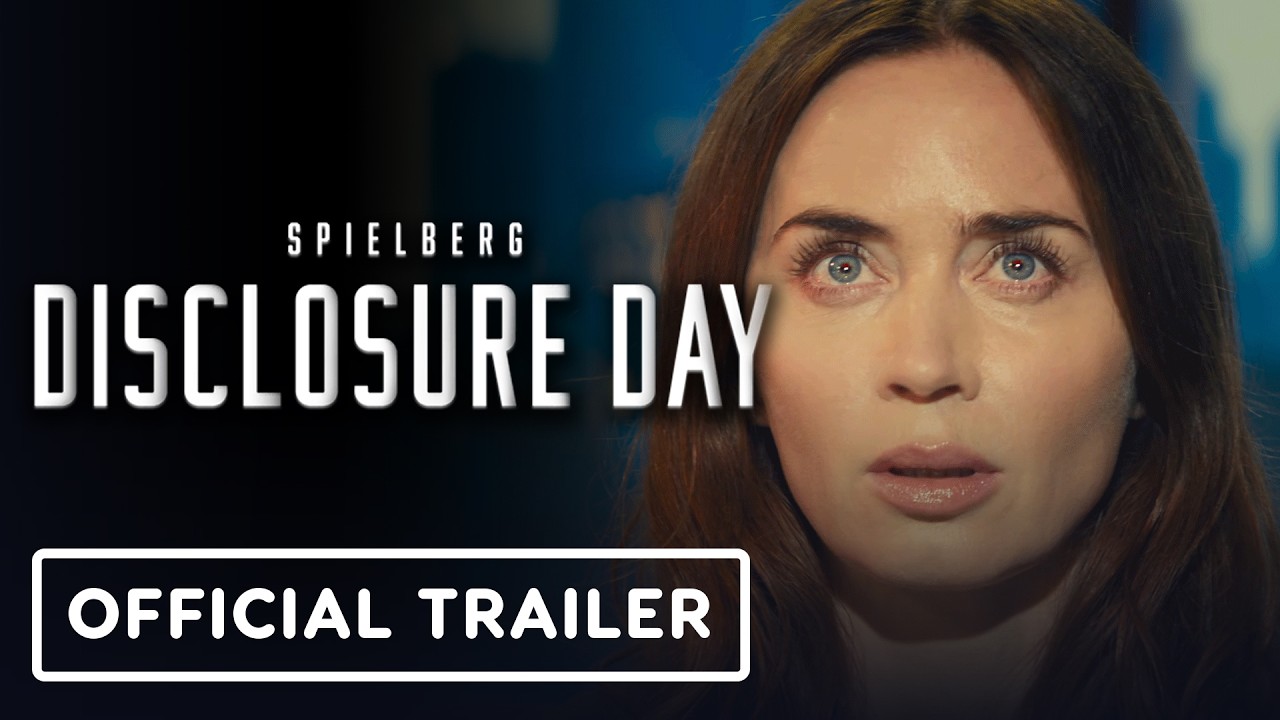
Sector Intelligence Report // Disclosure Day
This week’s Disclosure Day sweep is less a promo cycle and more a live masterclass in cinematic systems design. Every new fragment of intel points to a production obsessed with one question: how do you convert Spielberg‑grade film language into interactive tension that actually feels playable? For #gamedev and #indiegame teams, this is a rare, high-signal case study in how to weaponize cinematic craft without losing mechanical clarity.
Intel Node 01: The Endgame as a Designed “Final Encounter”
The latest field log frames Disclosure Day’s ending as a “Spielberg-grade end sequence” that pivots from grounded tension into full cosmic spectacle. That’s not just marketing language; it’s a blueprint for encounter design.
The report flags three crucial pillars:
1. Escalating Set Pieces as Difficulty Curves
The endgame is described as a chain of escalating set pieces, each cut hard into the next. In game terms, this reads like a difficulty curve where every phase iterates on the last: tighter framing, higher stakes, denser information. Instead of one big VFX dump, the finale behaves like a multi-phase boss fight, where the spectacle ramps in sync with the player’s (or viewer’s) cognitive load.
2. “Tight Interactive Control Loops”
Even as the finale swerves into full-scale cosmic spectacle, the intel stresses that the film maintains tight control loops. For designers, that’s the key: spectacle never overwhelms legibility. Think of it as maintaining strict input/output clarity—clear cause, clear effect—even when the frame is visually loud. The lesson for #gamedev: if your final act becomes a fireworks show where player intent gets lost, you’ve broken the loop.
3. The Final Image as Neural Imprint
The end sequence is calibrated around a single, final image “for maximum neural imprint.” This is your equivalent of a last playable moment or final decision prompt. It’s the emotional checksum the audience carries out of the experience. In narrative-driven games, that could be a last choice, a final vista, or a quiet mechanical interaction that reframes everything before it.
Intel Node 02: Spielberg’s Car Scene Breakdown as Design Postmortem
Watch: Transmitting Gameplay footage from the field: Official Disclosure Day featurette
Another packet in this week’s feed: Spielberg dissecting the infamous car sequence from Disclosure Day “like a post-mortem on a failed escort mission.” That phrasing is telling. The breakdown reportedly treats the scene with the same granularity a senior systems designer would bring to an AI or encounter review.
Shot Composition as Player Readability
Spielberg’s frame-by-frame analysis maps directly onto how we talk about player readability in games. Where the camera sits, what’s in focus, and how motion vectors guide the eye all mirror how designers use level layout, lighting, and UI to direct player attention. The scene becomes a live demonstration of:
- Threat surfacing: What danger is visible, when?
- Information gating: What does the audience know that the characters don’t?
- Emotional aggro: How do you pull the viewer’s anxiety toward a specific object or character, the way you would manipulate enemy aggro toward a player avatar or escort target?
Timing as Encounter Tuning
The intel hints at “almost frame-perfect precision” in the timing analysis. Translate that to game design and you get frame data, animation windups, and telegraphs. In Disclosure Day’s car scene, every beat is tuned: when the threat is revealed, how long the audience has to anticipate impact, when the illusion of safety is yanked away. For #indiegame teams without blockbuster resources, this is a reminder that tension often comes from tuning and timing, not budget.
Intel Node 03: The “Oner” as a High-Risk No-Cut Operation
Watch: Transmitting Gameplay footage from the field: Official Disclosure Day short-form sequence
Field notes confirm that Emily Blunt and Spielberg pushed for a continuous one-shot (“oner”) sequence in Disclosure Day. The report calls it a “high-risk, no-cut operation,” which is exactly how a senior producer would describe a long, unbroken gameplay segment with no checkpoint safety net.
Militant Coordination = Systems Integration
A true oner is a systems integration test disguised as spectacle. Blocking, timing, stunts, VFX, and camera choreography must all fire in perfect sync. In game terms, this is:
- Animation + camera + AI + scripting all interlocked
- Zero room for “cuts” (loading masks, hard scene transitions, or jarring camera jumps)
- Every failure point instantly visible to the audience
For developers, the oner is a metaphor for sequences where you refuse to hide behind cuts or fades. Think of a single-take infiltration mission, a no-UI exploration segment, or a real-time escape where level streaming, AI pathing, and physics must hold under pressure.
Spock-Level Logic: The Cinematic Systems Mindset
The intel jokes that “Spock would call it an exercise in pure cinematic logic.” That’s not just a quip; it’s a design directive. The camera path, actor movement, and timing must all obey a strict internal logic, or the spell breaks. For games, this is a reminder that your camera is not neutral—whether first-person, third-person, or isometric, its path and constraints are part of your systems design, not just a presentation layer.
Intel Node 04: Character Psychology as Live Ops Data
Watch: Transmitting Gameplay footage from the field: Cast and tension featurette
The Emily Blunt featurette deconstructs character psychology, political tension, and escalating stakes like a live ops postmortem. That framing is particularly relevant for narrative-heavy and systemic titles.
Performance as UX for Emotion
Blunt, Josh O’Connor, and Colin Firth are positioned as operators inside a high-pressure Disclosure Day scenario. Their performances don’t just sell drama; they surface state changes—fear, resolve, doubt—the way UI surfaces health, ammo, or suspicion meters. For narrative #gamedev, this is a reminder that:
- Facial performance and body language are primary feedback channels
- Political stakes function like hidden variables in a strategy sim
- Each dialogue beat can be treated as a state transition, not just flavor
Crisis Framing and Pacing
The featurette reportedly breaks down how tension escalates, step by step. That’s your pacing template. Start from a relatively stable system, introduce a small destabilizing event, then ratchet up the consequences while constraining options. It’s the same logic behind well-designed stealth sandboxes or branching narrative crises: limit safe paths, increase perceived risk, and keep the player making informed but uncomfortable choices.
Strategic Takeaways for Developers
Across all intel nodes, Disclosure Day is operating like a cross-media design document for how to merge cinematic language with systemic clarity:
- Treat your finale like a multi-phase boss encounter with a single, unforgettable final image.
- Use shot composition and timing as direct analogues for readability and encounter tuning.
- Approach long, unbroken sequences as integration stress tests, not just showpieces.
- Leverage performance and psychology as visible state machines that communicate stakes.
For teams building story-driven or spectacle-heavy projects, Disclosure Day’s current intel drop isn’t just film marketing—it’s a living reference manual on how to keep control loops tight while your world explodes.
Sources and corrections
This archive entry does not have a verified article-source list. Images and video embeds alone are not evidence for every claim.
Found an error? Request a correction. Include the passage and a supporting source.