Automated archive / Destiny 2
Destiny 2’s Monument of Triumph: How Bungie Is Freezing a Live Service in Legendary Amber
Destiny 2’s Monument of Triumph update doesn’t kill the game—it freezes a decade of live-service evolution into a curated, playable archive. Bungie is turning raids, Triumphs, and buildcrafting into a long-tail legacy platform instead of a fading content treadmill.
AI-generated summary. This archive article does not have a current recorded source check. Check linked sources before relying on details. Editorial policy
Sector Intelligence Report: Destiny 2 – Week of June 15, 2026
Destiny 2 has officially entered its Monument of Triumph era — not a shutdown, but a controlled transition into what is effectively “legendary stasis.” For a live-service title that has defined an entire generation of online play, this week’s updates read like a cross between a final seasonal drop and a long-term archival strategy. From a #gamedev and systems-design perspective, Bungie is doing something unusual: locking in a mature sandbox while still promising rotating, curated reasons to log back in.
Monument of Triumph: The Final Shape of a Live Service
The Monument of Triumph update reframes Destiny 2 as a persistent legacy platform rather than a constantly expanding treadmill.
Triumph Grid as Long-Tail Engagement Design
The new Triumphs aren’t just checklists; they form a meta-route across core activities — strikes, raids, patrols, and late-game ops. This is classic retention design, but with a twist: the grid is now a finite mastery map instead of an ever-expanding backlog. For players, it’s a clear, achievable endgame. For Bungie, it’s a way to stabilize engagement without the cost of continuous content production.
From a #gamedev standpoint, this is a strong example of how to sunset a live-service product while still respecting player time. The Triumph matrix essentially converts the entire back catalog into a structured “legacy campaign.”
Pantheon and Legacy Raids as Rotating Pillars
Pantheon’s reboot as a rotating raid gauntlet is the centerpiece of this strategy. Legacy bosses cycle in with weekly modifiers, turning old encounters into stress tests for modern builds and fireteam cohesion. Coupled with legacy raids returning to circulation and reprised weapons re-entering the loot pool, Bungie is leaning hard into curated nostalgia rather than new environments.
This is archival design in action: instead of building new raids, the studio is re-contextualizing existing ones with modifier-driven difficulty and buildcraft pressure. It’s cost-efficient, but also deeply respectful of Destiny 2’s raid heritage.
Unified Director, Distortions, and Heavy Metal: Frictionless Access to the Vault
The new unified Director is a quietly massive quality-of-life win. By consolidating playlists into a single tactical dashboard, Destiny 2 reduces route-to-activity friction — a crucial move when your strategy shifts from novelty to convenience.
Distortions reinsert Guardians into legacy destinations as curated flashpoints, effectively turning the back catalog into a rotating “best of” tour. Heavy Metal, with its Cabal behemoths and vehicle-heavy chaos, functions as a sandbox stress lab, giving players a reason to re-engage with underused tools and vehicles.
For #indiegame and smaller live-service teams studying Destiny 2’s evolution, this is a key lesson: when active development slows, your UX and playlist curation become the content.
Sparrow Racing League: High-Skill Expression in a Static World
Sparrow Racing League finally breaching into Destiny 2 is more than fan service. It’s a clever way to inject evergreen, low-maintenance skill expression into the game’s end-state.
Classic tracks plus new circuits give players time-trial optimization, leaderboard chasing, and mechanical mastery without requiring new enemy factions, AI behaviors, or narrative beats. From a development update perspective, this is a textbook example of designing systems where player skill and replayability do the heavy lifting instead of content volume.
Buildcrafting in Stasis: Subclass Tuning and Artifact Access
Subclass tuning, armor set bonuses, and retroactive access to past season artifacts expand Destiny 2’s buildcrafting matrix at precisely the moment the content treadmill slows down. That’s intentional.
By handing players “more knobs to turn” — synergy stacking, niche role definition, and cross-expansion loadout experimentation — Bungie is ensuring the final meta doesn’t feel static even if the destination list is. This is the endgame of systemic design: when you can’t keep adding places, you deepen how players interact with the ones you already have.
It’s also a subtle form of preservation. Future designers can look back at Destiny 2’s closing state as a complete, fully unlocked combat sandbox — a snapshot of a decade of iteration.
So Far, Together: Social Fabric as Endgame Content
The “So Far, Together” trailer operates less like a traditional hype reel and more like a social retrospective. The montage of raids, seasonal ops, synchronized supers, and cross-expansion highlights is a reminder that in a game entering legendary stasis, the real live-service content is the people.
This is smart positioning. As Trials of Osiris reactivates and Pantheon expands, Bungie is effectively reframing Destiny 2 as a social platform with a stable, curated ruleset. From a #gamedev communications standpoint, the message is clear: the game isn’t dying; the churn is.
For returning veterans, the updated New Player Guide and Monument of Triumph FAQ double as re-onboarding docs — a form of UX documentation that many live-service games neglect. For new Guardians, they’re a late-entry manual for a mature ecosystem.
Deadlands Drip: Cosmetic Economy in a Post-Growth Era
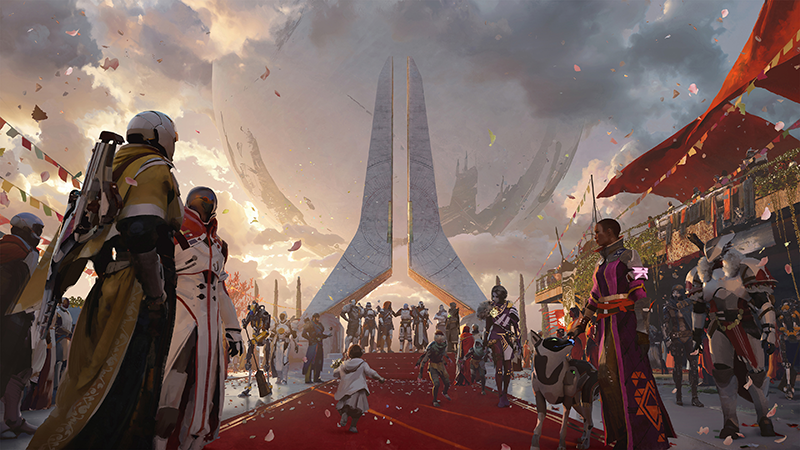
The Deadlands Deployment Package is a targeted thank-you bundle: armor ornaments across all classes, a Field Transcriber Ghost Shell, multiple Sparrows, a ship, and a “hot and cold” shader. It’s fashion as endgame, codified.
In a stabilized live service, cosmetics become less about FOMO and more about legacy identity. The meta might fossilize, but visual expression doesn’t have to. From an economic design angle, this is how you keep a cosmetic ecosystem relevant when new content slows: broaden access, emphasize completion, and let the community’s fashion meta carry the conversation.
Final Readout: A Case Study in How to Land a Live Service
Destiny 2’s Monument of Triumph phase is shaping up as a rare thing: a large-scale live-service game that isn’t just sunsetting, but concluding in a designed, systemic way. Legacy raids return, Sparrow Racing League fills the high-skill niche, Pantheon and Distortions curate the archive, and buildcrafting gets one last expansive pass.
For players, this is the moment to ping old fireteams, clear the Triumph grid, and lock in their final builds before the meta settles. For developers, it’s a blueprint — a development update that doubles as a postmortem in motion, showing how to transition from growth to preservation without pulling the plug on the world you’ve built.
Sources and corrections
This archive entry does not have a verified article-source list. Images and video embeds alone are not evidence for every claim.
Found an error? Request a correction. Include the passage and a supporting source.