Automated archive / Death Stranding 2: On the Beach
Sector Intelligence: Death Stranding 2’s March Overhaul Rewrites the Beachhead Meta
Death Stranding 2: On the Beach just underwent a high‑impact March 2026 overhaul that rewrites traversal, cargo, and combat across PS5 and PC. Kojima Productions is treating the game as a live systemic framework, synchronizing balance changes, platform features, and cinematic upgrades into a single, evolving strand.
AI-generated summary. This archive article does not have a current recorded source check. Check linked sources before relying on details. Editorial policy

Sector Intelligence Report: Death Stranding 2 – On the Beach (Weekly Ops Brief)
Death Stranding 2: On the Beach just entered a new operational phase. Over the last seven days, Kojima Productions has synchronized a major balance patch, a cross‑platform feature push, and multiple cinematic intel drops, effectively re‑cutting the game’s traversal, combat, and narrative pacing profile in real time.
This isn’t a routine tune‑up – it’s a systemic re‑authoring of how players move, plan, and emotionally invest in the strand network. For #gamedev observers and designers dissecting high‑budget systemic storytelling, this week’s activity is a goldmine of live‑service thinking applied to a primarily narrative experience.
March 2026 Systems Overhaul: Traversal, Cargo, and Combat Rewritten
The March 2026 balance & systems overhaul is the headline event. Field notes indicate three primary vectors of change:
Traversal & Route Design
Delivery routes have been re‑tuned, with terrain friction, slope risk, and weather impact recalibrated. The design intent is clear: reduce opaque friction while preserving tension. Where Death Stranding 2: On the Beach previously leaned into punishing micro‑errors, the new tuning appears to favor strategic clarity—making it easier to read the land and harder to brute‑force it.
For designers, this is a case study in how to iterate on traversal difficulty without flattening identity. Expect:
- Clearer risk‑reward gradients between safe and high‑yield routes.
- More readable choke points where encounters and narrative beats converge.
- Subtler but more legible feedback loops from weather and timefall.
Cargo Management & Equipment Efficiency
Equipment efficiency has been recalibrated, shifting the loadout meta. The update incentivizes purpose‑built kits over generalist hoarding:
- Specialized tools now have sharper use‑cases and trade‑offs.
- Over‑stacking appears less optimal as encumbrance penalties and traversal friction are better aligned.
For #indiegame teams wrestling with inventory bloat, this is a high‑profile example of how to prune systems mid‑cycle without alienating invested players.
Encounter Pacing & Combat Risk Profiles
Combat risk profiles have been tuned for “higher strategic clarity.” In practice, this likely means:
- Cleaner telegraphs on enemy behavior.
- More consistent time‑to‑kill bands across difficulty settings.
- Encounters that better respect traversal rhythm instead of derailing it.
The key takeaway: Kojima Productions is tightening the signal‑to‑noise ratio in moment‑to‑moment play, reinforcing that Death Stranding 2 is still, fundamentally, about movement and connection—not raw DPS.
Cross‑Platform Feature Matrix: PC vs PS5 and the Visual Pipeline
With the PC deployment window now inside 48 hours, Kojima Productions has published a detailed PC & PS5 feature matrix. The studio is clearly treating parity as design, not just marketing:
- PC builds push higher texture density, extended draw distance, and more aggressive foliage complexity, particularly visible in rain‑drenched and beach biomes.
- PS5 builds lean on smart reconstruction, stable frame pacing, and tuned presets to preserve cinematic fidelity without sacrificing traversal responsiveness.
A recent rendering stack comparison between PC and PS5 highlights:
- Volumetric fog and particle density as key differentiators in mood and readability.
- Shadow fidelity and contact hardening as subtle but impactful contributors to environmental legibility.
For #gamedev teams, this is a lesson in platform‑conscious storytelling: the same scene can read differently depending on how fog, shadow, and texture density are budgeted. Death Stranding 2: On the Beach uses those levers not just for spectacle, but for emotional tone and navigational clarity.
Free Systems Update: Difficulty, Live‑Action Cutscenes, and Cross‑Platform Sync
Synchronized with the PC launch, Kojima Productions is pushing a major free systems update to both PS5 and PC:
- New difficulty parameters suggest a broader accessibility and mastery curve, enabling both narrative‑first and systems‑driven playstyles.
- Live‑action cutscenes are being wired directly into the existing cinematic pipeline, blurring the line between in‑engine and filmed material.
- Feature tuning across both platforms positions this update as a quasi‑expansion of the ruleset rather than a minor patch.
This is a notable move in the AAA narrative space: instead of selling a standalone DLC, the studio is reframing the base game’s experiential envelope through systemic and cinematic injections.
Character Network Uplink: Roster Expansion and Emotional Bandwidth
A new character‑focused trailer expands the operational roster, bringing both fresh faces and returning operatives back onto the sand‑swept front line. The messaging is explicit:
Every delivery is a live‑fire experiment in connection.
From a design standpoint, this implies:
- Character abilities and quirks likely intersect more overtly with traversal and cargo systems.
- Emotional stakes are being surfaced mechanically, not just in cutscenes—expect more moments where narrative context modifies systemic risk or reward.
For narrative‑driven #indiegame creators, this is a blueprint for tying character arcs to mechanical friction: who you’re delivering for, and with, can meaningfully shift how you plan routes and accept danger.
Cinematic Pipeline Escalation: Performance Capture as Design Tool
Kojima Productions also released a dedicated performance capture trailer, signaling that cinematic assets are entering a mature production phase:
- High‑fidelity facial capture and tightly synced VO suggest a near‑final pass on key narrative set‑pieces.
- Physical stunt work is being staged to integrate cleanly with in‑engine animation, minimizing the seam between gameplay and cutscene.
This isn’t just polish; it’s pipeline escalation. The studio is using performance capture as a design tool to:
- Control pacing: when to slow traversal for emotional impact.
- Anchor systemic spikes: when a big narrative beat justifies a sudden difficulty or stakes jump.
For #gamedev practitioners, Death Stranding 2: On the Beach is fast becoming a reference project in how to align cinematics, systems, and platform‑specific rendering into a single authored experience.
Strategic Outlook: The Beach as a Live, Iterated System
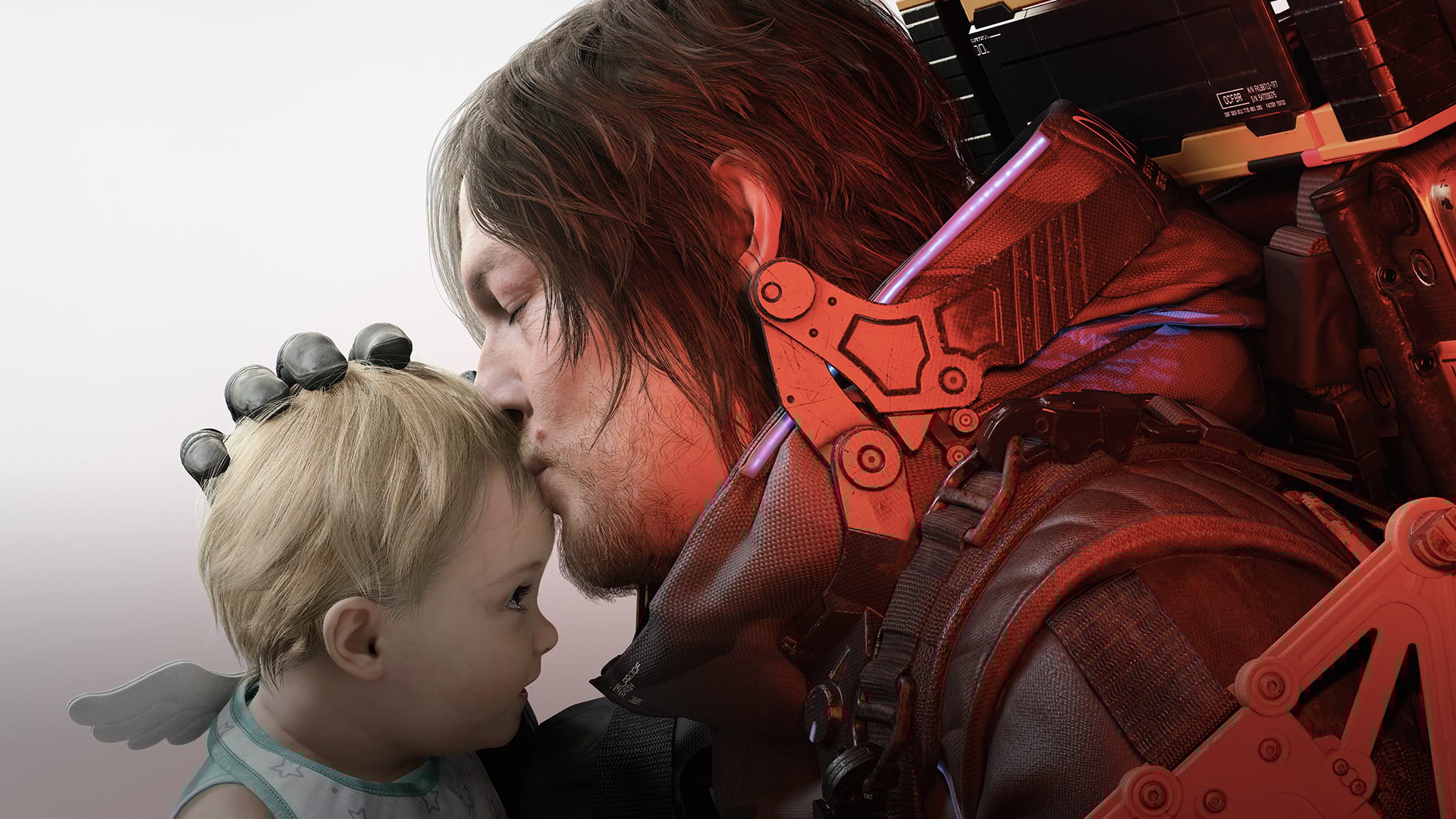
Taken together, this week’s transmissions show a project in active recalibration, not post‑launch maintenance. The March 2026 overhaul, the PC vs PS5 feature matrix, the free systems update, and the surge of character and performance‑capture trailers all point to the same thesis:
Death Stranding 2: On the Beach is being treated as a living systemic framework, where narrative, traversal, and technology are co‑authored over time.
For players, that means revisiting loadouts, routes, and difficulty expectations. For developers, it’s a rare, large‑scale case study in how to iterate on a deeply authored, linear‑leaning experience without fracturing its identity.
Sector conclusion: the beach is shifting under our feet—and that’s by design.
Sources and corrections
This archive entry does not have a verified article-source list. Images and video embeds alone are not evidence for every claim.
Found an error? Request a correction. Include the passage and a supporting source.