Automated archive / Cyberpunk 2077
Cyberpunk 2077 Reboots Its Optics on PS5 Pro
Cyberpunk 2077 has quietly rearmed itself for PS5 Pro, trading brute-force resolution for smarter ray tracing and PSSR 2 upscaling. The result is a sharper, more stable Night City that doubles as a live case study in mid-gen optimization for gamedev teams.
AI-generated summary. This archive article does not have a current recorded source check. Check linked sources before relying on details. Editorial policy

Sector Intelligence Report: Cyberpunk 2077 – Week of PS5 Pro Uprising
Night City just got a silent but significant firmware bump. Cyberpunk 2077 hasn’t added new gigs or districts this week, but under the hood the game has been meaningfully re-weaponized for Sony’s upgraded hardware, with PS5 Pro-focused ray tracing, PSSR 2 upscaling, and more stable performance in the city’s heaviest combat and traversal zones. For players, this is a visual overclock. For #gamedev teams, it’s a live case study in how to retrofit a massive open world for mid-cycle console refresh silicon.
PS5 Pro Deployment: Visual Overclock, Not Content Drop
The latest activity confirms a clear message: this is a hardware-optimized redeployment, not a content expansion. CD Projekt RED is leveraging PS5 Pro’s extra headroom to re-tune Cyberpunk 2077’s existing systems:
- Higher resolution targets with PSSR 2 upscaling, pushing closer to 4K output while maintaining fluidity.
- Improved frame pacing across dense urban sectors, reducing hitches during high-speed driving and heavy firefights.
- Stabilized performance modes, giving players a more reliable 60FPS experience even when the screen is flooded with particles, NPCs, and neon reflections.
For returning operators, this means familiar missions feel tactically different: cleaner image data for long-range reads, more predictable input response during close-quarters chaos, and less visual noise from temporal artifacts. For developers tracking the update, it’s a real-world reference on how to evolve a shipped title for new console tiers without fracturing the content pipeline.
Watch: Transmitting Gameplay footage from the field: Cyberpunk 2077 — PS5® Pro Update Trailer
Photon-Synced Ray Tracing: PSSR 2 as a Force Multiplier
The standout technical move is the photon-synced ray tracing deployment on PS5 Pro. Night City’s neon lattice now runs under PSSR 2 upscaling while chasing a 4K/60FPS target with ray tracing active. The operational gains are clear:
- Sharper reflections & denser lighting data: Windows, puddles, and chrome surfaces resolve with more precision, particularly under fast camera motion.
- Reduced ghosting and shimmer: Upscaling and reconstruction appear better tuned to Night City’s high-contrast signage and volumetric fog.
- Better cost-to-clarity ratio: Instead of brute-forcing native resolution, the pipeline leans on PSSR 2 to free GPU budget for ray tracing passes.
From a #gamedev perspective, this is a textbook example of rebalancing the fidelity triangle: resolution, framerate, and effects density. CDPR is explicitly trading raw pixel count for smarter reconstruction and more physically coherent lighting. For any #indiegame team eyeing future console refreshes, the lesson is simple: invest in scalable rendering architecture that can pivot like this without rewriting your entire engine.
Frame Pacing, Latency, and Combat Readability
Multiple field reports converge on one core improvement: stability under load. The PS5 Pro patch doesn’t just make Night City prettier; it makes it more legible when it matters most:
- Tighter frame pacing reduces micro-stutter during rapid camera sweeps and vehicle chases.
- Improved visual stability helps with target acquisition in crowded firefights, where overdraw and particle spam used to muddy silhouettes.
- Higher effective throughput means less perceived latency when snapping between targets or weaving through traffic at high speed.
For competitive-minded players, this upgrade subtly shifts the skill ceiling. For developers, it underscores how perceived responsiveness can be improved late in a game’s lifecycle via platform-specific tuning rather than core mechanic changes.
Analog Distortion: VHS Noise Mod as Counter-Programming
In parallel to the official visual uplift, the community is pushing in the opposite direction with a VHS noise overhaul mod. Instead of pristine ray-traced neon, the mod drenches Cyberpunk 2077 in:
- Scanlines and chroma bleed that mimic aging CRTs.
- Tracking errors and signal warping, making Night City feel like a corrupted tape from a lost 80s cyber-thriller.
- Dirty bloom and analog grit that deliberately sacrifice clarity for mood.
This is a powerful reminder that fidelity is not always the endgame. While CDPR optimizes for clarity and performance on PS5 Pro, modders are exploring how degradation as an aesthetic can reframe the same content. For #indiegame creators, this is a compelling data point: a strong visual identity can emerge from constraint and intentional imperfection, not just cutting-edge tech.
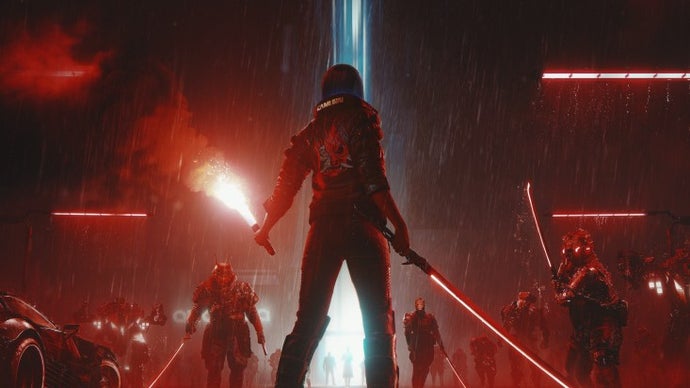
Strategic Takeaways for Developers
1. Mid-Gen Refresh as Live R&D
Cyberpunk 2077’s PS5 Pro deployment is effectively a public R&D exercise in retrofit optimization. It shows how large studios can:
- Revisit streaming, LOD, and lighting budgets for new hardware.
- Use upscalers like PSSR 2 to unlock more ambitious effects.
- Improve player experience without shipping new narrative content.
2. Performance as a Design Lever
Better performance is not just a tech bullet point; it changes how players read and react to your world. Stable 60FPS with ray tracing means more confident driving, sharper gunplay, and less friction in dense hubs.
3. Style vs. Fidelity
The VHS mod demonstrates that the community will always experiment at the edges. High-end ray tracing and low-fi analog grime can coexist—and both can be valid creative directions. The key is intentionality.
Status: Night City, Recalibrated
This week’s Cyberpunk 2077 traffic isn’t about new quests or expansions; it’s about reclaiming performance headroom and recontextualizing the game on a more powerful console. For players, Night City is sharper, smoother, and more reactive on PS5 Pro. For developers and #gamedev observers, it’s a live blueprint on how to extend the life of a massive open world through targeted technical deployment rather than constant content escalation.
In a genre obsessed with future hardware, Cyberpunk 2077 is quietly demonstrating how to evolve with it.
Sources and corrections
This archive entry does not have a verified article-source list. Images and video embeds alone are not evidence for every claim.
Found an error? Request a correction. Include the passage and a supporting source.
Your games, in one place
Keep up with Cyberpunk 2077
Follow this game to collect its posts in your personal feed. Come back to see what you missed.