Automated archive / Crazy Taxi: World Tour
Crazy Taxi: World Tour Reboots the Adscape and Reloads the Creator
Crazy Taxi: World Tour is evolving from a simple nostalgia play into a full-scale global systems reboot, complete with a reengineered adscape and the return of original creator Kenji Kanno. This week’s intel breaks down how SEGA is weaponizing real-world brands, legacy arcade design, and multi-platform reach to...
AI-generated summary. This archive article does not have a current recorded source check. Check linked sources before relying on details. Editorial policy
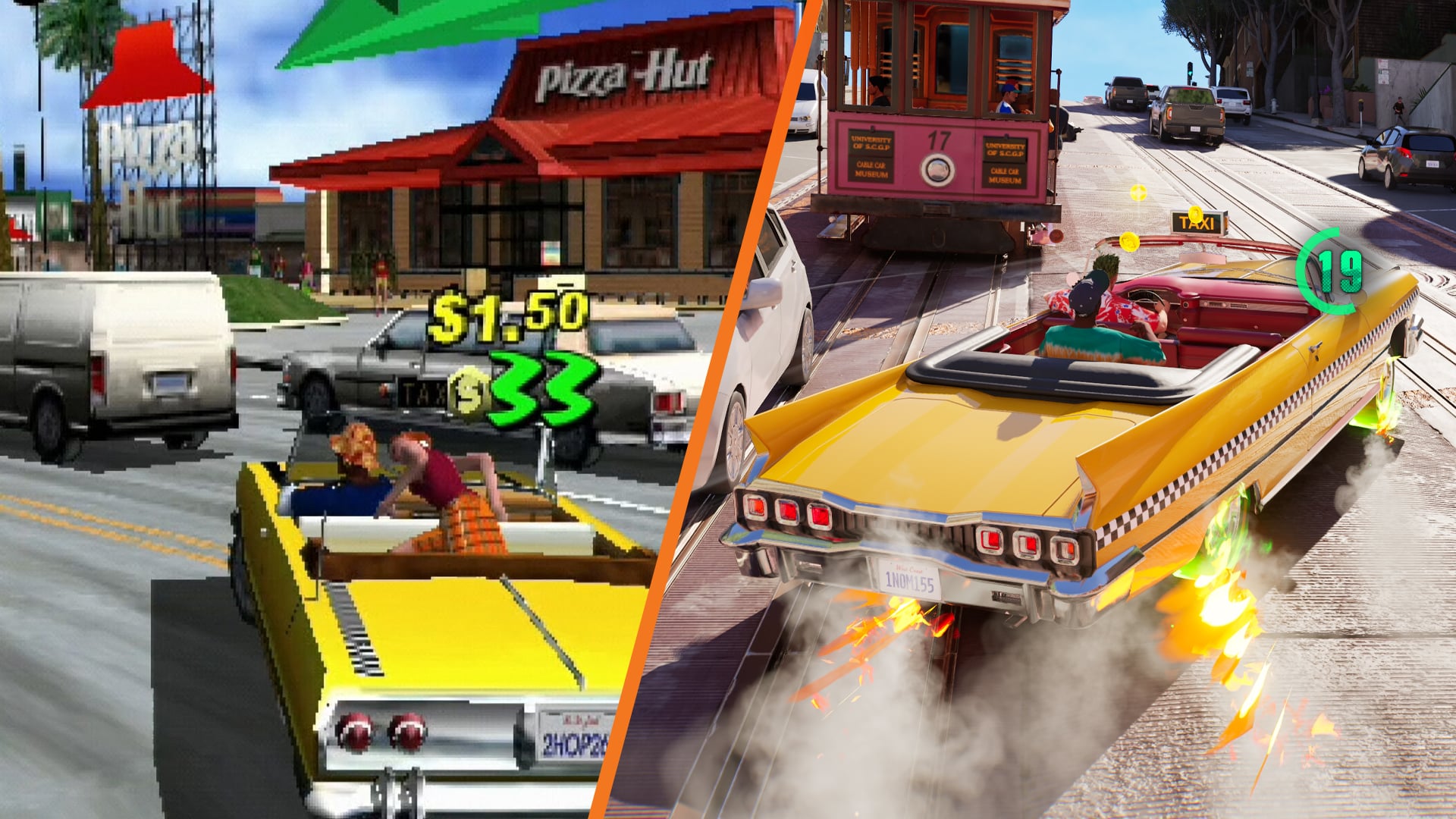
Watch: Transmitting Gameplay footage from the field: Official Crazy Taxi: World Tour Reveal
Sector Intelligence Report // Crazy Taxi: World Tour
Crazy Taxi: World Tour is shifting from nostalgic comeback to full-scale systems reboot. Over the last week, SEGA has quietly clarified three pillars of the project: a global multi-platform rollout, a radical new commercial adscape, and the return of original creator Kenji Kanno to the driver’s seat. For #gamedev teams tracking live-ops racers, licensed worlds, and arcade-forward systems design, this reboot is rapidly becoming a high-priority case study.
Global Deployment: From Arcade Corner to Worldwide Circuit
SEGA has officially slotted Crazy Taxi: World Tour into a 2027 launch window, with deployment confirmed across PS5, Xbox Series, Nintendo Switch 2, and PC. What started as a vague reboot tease in 2023 has now crystalized into a cross-platform operation with clear intent: reframe Crazy Taxi as a global ride-share battlefield rather than a single-city stunt box.
The latest transmission (surfacing via the Xbox Showcase) shows a project straddling two imperatives:
- Honor the arcade-chaos DNA: tight timers, explosive boosts, dense traffic, and aggressively readable routes.
- Modernize the loop: broader progression systems, potentially seasonal content, and a more connected global structure.
For developers, the interesting tension isn’t just nostalgia vs innovation—it’s how far SEGA is willing to stretch the original’s pick-up-and-play loop into something that can sustain multi-year engagement without losing that 90-second hit of adrenaline.
Commercial Grid Rewritten: From Pizza Hut to Five Guys
One of the clearest design signals this week is the adscape reboot. The activity feed flags a major shift: legacy brands like Pizza Hut are out, while new-era storefronts such as Five Guys are in. More importantly, SEGA appears to be doubling down on licensed brands, not backing away from them.
Key takeaways from the new commercial circuit:
1. The City as a Living Billboard Stream
Crazy Taxi has always been loud, but World Tour looks set to turn the volume way up on IRL commerce. The report calls out:
- “Dense traffic, louder signage, and more IRL logos” woven directly into the routes.
- Corners that function as both stunt arenas and ad funnels.
From a #gamedev perspective, this is an aggressive take on environment-as-monetization. Instead of skirting product placement, SEGA is embracing it as a core visual and mechanical layer. Expect:
- Routes that nudge players past key storefronts.
- Scoring, combo, or mission structures that leverage branded destinations.
- Potential for time-limited brand events or cross-promos.
2. Design Risk: Immersion vs Intrusion
The upside: licensed clutter fits Crazy Taxi’s chaotic, commercialized fantasy. The downside: in 2027, players are far more sensitive to feeling like user acquisition targets rather than valued riders.
The design question becomes: Can the team ensure that every brand beat also functions as a gameplay beat? If a Five Guys drive-by is just an ad, players will tune it out. If it’s the optimal apex for a drift-boost chain, it becomes part of the game’s tactical language.
For #indiegame teams watching from the sidelines, World Tour may become a blueprint (or cautionary tale) for how far you can push real-world licensing before it fractures player trust.
Kenji Kanno Re-Enters the Grid
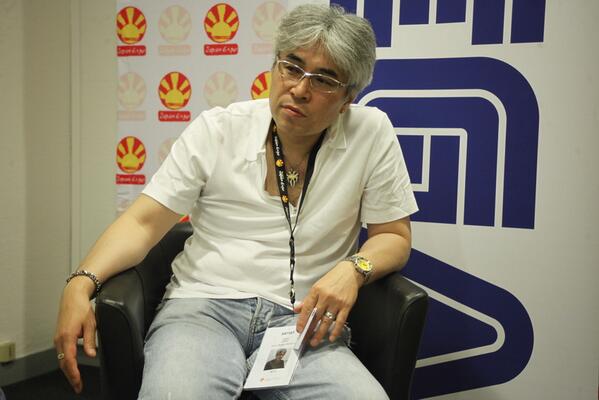
The most strategically important datapoint this week: Kenji Kanno is back.
SEGA has reactivated the original series architect to helm Crazy Taxi: World Tour, wiring legacy arcade instincts into a modern systemic framework. For developers, this dramatically shifts expectations around design intent.
1. Legacy DNA as Design Firewall
Kanno’s presence functions as a cultural firewall against a total identity drift. His historical priorities—clarity, immediacy, readable chaos, and aggressive scoring feedback—are exactly what fans fear could be diluted by modern open-world and live-service trends.
With Kanno in charge, expect:
- Short, high-intensity sessions to remain central—even if wrapped in a larger meta.
- Traffic and pedestrian systems tuned as active obstacles, not just set dressing.
- Distinctive cab physics that reward risk, not just safe, optimized lines.
2. Old-School Arcade Meets New-School Systems
The activity feed frames World Tour as a “new global ride-share battlefield”, hinting at:
- Multi-region hubs or cities.
- Possibly shared or asynchronous leaderboards and events.
- A broader economy around cosmetics, cab unlocks, or driver archetypes.
The interesting #gamedev challenge: maintaining arcade clarity inside a layered meta. If every run is overloaded with currencies, challenges, and seasonal tracks, the original “pick up, blast, bail” rhythm could be compromised. Kanno’s role will likely be to impose hard constraints on complexity creep.
Tone, Controversy, and Player Expectation Management
The latest transmissions note “fresh controversy over direction and tone” following the Xbox Showcase footage. That tension is predictable: fans want 1999 energy, but SEGA needs 2027 retention metrics.
Current friction points:
- Visual density: louder signage and heavier branding risk visual noise and readability issues.
- Structure drift: a “global operation” framing suggests a move away from the tightly scoped, single-city fantasy.
- Monetization anxiety: dense IRL logos plus a global, multi-platform rollout will trigger fears of aggressive in-game advertising.
For now, SEGA’s smartest communication vector would be systems transparency:
- Clarify whether World Tour is premium, live-service, or hybrid.
- Show how classic arcade modes exist alongside any larger progression structure.
- Demonstrate that performance, not spend, drives your best runs.
What Developers Should Be Watching
For studios and #indiegame teams observing from the sidelines, Crazy Taxi: World Tour is shaping up as a multi-layered case study:
- IP Reboots: How far can you stretch a pure arcade formula into modern expectations without losing the core loop?
- Brand Integration: Can heavy licensing be turned into a mechanical asset instead of a visual tax?
- Creator-Led Revivals: Does bringing back the original architect meaningfully anchor design, or mostly serve as marketing insulation?
As World Tour races toward its 2027 launch window, the project is less about nostalgia and more about whether an arcade relic can be re-engineered for a global, connected audience without stalling its own identity.
For now, the signal is clear: SEGA is not playing this safe.
Watch: Transmitting Gameplay footage from the field: Extended Crazy Taxi: World Tour Showcase Cut
Sources and corrections
This archive entry does not have a verified article-source list. Images and video embeds alone are not evidence for every claim.
Found an error? Request a correction. Include the passage and a supporting source.