Automated archive / Cinder City
Cinder City Dials Back RAM, Cranks Up the GPU Arms Race
Cinder City just walked back its headline-grabbing 64 GB RAM recommendation while quietly escalating its GPU demands, signaling a sharper focus on visual and systemic fidelity. This week’s intel breaks down what that recalibration means for the MMO extraction shooter’s high-spec future.
AI-generated summary. This archive article does not have a current recorded source check. Check linked sources before relying on details. Editorial policy

Sector Intelligence Report: Cinder City – Week of July 7
Cinder City is quietly redefining what a top-down MMO extraction shooter can demand from both hardware and players. This week’s telemetry shows a crucial systems recalibration: RAM requirements have eased off their record‑setting recommendation, while GPU expectations have been pushed harder into next‑gen territory. For anyone tracking #gamedev trends and high-spec PC design, Cinder City just became a case study in live-fire optimization.
System Recalibration: From RAM Hog to GPU Showpiece
The headline shift in this week’s development update is clear: Cinder City has dropped its previously reported 64 GB of RAM recommendation, but it’s not exactly going soft on rigs.
- Minimum RAM: 32 GB remains locked in. That’s still well above the 16 GB ceiling many modern PC titles orbit around.
- Recommended RAM: The controversial 64 GB flag has been scrubbed from current guidance.
- GPU Requirements: The recommended GPU spec has climbed, signaling a pivot toward visual fidelity and rendering throughput rather than sheer memory hoarding.
This is a notable course correction. Days ago, Cinder City was being framed as “the MMO that eats RAM for breakfast,” with talk of 64 GB kits brushing up against four-figure price tags in some regions. That kind of requirement doesn’t just filter casual players—it risks alienating core PC enthusiasts who still standardize around 32 GB for high-end builds.
By easing the RAM recommendation while escalating GPU expectations, the team is effectively saying: we’d rather you spend on pixels, effects, and frame-time stability than on an over-provisioned memory pool. For a visually dense, physics‑driven urban battlefield, that trade tracks with how modern engines are leaning on GPU compute for everything from destruction to AI perception.
Urban Killbox Design: Twin-Stick Tension in an MMO Shell
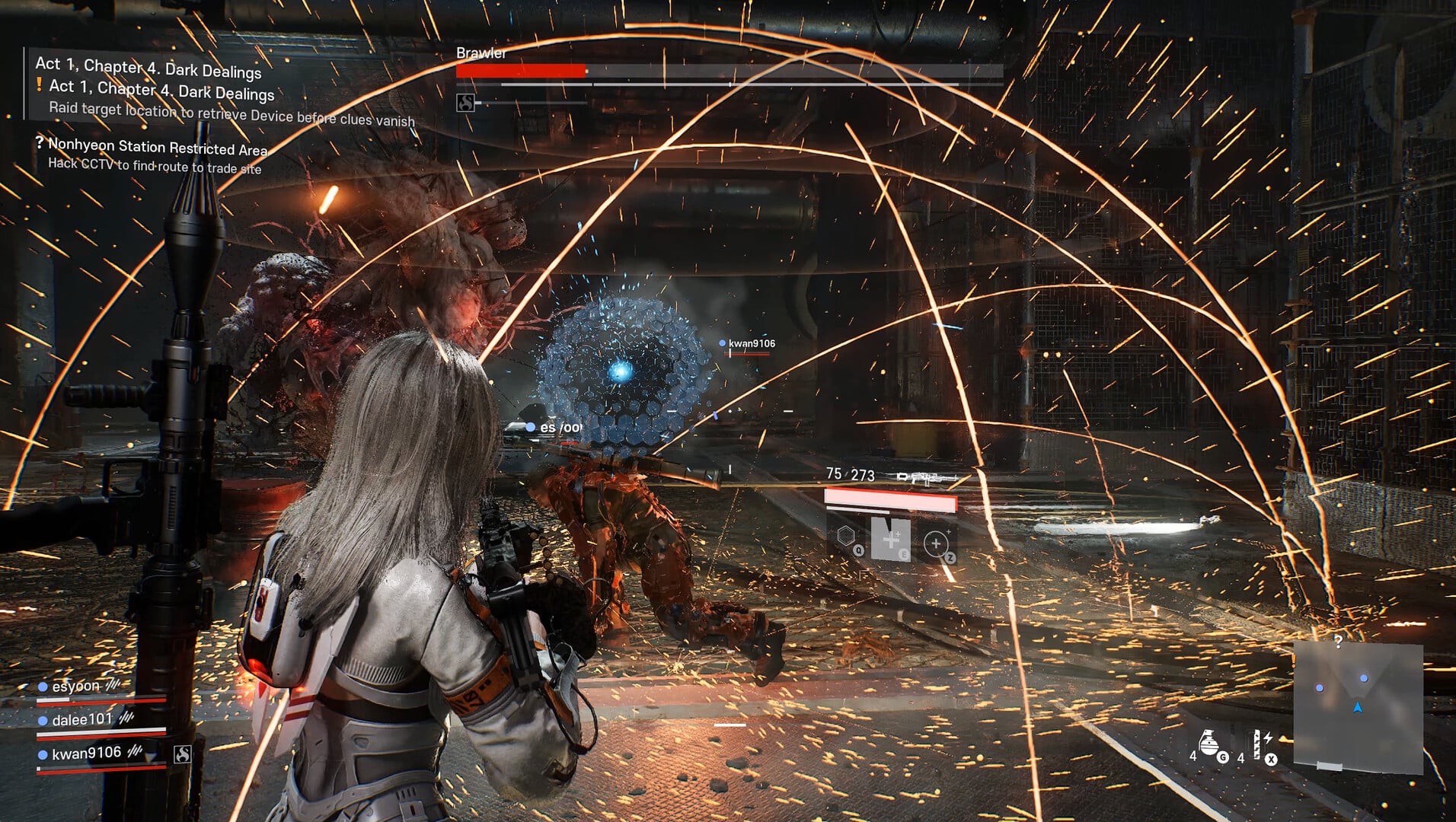
Cinder City isn’t just a spec sheet curiosity; the gameplay loop described in the latest field report suggests a hybrid design that’s rare at MMO scale:
Top-Down, Twin-Stick, Extraction-Focused
The core combat telemetry points to a top-down, twin-stick shooter sensibility layered over an extraction protocol more commonly associated with first-person titles. Players navigate a burning urban killbox, juggling:
- Stealth routing across multi-layered streets.
- Precision gunplay that demands tight analog or mouse control.
- Physics-driven destruction, where cover, debris, and line-of-sight are constantly redefined.
That combination is non-trivial for #indiegame teams, and even for larger studios it’s a technical gauntlet. Twin-stick shooters thrive on responsiveness; extraction MMOs live or die on persistence, netcode, and systemic depth. Marrying the two means animation timing, input latency, and server reconciliation all have to be tuned with surgical precision.
A Constantly Shifting Threat Grid
The report highlights environmental hazards and enemy patrol logic combining into a “constantly shifting threat grid.” In practical #gamedev terms, that implies:
- Dynamic AI pathing reacting to destruction and player movement.
- Hazard volumes (fire, collapsing structures, volatile objects) that alter viable routes mid-run.
- Intel markers and objectives that force players to cross contested lanes rather than circling safely.
Those systems are exactly where the new GPU emphasis makes sense. Dense particle effects, volumetric fire, and destructible geometry all scale better with GPU muscle than with raw RAM. If Cinder City’s vertical slice is already pushing heavy environmental simulation, the spec pivot feels less like panic and more like alignment with how the game actually plays.
Hardware Meta: Who Can Actually Run Cinder City?
The lingering friction point is that 32 GB of RAM as a minimum still places Cinder City in the ultra‑enthusiast bracket. This isn’t a “can my mid-range laptop run it?” proposition; it’s a title targeting:
- Desktop players with modern multi-core CPUs.
- GPUs in the current or last generation performance tiers.
- Memory configurations that are usually reserved for creators, not just gamers.
From a market positioning standpoint, Cinder City is carving out a high-spec urban warfare niche. That can be a strength—if the destruction, AI complexity, and MMO-scale encounters genuinely justify the demands. If not, the community will quickly flag it as inefficient, especially after the early 64 GB discourse.
For now, the recalibration reads as a studio listening to early feedback while still committing to an aggressively modern technical target.
Visual & Systems Telemetry: Official Feed
Watch: Transmitting Gameplay footage from the field: Official Cinder City systems overview
The official gameplay overview underlines the project’s ambition: a multi-layered, vertical cityscape where every street corner is a potential extraction choke point. Gunfire, explosions, and structural collapse form both spectacle and systemic risk.
For developers watching Cinder City, this week’s intel is instructive:
- Don’t be afraid to walk back extreme specs when real-world sentiment and telemetry clash.
- Use your vertical slices to validate where your bottlenecks truly are—CPU, RAM, or GPU.
- If you’re going to demand high-end rigs, spend that budget visibly on destruction, AI, and environmental storytelling.
Cinder City’s latest moves suggest a project still in flux, but increasingly aware of the fine line between technical ambition and player accessibility. As the urban killbox evolves, the next key data point will be whether that 32 GB minimum holds—or if further optimization can bring more players into the fire.
Sources and corrections
This archive entry does not have a verified article-source list. Images and video embeds alone are not evidence for every claim.
Found an error? Request a correction. Include the passage and a supporting source.
Your games, in one place
Keep up with Cinder City
Follow this game to collect its posts in your personal feed. Come back to see what you missed.