Automated archive / Cinder City
Cinder City’s Hardware Crossfire: RAM Rollback, GPU Arms Race, and a Mean Vertical Slice
Cinder City is recalibrating its demands on your rig, rolling back a controversial 64 GB RAM recommendation while escalating the GPU arms race. Behind the specs, a top-down twin-stick MMO extraction shooter is taking shape in a burning urban killbox built on physics, stealth, and a shifting threat grid.
AI-generated summary. This archive article does not have a current recorded source check. Check linked sources before relying on details. Editorial policy

Sector Intelligence Report: Cinder City – Week of July 5
Cinder City is rapidly evolving from “that MMO that eats RAM for breakfast” into a sharper, more focused PC battleground where the bottleneck is shifting from memory to raw GPU muscle. This week’s #gamedev telemetry shows a key systems recalibration, a clearer picture of its top-down extraction combat loop, and a signal that this so‑called #indiegame is quietly positioning itself as a hardware stress test wrapped in an MMO shooter.
Spec Warfare: From RAM Horror Story to GPU Arms Race
The 64 GB Shockwave
The first wave of chatter around Cinder City detonated around one brutal number: 64 GB of RAM recommended. For a PC MMO shooter, that’s beyond aggressive; it’s workstation‑class territory. With high‑end DDR5 kits flirting with the $1,000 mark, that recommendation instantly framed Cinder City as a luxury battleground.
The implication was clear: massive concurrent simulation, dense urban streaming, and heavy systems layered on top of each other. For #gamedev watchers, it suggested a tech stack leaning hard into high‑fidelity destruction, AI routing across multi‑layered maps, and perhaps ambitious server‑client replication.
Recalibration: 32 GB Minimum, GPU Dialed Up
This week, that narrative shifted. The 64 GB “recommended” flag has been scrubbed, but the minimum of 32 GB RAM remains locked in. In other words, the floor is still high, but the ceiling is no longer absurd.
Instead, the pressure has moved to the GPU. The “visual arms race” wording in the latest intel reads like the team has:
- Optimized memory usage enough to avoid the PR disaster of a 64 GB recommendation.
- Doubled down on GPU‑driven visuals: heavier post‑processing, higher‑density effects, and potentially more aggressive resolution and upscaling targets.
For players, this means Cinder City is no longer just “the MMO that eats RAM for breakfast,” but a game that expects you to bring both a big memory pool and a modern GPU if you want the full experience. For PC hardware enthusiasts, this is shaping up to be a new benchmark candidate.
Combat Telemetry: Twin-Stick Extraction in a Burning Killbox
Top-Down, Twin-Stick, High Tension
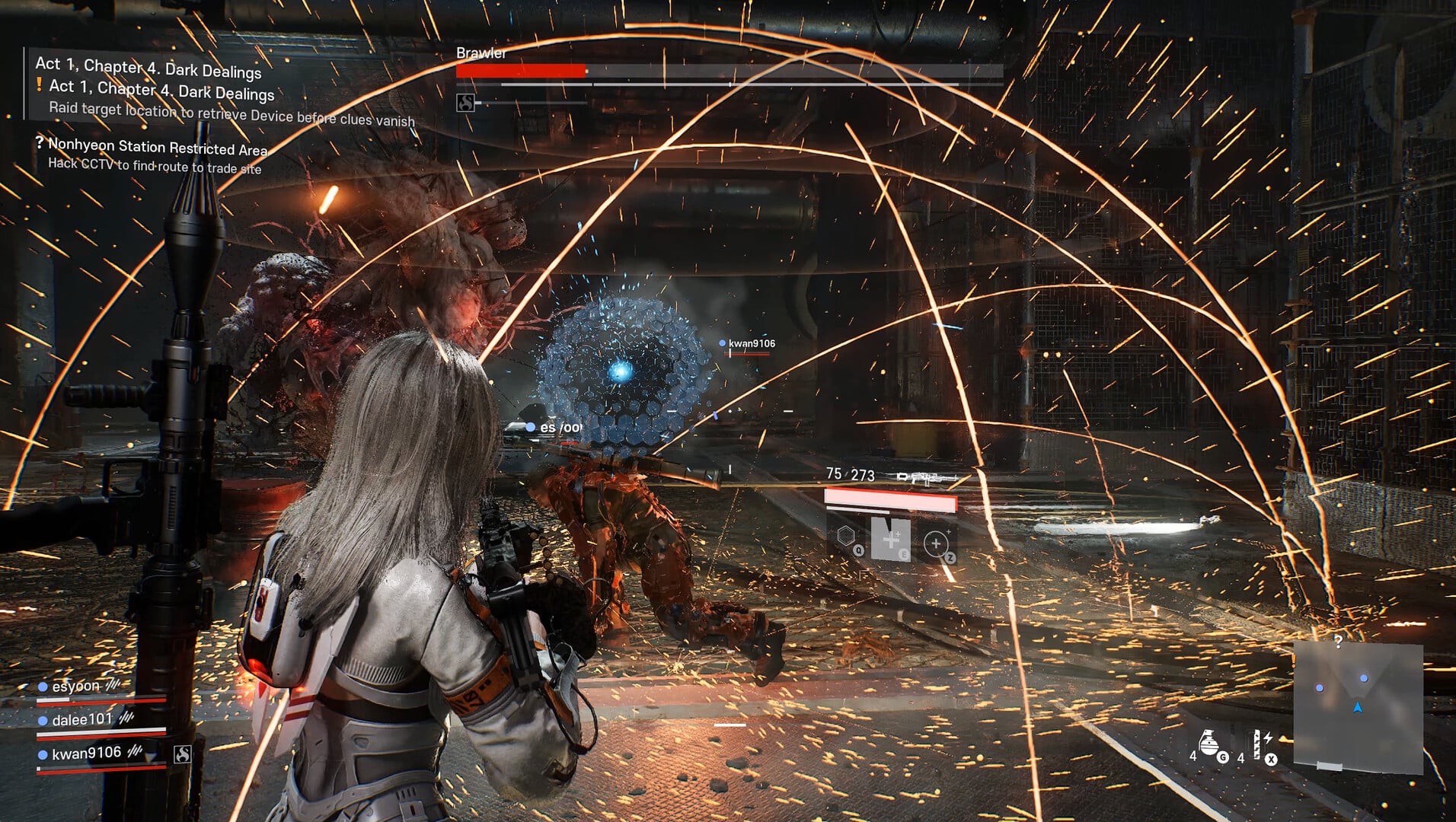
The latest developer overview clarifies Cinder City’s core loop: a top-down, twin-stick extraction shooter set in a “burning urban killbox.” Instead of a traditional third‑person MMO shooter, this is closer to a hybrid between Helldivers‑style chaos and extraction‑genre tension.
Key systems called out in the field report:
- Stealth routes: Not every engagement is a straight gunfight. Players are expected to path around patrols, use line‑of‑sight, and treat the city like a stealth puzzle as much as a shooting gallery.
- Precision gunplay: Despite the top‑down angle, the language suggests tight hit registration and recoil/weapon identity matter. This isn’t spray‑and‑pray arcade slop.
- Physics-driven destruction: This is where the hardware demands start to make sense. If cover, debris, and environmental props are simulated and destructible at scale, both memory and GPU load spike.
- Multi-layered streets: Verticality in a top‑down game implies overlapping walkable layers, bridges, interiors, and underpasses, all needing simultaneous streaming and AI awareness.
A Shifting Threat Grid
Cinder City’s “constantly shifting threat grid” is a key design pillar. Environmental hazards and enemy patrol logic appear to be dynamically recombined, which supports the idea of:
- Reactive patrol AI that reroutes based on noise, destruction, or player routes.
- Hazard zones (fire, collapsing structures, gas, or electrical arcs) that reshape safe paths mid‑run.
- Extraction tension: The more you linger, the more the grid tightens, forcing hard choices between loot and survival.
For #gamedev observers, this reads like a systems‑driven approach where replayability comes from the interplay of AI, hazards, and physics rather than just static level design.
MMO Layer: What the Systems Are Signaling
We still don’t have a full network architecture breakdown, but the current intel paints a picture of Cinder City as an MMO shooter where:
- Sessions likely involve multiple squads navigating overlapping routes in the same urban instance.
- The heavy RAM footprint could be supporting large concurrent player counts, dense AI populations, or extensive state tracking across the map.
- Physics and destruction may be replicated selectively, with the GPU load focused on client‑side spectacle while the server tracks critical state.
The move away from a 64 GB recommendation suggests the team is trimming excess and optimizing asset streaming — a necessary step if Cinder City wants to be more than a niche curiosity.
Developer Signaling: Confidence in the Vertical Slice
The official gameplay overview functions as a vertical slice confidence play. By spotlighting stealth, precision shooting, and environmental complexity in a single run, the studio is telling both players and fellow developers:
- The core loop is locked in: sneak, engage, adapt to hazards, extract.
- The visual identity—smoldering cityscapes, layered streets, and readable chaos—is far enough along to show publicly.
- The tech stack, while demanding, is stabilizing: the recalibrated RAM and GPU messaging arrived almost in sync with the gameplay push.
For an #indiegame operating in MMO territory, that’s an aggressive but calculated move.
Sector Outlook: Prepare Your Rigs, Watch the Next Patch Notes
Cinder City is emerging as a high-spec, systems-heavy MMO extraction shooter with a top-down twist and a clear appetite for modern hardware. The rollback from a 64 GB recommendation to a 32 GB minimum plus a stronger GPU emphasis suggests a team actively tuning its ambitions rather than blindly pushing specs.
If the studio can keep trimming memory bloat while preserving its physics-driven destruction and dynamic threat grid, Cinder City could become a flagship case study in how far small teams can push urban combat sandboxes on PC.
For now, the intelligence is clear: optimize your rigs, track the next wave of system requirements, and expect Cinder City to remain a lightning rod in the PC performance debate.
Sources and corrections
This archive entry does not have a verified article-source list. Images and video embeds alone are not evidence for every claim.
Found an error? Request a correction. Include the passage and a supporting source.
Your games, in one place
Keep up with Cinder City
Follow this game to collect its posts in your personal feed. Come back to see what you missed.