Automated archive / Call of Duty: Black Ops 7
Black Ops 7 Season 3 Turns Live Ops Into a Live-Fire Lab
Call of Duty: Black Ops 7’s Season 3 isn’t just adding content—it’s running a full-scale live-ops experiment across Multiplayer, Zombies, and Warzone. From the Free Trial sandbox to BlackCell’s prestige economy, every system is being stress-tested under live fire.
AI-generated summary. This archive article does not have a current recorded source check. Check linked sources before relying on details. Editorial policy
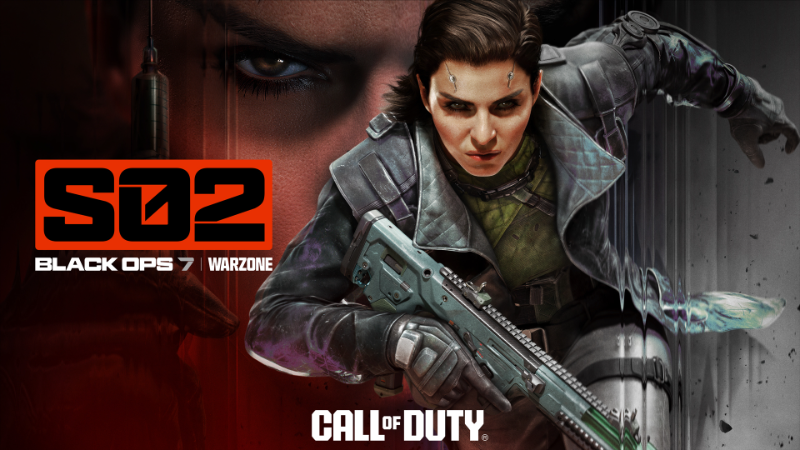
Sector Intelligence Report // Week of April 5, 2026
Season 3 for call of duty: black ops 7 isn’t just more content—it’s a coordinated live-ops experiment across Multiplayer, Zombies, and Warzone. Between the triple-front seasonal launch, the Season 3 Free Trial, and the Battle Pass / BlackCell economy push, Treyarch and partners are stress-testing both player skill and systemic design in real time.
This week’s telemetry points to a clear pattern: the studio is using Season 3 as a data-rich balancing window, funneling fresh players into a controlled sandbox while incentivizing veterans to engage deeper with progression and monetization layers.
1. Triple-Front Seasonal Launch: Unified Live-Ops, Fragmented Metas
The “Triple-Front Assault Protocol” messaging makes one thing clear: Season 3 is designed as a synchronized strike across all major modes. From a #gamedev perspective, that means:
Multiplayer: High-Velocity Lanes, Fast TTK Validation
Season 3’s positioning around “dense firefights” and “high-velocity engagements” suggests:
- Aggressive lane design on new maps to compress time-to-contact.
- Shorter time-to-kill (TTK) profiles being validated under peak concurrency.
- A focus on streak viability and lane control, signaling ongoing tuning of sightlines and spawn logic.
The studio is effectively running a live-fire usability test: can average players meaningfully influence matches in these compressed engagements, or does the meta over-favor high-skill twitch aim and pre-aim discipline?
Zombies: Systems Stress Under Horde Density
While the activity feed doesn’t deep-dive Zombies specifics, the “triple the pressure” framing implies:
- Higher enemy density curves to stress-test performance and scaling.
- Economic tweaks to points, crafting, and perk pacing.
- A possible pivot toward more objective-driven micro-phases, aligning with Warzone’s contract-style flow.
Warzone: Macro Tuning for Rotations and Risk/Reward
With Warzone explicitly folded into the Season 3 push, expect:
- Adjustments to circle pacing and rotation routes that mirror the faster tempo in Multiplayer.
- Shifts in loot table distribution to encourage more mid-game conflict rather than end-circle clustering.
- A renewed emphasis on “plays per hour”—a critical live-ops metric that often drives map and playlist curation.
Watch: Transmitting Gameplay footage from the field: Season 3 & Warzone Live Operations
From a #gamedev and live-ops lens, Season 3 is less about spectacle and more about behavioral telemetry: how players move, die, and re-engage across all three pillars.
2. Season 3 Free Trial: Controlled Sandbox, Maximum Telemetry
The Season 3 Free Trial Deployment Protocol is the sharpest tool in Treyarch’s current kit. By opening a limited-time, curated content slice to non-owners, the team gains a clean dataset:
- Fresh player onboarding: How quickly do new recruits grasp map flow, objective rules, and weapon roles?
- Weapon balance perception: Which guns feel overtuned to inexperienced players versus veterans?
- Retention and conversion: Which modes or maps correlate most strongly with full-game purchases?
Positioning the trial as a “combat sandbox” is telling. This isn’t just a marketing beat; it’s a live experimental environment:
- Trial playlists can be weighted toward new maps and modes, accelerating feedback loops.
- Matchmaking can subtly segment trial users to study skill curve adoption without veteran noise.
- The studio can A/B test UI, onboarding tips, and difficulty ramps specifically for this cohort.
For #indiegame developers watching from the sidelines, this is a case study in scaled user testing: use time-limited, targeted access to both market the game and harden your data around early-game friction.
3. Battle Pass, BlackCell, and the Valkyrie Operator: Economy as Design Pressure
The Season 03 Payload Matrix—Battle Pass, BlackCell, and premium bundles—is more than cosmetic churn. It’s where monetization design intersects with core game feel.
Battle Pass: Pacing, Progression, and Player Churn
The 100+ tier Battle Pass, with:
- 1,100 COD Points for base access
- 2,400 COD Points for the Bundle with 20+ Tier Skips
…is a classic F2P-style progression ladder embedded in a premium ecosystem. The design levers here:
- Engagement velocity: XP earn rates and challenge structures dictate how often players log in and how long they stay.
- Perceived fairness: If progression feels grindy, players disengage; if it feels generous, they’re more likely to convert on bundles.
- Loadout meta influence: Weapon Blueprints with tuned attachments can subtly nudge the meta without outright pay-to-win—if the studio walks the line carefully.
BlackCell: Prestige Layer and Visual Hierarchy

BlackCell is framed as an “elite-grade” suite: exclusive Operator skins, precision-tuned blueprints, and high-visibility cosmetics. From a design standpoint, this creates:
- A clear status hierarchy in lobbies and killcams.
- Strong visual silhouettes that let high-value spenders stand out without necessarily altering hitboxes or gameplay readability.
- A psychological ladder: standard Battle Pass → BlackCell as the aspirational peak.
Valkyrie (JSOC): Mobility as a Selling Point
Valkyrie isn’t just another skin; she’s messaged as a mobility-focused, tech-augmented Operator:
- “Next-gen mobility rig” and “neural-linked targeting suite” suggest animation and audio design tuned to feel sharper and more responsive.
- The fantasy is CIA experimental hardware—a lore wrapper that justifies any bespoke VO, SFX, or traversal flair.
For developers, this is a reminder that premium Operators sell best when they embody a mechanical fantasy, even if the actual gameplay delta is mostly aesthetic.
4. Strategic Outlook: Season 3 as a Live-Fire Design Lab
Zooming out, the last seven days of activity around call of duty: black ops 7 point to a deliberate strategy:
- Use the Season 3 Free Trial to flood the system with new data on onboarding, weapon balance, and map flow.
- Leverage the triple-front seasonal push to synchronize tuning across Multiplayer, Zombies, and Warzone, aligning their pacing and engagement curves.
- Deploy Battle Pass and BlackCell as both revenue engines and behavioral design tools, steering players into specific modes, maps, and loadouts.
For the broader #gamedev and #indiegame community, Black Ops 7’s Season 3 is a live demonstration of:
- How to treat a season not as a content drop, but as a time-boxed experimental window.
- How monetization, progression, and moment-to-moment gameplay can be co-authored by telemetry rather than intuition alone.
- How strong, militarized marketing language—“LIVE-FIRE TEST,” “CAMPAIGN,” “TRIPLE-FRONT ASSAULT”—can frame systemic changes as part of a larger, evolving war effort.
As Season 3 matures, expect incremental balance passes and playlist rotations that quietly respond to the data being harvested right now. The message from the field is clear: this isn’t just a season; it’s an ongoing design trial by fire.
Sources and corrections
This archive entry does not have a verified article-source list. Images and video embeds alone are not evidence for every claim.
Found an error? Request a correction. Include the passage and a supporting source.
Your games, in one place
Keep up with Call of Duty: Black Ops 7
Follow this game to collect its posts in your personal feed. Come back to see what you missed.