Automated archive / Call of Duty: Black Ops 7
Black Ops 7 Season 3 Rewrites the Multiplayer Battle Doctrine
Black Ops 7 Season 3 isn’t just another content drop—it’s a synchronized, cross-theater systems update reshaping how squads move, aim, and adapt. Tightened sightlines, vertical power positions, and unified progression with Warzone are turning this season into a live-ops stress test for the entire Call of Duty...
AI-generated summary. This archive article does not have a current recorded source check. Check linked sources before relying on details. Editorial policy
Sector Intelligence Report // Week of March 27, 2026
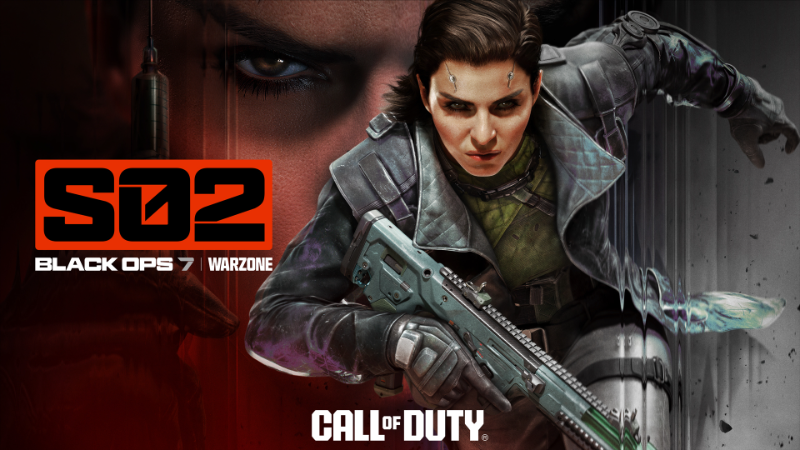
Call of Duty: Black Ops 7 is pivoting into Season 3 with a clear design mandate: compress the chaos, sharpen the decision space, and keep squads locked into a perpetual adaptation loop. This week’s intel points to a tightly synchronized rollout across Black Ops 7 and Warzone, with new maps, operators, weapons, and systemic tweaks converging into a single live-service combat cycle.
From a #gamedev perspective, Season 3 reads less like a content drop and more like a systems-level recalibration of how players move, aim, and coordinate under pressure.
Multiplayer Map Uplink: Geometry as a Weapon
The new Season 3 multiplayer rotation in call of duty: black ops 7 leans hard into deliberate map geometry: tightened sightlines, vertical power positions, and objective choke points are explicitly tuned for high-pressure squad play.
Tightened Sightlines & Lane Discipline
The language coming out of Treyarch suggests a conscious move away from overly open, sniper-dominated lanes toward curated mid-range kill zones. Expect:
- Constrained long lanes that still reward precision but demand stronger crossfire coordination.
- Mid-range corridors where assault rifles and flexible SMGs can dominate, shifting the meta away from pure long-range dominance.
- Micro-flank routes that allow solo playmakers to break entrenched setups—if they’ve internalized the layout.
The subtext is clear: learning these routes early will dictate K/D, not luck. This is a direct design investment in map mastery over raw mechanical skill.
Vertical Power Positions & Risk-Reward Balancing
Verticality is being elevated from a novelty to a core systemic pillar. Power positions—overwatch windows, rooftop angles, and elevated headglitch points—are being tuned as high-risk, high-uptime zones:
- Strong sightlines, but with multiple counter-angles.
- Increased exposure to utility (nades, tacticals, streaks).
- Shorter time-to-punish if a team overcommits to a single nest.
This is classic Treyarch map philosophy: give players power, but build in structural counters so coordinated teams can break it without relying on pure gun-skill disparities.
Objective Choke Points & Squad Cohesion
Objective modes are the real beneficiaries. Choke points are being engineered to force team-based problem solving:
- Hardpoint/Control-style zones that can’t be safely held from a single angle.
- Rotations that reward early setup, but punish static anchoring.
- Clear “lanes of responsibility” that make role clarity inside a squad more important than ever.
From a competitive design perspective, this is fertile ground. Expect early scrim data to heavily influence how these zones are iterated on in mid-season patches.
Season 3 Systems Sync: A Unified Combat Economy
Watch: Transmitting Gameplay footage from the field: Official Season 3 Launch Trailer
Season 3 isn’t just a map pack—it’s a synchronized multi-theater operation across Black Ops 7 and Warzone. The shared content spine (operators, weapons, cosmetics, and progression) is clearly built to maximize engagement throughput and retention loops.
Cross-Theater Progression & Meta Disruption
When operators and weapons deploy simultaneously in both Black Ops 7 and Warzone, balance changes echo across the entire ecosystem:
- New weapons enter both close-quarters and large-scale engagements at once, accelerating meta discovery.
- Battle pass unlock cadence is tuned to keep players bouncing between modes, maintaining a persistent sense of forward motion.
- Live balance passes can now be justified with richer data—Treyarch can track weapon performance across TTK profiles in both 6v6 and BR environments.
This is live-service design at scale: every unlock and stat tweak is part of a single, unified combat economy.
Live-Service Cadence: Maximum Entropy, Controlled Chaos
The briefing explicitly calls out a Season 03 content deployment designed to keep the combat loop at “maximum entropy.” Translated into #gamedev terms, we’re looking at:
- High-frequency balance updates as squads rapidly adapt to the new meta.
- Limited-time modes and map reconfigurations that act as testing labs for new rulesets and pacing.
- Iterative tuning of engagement ranges based on heatmaps and kill-distribution data harvested in real time.
The goal is to avoid meta stagnation without pushing the ecosystem into incoherence—a delicate balance that will test Treyarch’s telemetry pipelines and design agility.
Tactical Takeaways for Players & Designers
Watch: Transmitting Gameplay footage from the field: Season 3 Multiplayer Maps Deep Dive
For Players: Mastery Over Muscle Memory
If you’re dropping into call of duty: black ops 7 this week, treat Season 3 like a soft reset:
- Prioritize map study—custom games, bot matches, and VOD reviews will pay outsized dividends.
- Refine squad roles—entry, anchor, flex, and IGL distinctions matter more with chokepoint-heavy objectives.
- Track balance notes—weapon performance can swing quickly; early adopters of new meta tools will gain a serious edge.
The players who treat Season 3 like a new playbook, not just a new skin bundle, will control the pacing of their lobbies.
For Developers & #indiegame Teams: Lessons in Live-Service Discipline
Even if you’re building a small-scale #indiegame, there are sharp takeaways from Black Ops 7’s Season 3 rollout:
- Map design as a meta lever: You don’t always need new guns—reframing sightlines and flanks can refresh your entire combat loop.
- Synchronized content drops: Aligning cosmetics, modes, and maps around a single theme amplifies perceived value and narrative cohesion.
- Telemetry-driven iteration: Rapid-fire balance updates only work if you’re collecting and interpreting meaningful player data.
This Season 3 push showcases how a AAA shooter can operate like a live, evolving platform instead of a static boxed product.
Outlook: Season 3 as a Live-Ops Stress Test
The coming weeks will be a stress test for Treyarch’s live-ops discipline. With Black Ops 7 and Warzone operating in lockstep, every content beat has multiplied impact:
- If the new maps successfully reward early route mastery, expect a visible skill stratification in public lobbies.
- If balance changes land cleanly, Season 3 could set the template for future cross-theater seasons.
- If entropy overwhelms clarity, we’ll see a quick pivot toward more conservative tuning.
For now, the directive is clear: learn the maps, respect the chokepoints, and treat every patch note like battlefield intel.
Season 3 isn’t just more Call of Duty; it’s Treyarch tightening the screws on how modern multiplayer shooters are built, maintained, and evolved in real time.
Sources and corrections
This archive entry does not have a verified article-source list. Images and video embeds alone are not evidence for every claim.
Found an error? Request a correction. Include the passage and a supporting source.
Your games, in one place
Keep up with Call of Duty: Black Ops 7
Follow this game to collect its posts in your personal feed. Come back to see what you missed.