Automated archive / Assassin's Creed IV: Black Flag
Black Flag’s Pirate-Assassin Loop Is Aging Into a Naval Masterclass
Assassin's Creed IV: Black Flag is quietly re-emerging as a naval design benchmark, powered by a PS5 Pro resync and a renewed appreciation for Edward Kenway’s volatile pirate-assassin loop. This week’s intel breaks down how its systems, style, and narrative are aging into a masterclass for modern gamedev and...
AI-generated summary. This archive article does not have a current recorded source check. Check linked sources before relying on details. Editorial policy
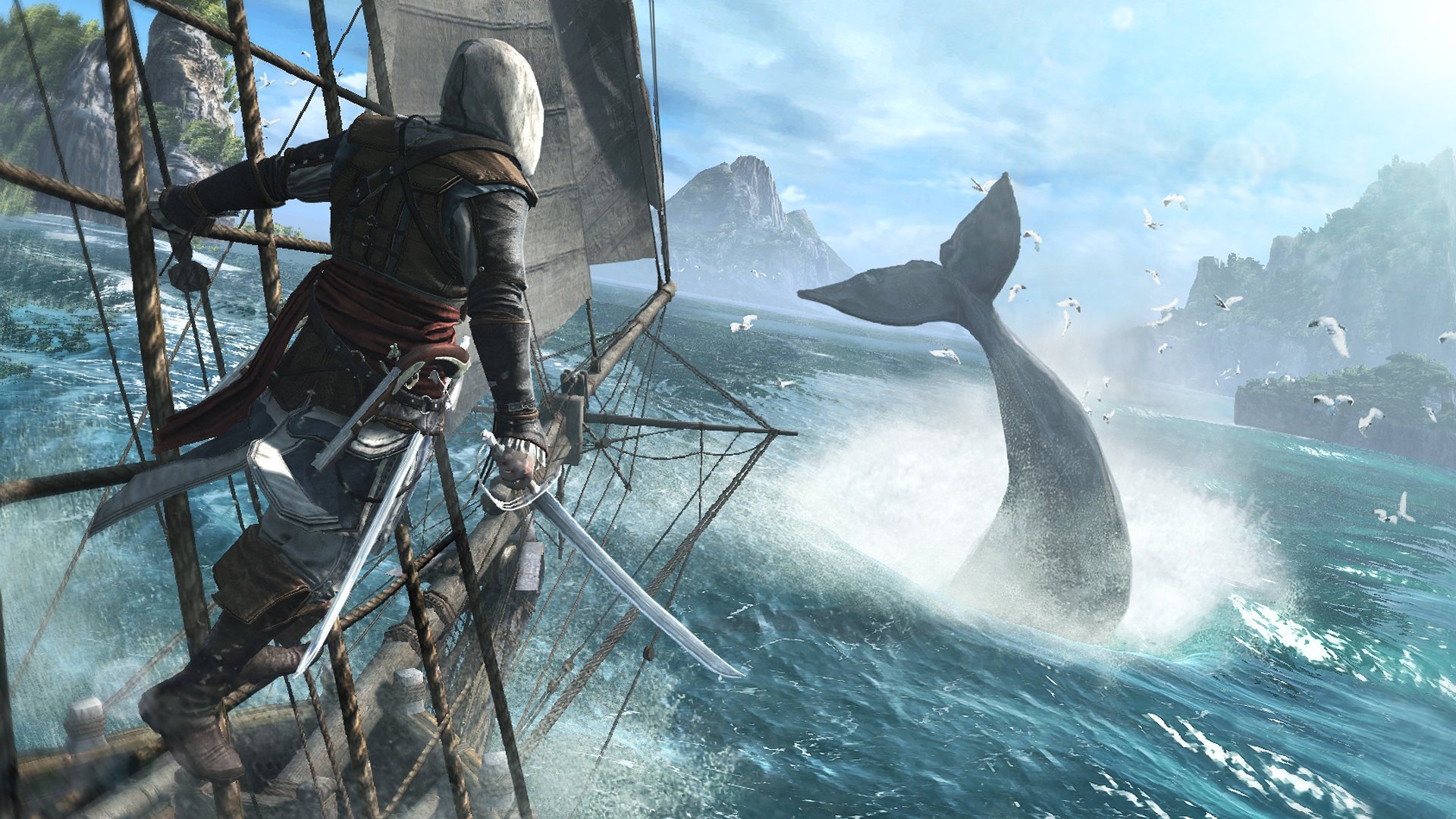
Sector Overview: Black Flag Re-enters the Next-Gen Combat Theater
Assassin's Creed IV: Black Flag is quietly staging one of the most effective late-career comebacks in Ubisoft’s portfolio. Over the last week, field intel has zeroed in on three converging vectors: a PS5 Pro resync that meaningfully sharpens the naval sandbox, a renewed fixation on Edward Kenway as a high-variance protagonist, and a meta-driven rediscovery of the pirate–assassin hybrid fantasy loop. For a title that predates the current #gamedev live-service era, Black Flag is demonstrating how strong systemic design can re-surface as if it were a modern development update.
From an industry lens, Black Flag is now functioning as a reference build for any #indiegame or AAA team chasing open-world traversal, water simulation, and character-driven systemic storytelling. The Caribbean isn’t just holding up; it’s competing with contemporary sandboxes on clarity, readability, and emotional throughput.
Visual & Systems Refresh: PS5 Pro Resync as a Soft-Remaster
The "Next-Gen Wake" PS5 Pro resync (Asset 6) doesn’t hard reboot Assassin's Creed IV: Black Flag, but it does strategically re-weaponize its strongest systems:
- Higher-fidelity seas: Enhanced surface detail and lighting make wave states more legible. For naval combat design, this improves moment-to-moment decision-making—players can read swell timing, broadside windows, and collision risk more precisely.
- Sharper combat visibility: Canon fire tracers, ship silhouettes, and boarding points stand out more cleanly, reducing visual noise in storm and night encounters.
- Frame pacing stability: Smoother output means longer tactical sessions without fatigue, which is crucial in a game where the loop is built around chaining exploration, pursuit, and boarding in a single continuous flow.
From a #gamedev standpoint, this is a case study in how to extend the half-life of a legacy open world. Rather than re-authoring content, Ubisoft is amplifying legibility and comfort—the two levers that most directly affect whether players will re-commit to a massive map in 2026.
Naval Stealth Ops: Pirate-Assassin Hybridization at Full Maturity
Recent activity logs highlight a specific emergent playstyle: naval stealth ops as a continuous, multi-layered kill-loop.
Key behaviors observed:
- Parkour boarding: Players are chaining ocean approach, ship-to-ship traversal, and vertical infiltration as if it were a single parkour route. This smooths the seam between open water and on-deck combat.
- Mast-top sniping: Using masts as vertical sniper nests transforms each ship into a micro-arena with layered sightlines, not just a flat combat platform.
- Covert deck executions under heavy sail: Full-speed, high-sail states normally scream “loud playstyle,” but players are exploiting animation timings and blind spots to maintain stealth while still leveraging the Jackdaw’s speed.
In design terms, Assassin's Creed IV: Black Flag is solving a problem many modern open worlds still struggle with: role coherence across traversal, combat, and stealth. The pirate–assassin fantasy doesn’t reset when you change context; it persists from city rooftop to ship deck to underwater wreck.
Style as System: The Obsidian Gold Jackdaw Configuration
The black-and-gold Jackdaw livery is more than cosmetic fan service; it’s a reminder that visual customization can directly support gameplay clarity and player identity.
- Intimidation per polygon: Dark hull + gilded trim reads instantly against the Caribbean color palette, making the player’s ship a consistent focal point in chaotic engagements.
- Combat readability: High-contrast detailing on masts, rigging, and deck edges helps players parse climbable paths and cover points at a glance.
- Identity lock-in: For long-form campaigns, strong visual identity reduces protagonist fatigue—players feel like they’re piloting their Jackdaw, not a generic asset.
For #indiegame teams working on smaller-scale naval or vehicle combat, Black Flag’s approach is instructive: cosmetics that enhance silhouette and readability can double as UX improvements, not just monetization hooks.
Edward Kenway: High-Variance Narrative Design in Action
The activity feed’s characterization of Edward Kenway as "the antidote to boring Assassin's Creed protagonists" is more than nostalgia. It’s a sharp observation about narrative systems design.
Edward is tuned as a pirate-first, creed-second asset:
- Moral volatility: His goals frequently misalign with the Assassin order, creating friction that keeps story beats from collapsing into pure hero worship.
- Economic motivation: Greed, not dogma, drives much of his early arc. This anchors progression systems (plunder, upgrades, crew management) to his personality rather than to abstract destiny.
- Interpersonal conflict: Because Edward isn’t ideologically stable, side characters get to challenge, betray, or redirect him in ways that feel earned.
Watch: Transmitting Gameplay footage from the field: Edward Kenway character and narrative spotlight
Modern narrative design often defaults to frictionless protagonists who align perfectly with the game’s core faction. Black Flag demonstrates how slight misalignment between player power and institutional expectations can generate richer mission framing and more memorable character arcs.
Lessons for Modern Development Pipelines
Assassin's Creed IV: Black Flag, viewed through a 2026 lens, reads like a forward-compatible design document:
- Systemic loops age better than scripted spectacle. Naval stealth ops and hybrid traversal remain compelling because they’re rules-driven, not cutscene-dependent.
- Visual clarity is a force multiplier. The PS5 Pro resync doesn’t reinvent assets; it refines how readable they are under combat stress.
- Protagonist volatility extends campaign life. Edward’s pirate-assassin tension injects narrative oxygen deep into the runtime.
For studios planning their next development update or retrofitting older titles for new hardware, Black Flag’s current resurgence is a clear signal: if your core systems are strong, targeted technical passes and renewed framing can pull a "finished" game back into active rotation—no full remake required.
Sources and corrections
This archive entry does not have a verified article-source list. Images and video embeds alone are not evidence for every claim.
Found an error? Request a correction. Include the passage and a supporting source.
Your games, in one place
Keep up with Assassin's Creed IV: Black Flag
Follow this game to collect its posts in your personal feed. Come back to see what you missed.