Automated archive / Assassin's Creed IV: Black Flag
How Assassin’s Creed IV: Black Flag Re-Synced Naval Stealth for a New Generation
Assassin’s Creed IV: Black Flag is quietly re-emerging as Ubisoft’s most instructive case study in hybrid systems and volatile character design. From a PS5 Pro resync to fresh deep dives into Edward Kenway’s arc, the Caribbean theater is back under active analysis.
AI-generated summary. This archive article does not have a current recorded source check. Check linked sources before relying on details. Editorial policy
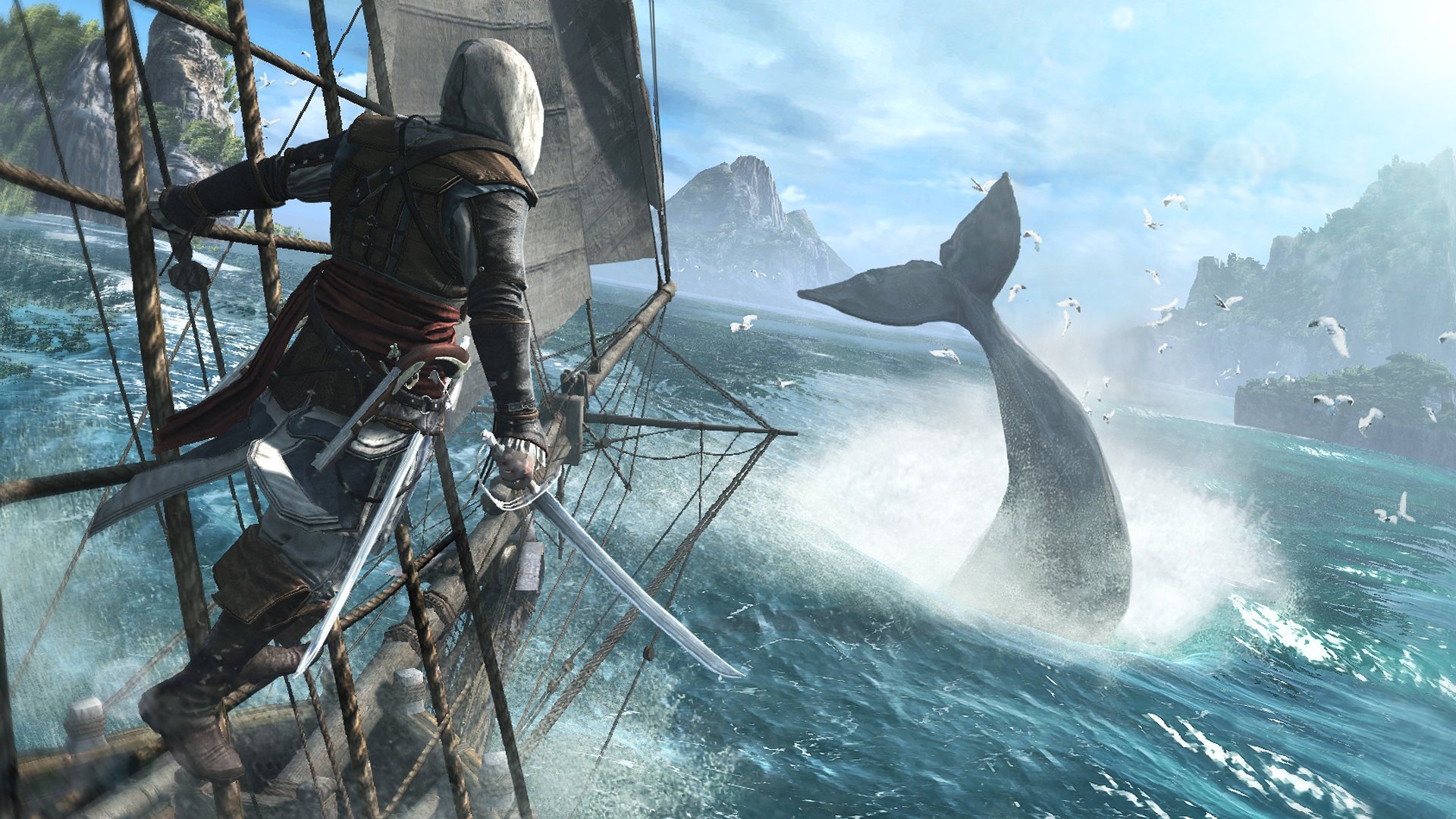
Sector Overview: A Classic Assassin Re-Emerges on Next-Gen Seas
Assassin's Creed IV: Black Flag is quietly reasserting itself as Ubisoft’s most resilient systems testbed. Over the last week, the signal has been clear: renewed platform support, fresh character-focused breakdowns, and a surge of community content are pulling this 2013 classic back into the assassin's creed iv: black flag conversation. For developers tracking long-tail live value, Black Flag is a case study in how strong systemic design and a volatile protagonist can keep a legacy title tactically relevant.
The new PS5 Pro resync in particular reframes Black Flag as more than a nostalgia play—it’s a live lab for #gamedev teams studying traversal, naval combat readability, and character-driven quest design at scale.
Naval Stealth Ops: The Pirate-Assassin Kill-Loop
Recent activity highlights a key design pillar: the fusion of pirate and assassin roles into a continuous, frictionless loop. Field reports describe a "full integration of pirate and assassin roles—parkour boarding, mast-top sniping, and covert deck executions under heavy sail." From a systems perspective, this is Black Flag’s masterstroke.
Instead of compartmentalizing stealth and action into discrete mission types, Ubisoft Montreal built:
1. Seamless Mode-Switching
- Sea-to-land transitions: Spot a target ship, disable it with cannon fire, close distance, then instantly shift into parkour and close-quarters stealth. No loading gates, no hard mode toggles.
- Verticality as combat grammar: Masts, rigging, and crow’s nests act as stealth scaffolding, extending classic Assassin’s Creed urban design language onto a moving, combat-active space.
For modern #indiegame and AA teams, this is a reference point in how to stretch a single traversal toolkit across multiple biomes (city, jungle, open sea) without rewriting core verbs.
2. Readability Under Chaos
Naval battles are information-dense: wind direction, enemy arcs, crew status, boarding prompts. The PS5 Pro resync directly targets this problem with sharper image clarity and more stable frame pacing, making it easier for players to parse threats and opportunities in real time.
For #gamedev teams, this is a reminder that performance and visual clarity are not just technical wins—they’re UX upgrades that extend session length and reduce cognitive fatigue in high-intensity encounters.
Edward Kenway: Volatility as a Narrative System
Multiple signals this week focus on Edward Kenway as a narrative asset rather than just a protagonist. The framing is explicit: "high-variance narrative asset" with a "pirate-first, creed-second alignment." That volatility is crucial to why assassin's creed iv: black flag still reads as fresh compared to more sanitized entries.
1. Character Arc as Telemetry
Matt Ryan’s recent breakdown of Edward’s iconic lines functions like a narrative postmortem. Each quote maps to a specific point in Edward’s emotional and moral evolution—greed, denial, disillusionment, reluctant responsibility.
For writers and narrative designers, the takeaway is tactical:
- Dialogue as state change: Key lines aren’t just flavor; they mark transitions in Edward’s internal logic and his relationship to the Creed.
- Conflict density: Because Edward is not ideologically aligned from the start, every mission has more potential for friction—with allies, antagonists, and his own goals.
This keeps the campaign from flattening into a single moral note, a risk many long-form open-world games face.
2. Anti-Template Protagonist Design
The activity feed explicitly positions Edward as "the antidote to boring Assassin’s Creed protagonists." In design terms, that means:
- Allowing self-interest and ambition to drive early-game decision-making.
- Letting the character’s worldview be wrong, then correcting it via systemic and narrative consequences.
- Using supporting cast conflicts (Assassins, Templars, pirates) as mirrors that expose his flaws.
For studios iterating on franchise fatigue, Edward is a blueprint for how to re-energize a series without discarding its core fantasy.
Community Signal: Memes, Desyncs, and Modern Overlays
The "Audio Desync in the Animus" playlist meme—Edward privateering to modern tracks—is officially classified as "meme-grade, non-canonical overlay." No new mechanics, no hidden quests, just engagement.
From a #gamedev and community-strategy standpoint, this is still valuable data:
- Players are recontextualizing legacy footage with modern audio, which signals strong visual identity and recognizability even out of context.
- The Animus "desync" framing keeps the meme anchored to core franchise lore rather than drifting into generic pirate parody.
This kind of low-friction UGC extends the shelf life of older titles and keeps the algorithmic surface area of assassin's creed iv: black flag wide on short-form platforms.
Watch: Transmitting Gameplay footage from the field: Edward Kenway meme-grade Animus audio desync
Strategic Takeaways for Developers
For teams studying Black Flag in 2026, this week’s signals reinforce several enduring design lessons:
1. Hybrid Systems Age Better Than Single-Mode Loops
By binding naval combat, stealth, and parkour into a single, fluid loop, Black Flag avoids the siloed-feeling mission design that dates many contemporaries. Hybrid systems give players more ways to express mastery and keep the sandbox feeling alive years later.
2. Performance Passes Can Be Narrative Wins
The PS5 Pro resync isn’t just a technical patch—it re-legitimizes the Caribbean as an active theater. Better visibility and stability make Edward’s journey easier to inhabit, particularly in long naval sessions.
3. Flawed Protagonists Drive Long-Term Engagement
Edward Kenway’s arc—selfish pirate to reluctant believer—remains one of the franchise’s strongest narrative skeletons. For #indiegame and AA studios without blockbuster budgets, this is a reminder: a volatile, well-voiced lead can carry a world that’s mechanically familiar.
In 2026, Assassin's Creed IV: Black Flag isn’t just a classic; it’s an ongoing design dossier on how to fuse systemic ambition, character volatility, and technical upkeep into a long-lived experience.
Sources and corrections
This archive entry does not have a verified article-source list. Images and video embeds alone are not evidence for every claim.
Found an error? Request a correction. Include the passage and a supporting source.
Your games, in one place
Keep up with Assassin's Creed IV: Black Flag
Follow this game to collect its posts in your personal feed. Come back to see what you missed.