
Back to guides and news
Gaming
June 7, 2026
Sector Intelligence Report: Assassin’s Creed IV: Black Flag Is Quietly Re-Surfacing in 2026
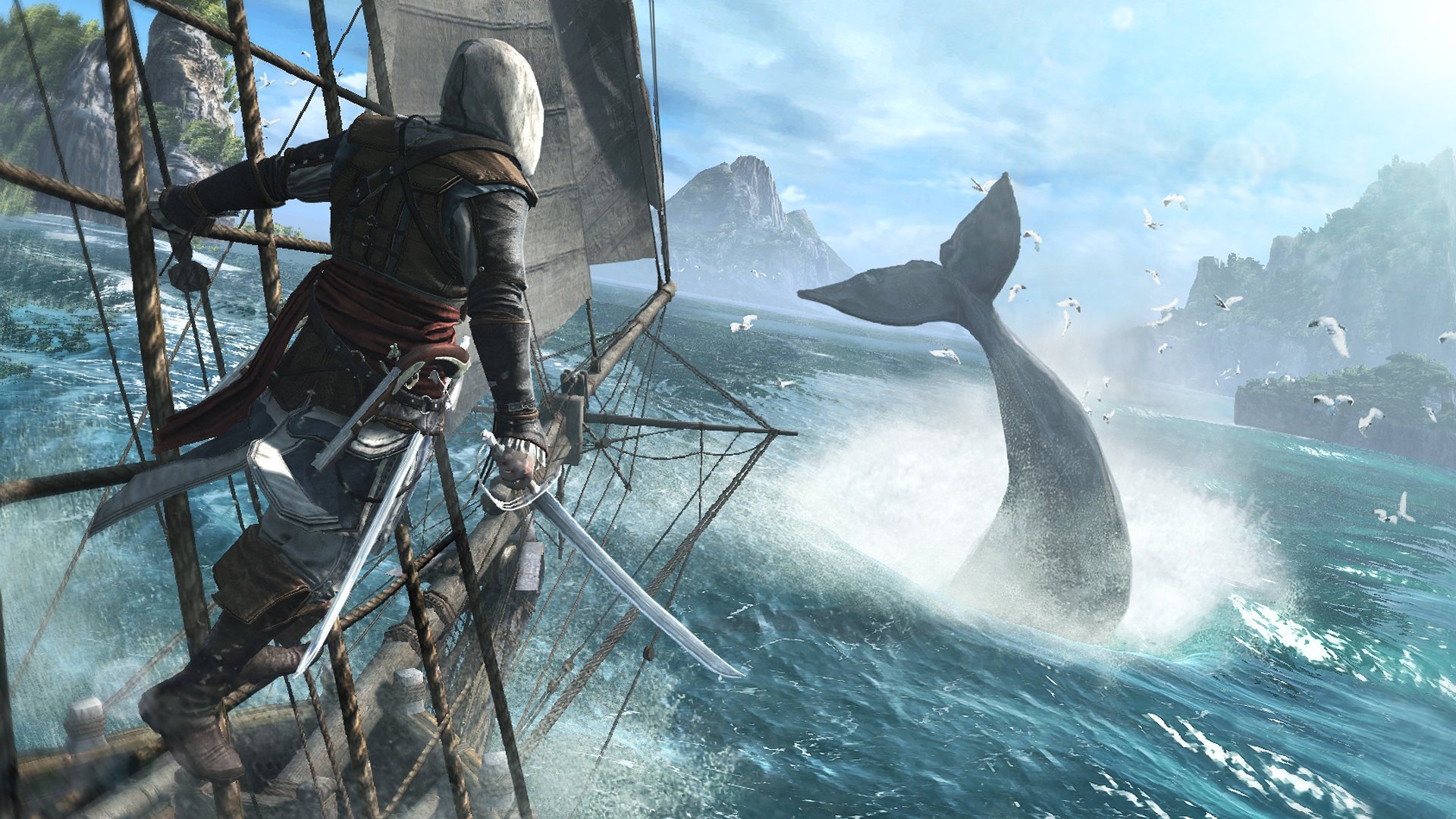
Edward Kenway returns to the spotlight in Assassin's Creed IV: Black Flag
Sector Intelligence Report // Assassin’s Creed IV: Black Flag
The last seven days have quietly turned into a micro–resurgence for assassin's creed iv: black flag, with community experiments, nostalgia drops, and renewed fascination with Edward Kenway’s design all converging. This isn’t a formal development update, but it is a clear signal: Black Flag’s systems, performance language, and character work are being re-evaluated in 2026 by both fans and developers.
Field Log 01: Real-World Parkour vs. Animus Physics
Signal: A community stress-test where a subject attempts an Edward Kenway–style Leap of Faith without the canonical haystack.
The takeaway is brutally simple: “Impact telemetry indicates zero synchronization, 100% pain reception.” It’s a joke, but it doubles as a design case study in how Assassin’s Creed IV: Black Flag abstracts danger for readability and flow.
From a #gamedev perspective, this highlights three long-standing design pillars:
- Risk Illusion vs. Real Risk – Black Flag’s parkour sells danger visually while using generous collision, auto-grab, and contextual jumps to protect the player. The IRL test underlines how far the game leans into cinematic safety over simulation.
- Telegraphed Safety Nets – Haystacks, water, and soft-landing surfaces are essentially UI elements embedded in the world. They let players read the level like a tactical map: where can I break fall damage and maintain momentum?
- Desync as Narrative Fail-State – The “desync threshold” is a lore-wrapped way of saying: we’ll bend physics until it breaks the fantasy. The IRL experiment reminds us that the Animus is fundamentally a curated reconstruction, not a physics engine.
For modern #indiegame teams working on traversal-heavy projects, this is a timely reminder: you don’t need realistic physics, you need consistent, legible physics that support your fantasy. Black Flag’s enduring appeal is anchored in that philosophy.
Field Log 02: Caribbean Sandbox Recon & Environmental Systems
Signal: Players are returning to the West Indies theater with a systems-first mindset—testing pathfinding, ship-approach lines, and stealth entries instead of chasing story beats.
This kind of replay behavior surfaces what still makes Assassin’s Creed IV: Black Flag feel modern:
- Macro–to–Micro Flow – The loop from open sea → ship approach vector → shoreline infiltration → rooftop navigation remains one of Ubisoft’s cleanest systemic pipelines. Each phase has its own verbs (sailing, boarding, sneaking, climbing), but transitions are frictionless.
- Environmental Readability – Rigging, mast beams, ledges, and balconies create a natural “parkour language.” Even a decade later, players can read routes at a glance, which is why community recon missions focus on testing “stealth entry routes” as if they’re doing QA.
- Stealth by Layout, Not Just UI – While modern games lean on cones and HUD indicators, Black Flag’s forts, coves, and coastal towns often communicate stealth states through line-of-sight, elevation, and cover density. That’s level design doing the heavy lifting.
For developers, this is the kind of emergent telemetry you want: years later, players are still stress-testing navigation meshes, approach vectors, and infiltration routes instead of just speedrunning cutscenes. That’s long-tail validation of your systemic design.
Field Log 03: Matt Ryan’s Audition Tape & Character Pipeline
Signal: Ubisoft surfaced the original audition tape for Matt Ryan as Edward Kenway, confirming that the character’s roguish tone and maritime swagger were essentially locked from day one.
This archival drop isn’t just nostalgia bait—it’s a rare look into character development pipelines from the early-2010s AAA era:
- Performance-First Prototyping – The audition footage shows that Edward’s core personality—cocksure, morally flexible, but ultimately human—was stable before full production. That early lock-in likely streamlined writing, animation direction, and cinematic blocking.
- Voice & Body as Design Constraints – Once Matt Ryan’s cadence and physicality were in place, designers could tune traversal barks, combat reactions, and stealth quips to reinforce a specific fantasy: a pirate who becomes an assassin, not the other way around.
- IP Longevity Through Character – The fact that this tape can be re-dropped in 2026 and still spike engagement is a reminder: mechanics bring players in; characters keep them emotionally invested. Edward Kenway remains one of the franchise’s most replayed protagonists because his arc is legible and grounded even inside a wild pirate power fantasy.
For #gamedev teams, especially #indiegame studios without AAA budgets, the lesson is sharp: lock your protagonist’s voice and thematic spine early. It will ripple through every system—from dialog density to animation priorities and even camera framing.
Strategic Takeaways for Developers Watching Black Flag’s Resurgence
-
Traversal Systems Age Better Than Visual Fidelity
The IRL Leap of Faith meme and Caribbean recon runs both orbit the same axis: movement still feels good. If you’re shipping a traversal-centric game in 2026, your parkour or mobility layer is a long-term investment, not a feature bullet. -
Systemic Worlds Invite Ongoing “Field Tests”
Players returning to Black Flag aren’t just reminiscing; they’re probing systems like designers—testing approach vectors, stealth options, and environmental affordances. That’s the kind of engagement you get when your world is built as a sandbox, not a corridor. -
Archival Content Is a Legit Development Asset
Publishing Matt Ryan’s early audition is more than fan service—it’s transparent process documentation. Studios can leverage similar archives to educate their communities about pipelines, while reinforcing the craft behind their characters. -
Narrative Framing of Fail-States Still Works
The desync concept remains a clever wrapper for failure. As more games explore diegetic UI and in-world explanations for replays, Black Flag’s Animus framing continues to be a useful reference model.
Sector Outlook
No formal development update has been issued for assassin's creed iv: black flag, but the telemetry from the last week is clear: players are re-engaging with its traversal model, systemic Caribbean sandbox, and character work as if it were a live case study. For developers, this is a signal to revisit Black Flag not just as a classic, but as a design document in motion—one whose lessons on movement, world structure, and character fidelity are still highly deployable in 2026’s #gamedev and #indiegame landscape.
Keep following Assassin's Creed IV: Black Flag
News, guides, posts, and game details in one place.
Open the game hub, then save it to build your personal Breach feed.
More images and video




About the game
Assassin's Creed IV: Black Flag
Ubisoft
Mission intelligence: Assassin's Creed IV: Black Flag is an open-world stealth action game set in the Golden Age of Piracy, where you command the Jackdaw across the Caribbean. As Edward Kenway, you engage in naval warfare, ship upgrades, and covert assassinations while navigating pirate politics and Templar conspiracies. Dynamic sea combat, boarding actions, and exploration define core gameplay loops. Expect a dense mix of parkour, stealth tactics, and high-risk ocean engagements.
Open game pageTopics
Assassin’s Creed IV: Black Flag
assassin's creed iv: black flag
Black Flag Matt Ryan audition
parkour game design
naval sandbox design
game development analysis
#gamedev
#indiegame
Assassin’s Creed traversal systems
Ubisoft Assassin’s Creed IV development update