Automated archive / Assassin's Creed IV: Black Flag
Assassin’s Creed IV: Black Flag’s Parkour Myths, Caribbean Sandboxes, and Edward Kenway’s Return to the Spotlight
Assassin’s Creed IV: Black Flag isn’t just aging gracefully—it’s being actively stress-tested as a modern design reference, from real-world Leap of Faith experiments to mission-free Caribbean recon runs. With Matt Ryan’s original Edward Kenway audition resurfacing, the game’s traversal, world design, and character...
AI-generated summary. This archive article does not have a current recorded source check. Check linked sources before relying on details. Editorial policy
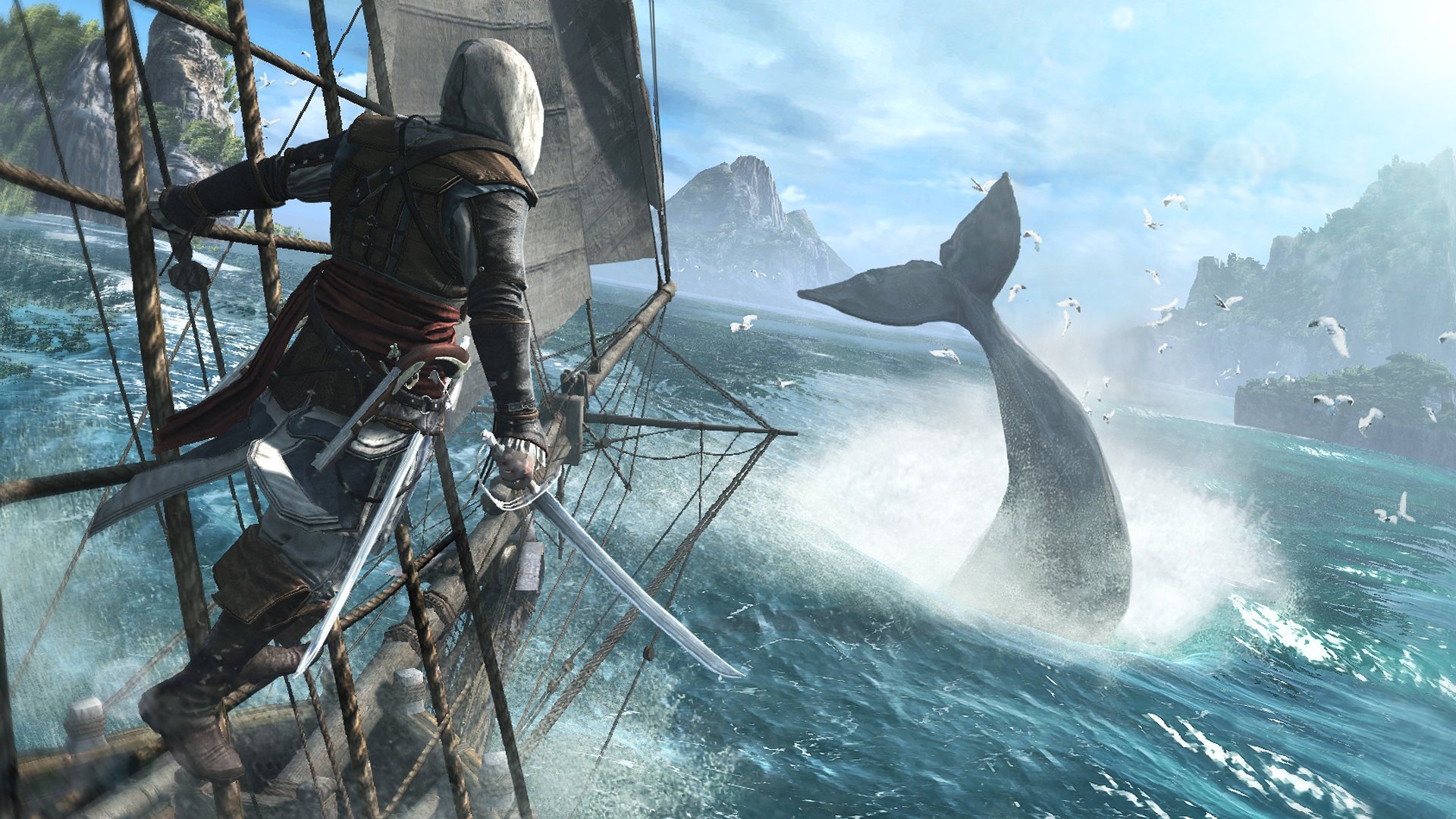
Sector Intelligence Report – Assassin’s Creed IV: Black Flag
This week’s Breach.gg Sector Intelligence sweep on assassin's creed iv: black flag shows a veteran title behaving less like a legacy artifact and more like an active live-service sandbox in the collective player psyche. From IRL parkour stress-tests to renewed fascination with Edward Kenway’s performance roots, the game is quietly reasserting itself as a design reference point for modern #gamedev and even #indiegame world-builders.
Field Log 01: Parkour vs. Physics – Desync Thresholds in the Real World
The standout datapoint in the activity feed is a real-world Leap of Faith stress-test: a player attempts an Edward Kenway–style dive without the canonical haystack. The log’s conclusion is blunt—“zero synchronization, 100% pain reception.”
From a development-analysis perspective, this is more than a meme. It underlines how Black Flag’s traversal fantasy is carefully tuned abstraction, not simulation:
- Fall damage curves in Black Flag are aggressively forgiving to preserve flow; the game prioritizes continuous movement over strict realism.
- Animations and camera framing sell the illusion of danger while collision volumes and damage thresholds quietly protect the player.
- The IRL test highlights the gap between authored systems and physical reality, a useful reminder for #gamedev teams flirting with parkour or stunt-driven design.
For designers, the takeaway is clear: player fantasy beats physical accuracy, as long as the rules are consistent. Black Flag’s parkour works because the system is predictable, readable, and tuned to reward boldness. That’s a pattern #indiegame devs can safely steal—just don’t ship a physics model that encourages leaps your players might try to replicate off-screen.
Field Log 02: Caribbean Sandbox Recon – Environmental Immersion Over Objectives
A second operative report focuses on “Caribbean Sandbox Recon”: free-running across rigging, diving into coves, probing ship-approach vectors, and testing stealth entry routes, with zero interest in quest markers. This is a textbook case of a mature open world being repurposed as a pure systems playground.
Black Flag’s West Indies map still holds up because:
- Traversal, stealth, and naval navigation are tightly interlocked. Moving from ship to shore to rooftop feels like a single continuous verb, not three separate modes.
- Coastal settlements, coves, and sea lanes are laid out with multiple approach vectors—ideal for emergent stealth routes and self-imposed challenges.
- The ocean isn’t just set dressing; currents, storms, and line-of-sight across waves all support improvised play.
For contemporary #gamedev teams, this is a reminder that objective design should be optional, not mandatory, for engagement. When players willingly ignore missions to stress-test pathfinding and infiltration routes, it means your world systems are doing the heavy lifting.
This is particularly instructive for #indiegame developers working with smaller maps: you don’t need Black Flag’s scale, but you can adopt its philosophy—design locations as multi-path problems that stay interesting even when the UI is turned off.
Watch: Transmitting Gameplay footage from the field: Edward Kenway’s world and systems in motion
Field Log 03: Archival Assets – Matt Ryan’s Edward Kenway, Locked from Day Zero
The third key signal this week is Ubisoft surfacing Matt Ryan’s original audition tape for Edward Kenway. The archival clip confirms that Kenway’s roguish tone, maritime swagger, and assassin edge were set almost from day one.
From a production and narrative-design angle, this matters:
- It shows how strong casting can crystallize a game’s thematic identity early in development.
- Kenway’s performance anchors the tonal blend of pirate hedonism and Assassin gravitas that defines assassin's creed iv: black flag.
- The resurfaced tape delivers a “nostalgia payload” that recharges fan interest years after launch, effectively acting as a stealth development update—not to the codebase, but to the game’s ongoing cultural footprint.
For studios, this is a case study in long-tail content strategy: archival material, behind-the-scenes footage, and early auditions can serve as low-cost, high-impact engagement beats. They also provide valuable reference for aspiring actors, writers, and directors studying how character is iterated in AAA pipelines.

Strategic Takeaways for Developers
1. Design for Myth, Not Mimicry
The failed IRL Leap of Faith underscores that mythic movement systems are about emotional plausibility, not physical fidelity. Building for spectacle—then invisibly protecting the player with tuned damage curves and collision logic—is a valid and often necessary trade.
2. Let the World Survive Without Quests
The Caribbean recon report shows Black Flag functioning as a mission-agnostic sandbox. When your AI patterns, navigation meshes, and environmental affordances are strong enough, players will invent their own objectives.
3. Archive Everything
The Matt Ryan audition resurfacing demonstrates the value of archival discipline. Recording and preserving early performance tests, greybox walkthroughs, and prototype systems can become future-facing content that reactivates your community and educates the next generation of devs.
Sector Status: Black Flag as a Living Reference Build
Across parkour experiments, sandbox recon, and archival character work, assassin's creed iv: black flag continues to operate as a living reference build for traversal design, open-world structuring, and performance-led character identity. There’s no formal development update on the code itself, but the game’s systems are still being interrogated, reinterpreted, and celebrated by the field.
For both AAA and #indiegame teams, Black Flag remains less a relic and more a design toolkit in circulation—its lessons on movement, world layout, and character craft still chart a reliable course through increasingly crowded open-world seas.
Sources and corrections
This archive entry does not have a verified article-source list. Images and video embeds alone are not evidence for every claim.
Found an error? Request a correction. Include the passage and a supporting source.
Your games, in one place
Keep up with Assassin's Creed IV: Black Flag
Follow this game to collect its posts in your personal feed. Come back to see what you missed.