Automated archive / Assassin's Creed IV: Black Flag
Why Assassin’s Creed IV: Black Flag Still Outperforms Modern Sandboxes
This week’s Assassin’s Creed IV: Black Flag signals show a decade-old classic quietly reclaiming its role as a systemic open-world benchmark. From IRL parkour stress tests to Ubisoft’s resurfaced Edward Kenway audition tape, Black Flag is being repositioned as design reference, not just nostalgia fuel.
AI-generated summary. This archive article does not have a current recorded source check. Check linked sources before relying on details. Editorial policy

Sector Intelligence Report // Assassin's Creed IV: Black Flag
The last seven days of signals around assassin's creed iv: black flag read less like nostalgia and more like an unsanctioned design postmortem. From IRL parkour stress tests to Ubisoft resurfacing Edward Kenway’s original audition tape, Black Flag is quietly re-entering the discourse as a benchmark for systemic open-world design rather than just a fan-favorite pirate sim.
This week’s data points reveal three converging threads: players re-evaluating the game’s traversal and physics, a renewed obsession with its Caribbean sandbox, and Ubisoft selectively weaponizing archival assets to keep Edward Kenway culturally and commercially active.
Field Ops: When Leap of Faith Meets Real-World Concrete
The standout log from the activity feed is a “Real-World Parkour Stress-Test for Assassin’s Creed Desync Thresholds” where a subject attempts an Edward Kenway–class Leap of Faith without the canonical haystack.
From a #gamedev perspective, this is more than a meme:
1. The Physics Fantasy Gap
The report’s punchline—“Impact telemetry indicates zero synchronization, 100% pain reception”—highlights the calibrated fantasy-first tuning of Assassin’s Creed IV’s traversal. Black Flag’s parkour system deliberately over-promises survivability to maintain flow: forgiving ledge grabs, generous auto-alignment, and cinematic fall states that keep players in the power fantasy loop.
The IRL test unintentionally underscores how the game’s risk envelope is tuned. In Black Flag, verticality is a reward vector, not a danger vector. For modern designers and #indiegame teams, this is a reminder that player trust is often built on consistent exaggeration, not realism.
2. Desync as Diegetic UX
The reference to “desync thresholds” taps into one of Assassin’s Creed’s smartest long-term UX tricks: using diegetic failure states (Animus desync) to mask pure mechanical limits. Black Flag leans into this—fall damage, combat failure, and out-of-bounds behavior are all framed as sync loss, not just “you died.”
The IRL comparison exposes how effectively the series has trained players to think in simulation terms: they’re now testing where the invisible “desync bar” would be in real life. That’s brand-level conditioning most franchises never reach.
Caribbean Sandbox Recon: Why Black Flag’s World Still Hits
The second key log describes an operator deploying to the West Indies theater, explicitly focusing on environmental immersion over objective completion: testing pathfinding, ship-approach lines, and stealth entry routes.
This is essentially a late-stage usability study happening years after launch, and the findings are still flattering:
1. Mission-Agnostic World Design
The player’s choice to ignore formal objectives and treat the map as a systems playground validates one of Black Flag’s core strengths: its locations are authored to be legible and interesting even when decoupled from quest scripting.
- Coastal forts double as stealth puzzles.
- Jungle coves support both infiltration and escape.
- Town layouts naturally suggest rooftop and crowd-blend lines.
For current #gamedev teams, this is a case study in mission-agnostic affordances—designing spaces that stay fun once the quest markers are gone.
2. Naval-to-Land Transition as a Design Spine
The operator’s focus on “ship-approach lines and stealth entry routes” spotlights a design pillar that’s still underutilized in modern open worlds: the approach phase as a core loop.
Black Flag’s brilliance is that the Jackdaw isn’t just a fast-travel mechanism; it’s a mobile staging platform. The decision of how you angle your entry—broadside bombardment, stealthy cove insertion, or risky direct harbor breach—meaningfully reconfigures the encounter.
For designers working on traversal-heavy #indiegame projects, this is a reminder that how players arrive at content can be as important as the content itself.
Archival Intel: Matt Ryan’s Edward Kenway Audition Resurfaces
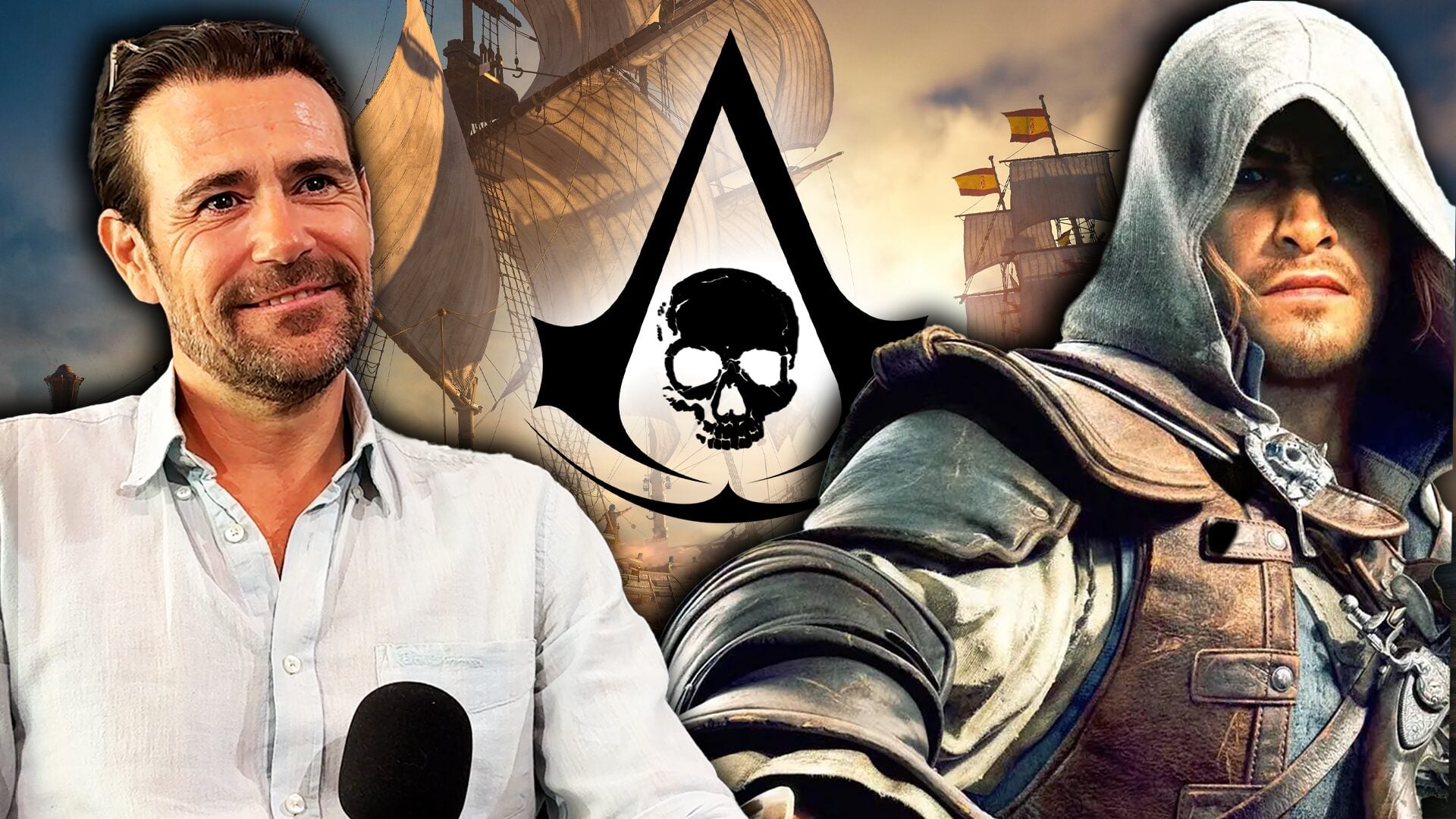
Two separate logs flag Ubisoft’s decision to re-sync and re-release Matt Ryan’s original Edward Kenway audition tape, with the actor reacting to his younger self and dissecting performance choices.
Watch: Transmitting Gameplay footage from the field: Matt Ryan revisits Edward Kenway’s origins
1. Character as Long-Term IP Infrastructure
The field notes emphasize that early-stage parameters—“roguish tone, maritime swagger, and assassin aptitude”—were locked in from day zero. From a development update lens, this is Ubisoft quietly showcasing its character bibles and casting pipelines.
Key takeaways for narrative teams:
- Voice cadence and rhythm: Ryan’s delivery sells Kenway’s arc from self-serving pirate to reluctant ideologue.
- Hybrid identity: The “pirate-assassin” framing is a genre fusion that gave Black Flag flexibility in tone—able to pivot between political intrigue and tavern brawls without tonal whiplash.
The re-release doubles as brand maintenance. By turning the audition into content, Ubisoft keeps Edward Kenway culturally present without committing to a full new title—smart IP stewardship in a crowded market.
2. Archival Media as Training Data
The log explicitly calls the footage “training data for future narrative calibrations.” That’s not just flavor text—it’s a nod to how large studios now mine legacy performances when tuning voice direction, casting briefs, and even ML-assisted tools for lip-sync and emotional tagging.
For #gamedev pipelines, this is a glimpse of a future where performance archives are searchable design resources, not just marketing relics.
Ubisoft’s Current Signal: Subtle, But Intentional
The combination of:
- IRL parkour experiments invoking Assassin’s Creed’s core verbs,
- Players stress-testing Black Flag’s Caribbean sandbox as a pure systems playground, and
- Ubisoft pushing official Edward Kenway archival content back into circulation,
suggests a deliberate soft-reactivation of the Black Flag brand.
Whether this is groundwork for future remaster activity, cross-media exploitation, or simply IP maintenance, the signal is clear: assassin's creed iv: black flag is being reframed less as “that good pirate one” and more as a design reference point for systemic open worlds.
For studios large and small, the week’s intel is a useful reminder:
- Exaggerated physics can deepen trust if they’re consistent.
- Worlds should survive contact with players who ignore the HUD.
- And sometimes, your most valuable development update is buried in an old audition tape, waiting to be re-synced for a new generation of designers and players.
Sources and corrections
This archive entry does not have a verified article-source list. Images and video embeds alone are not evidence for every claim.
Found an error? Request a correction. Include the passage and a supporting source.
Your games, in one place
Keep up with Assassin's Creed IV: Black Flag
Follow this game to collect its posts in your personal feed. Come back to see what you missed.