Automated archive / Apex Legends
Power Trip Protocol, Axle Containment, and the New Storm Point Order in Apex Legends
Respawn’s latest Apex Legends cycle fuses wild Power Trip experiments with hard-nosed balance passes for Axle and Conduit, plus critical stability and ranked integrity fixes. This week, the arena doubles as both a live-service battleground and a high-velocity design laboratory.
AI-generated summary. This archive article does not have a current recorded source check. Check linked sources before relying on details. Editorial policy
Power Trip Protocol: When Every Round Is a Design Experiment
Watch: Transmitting Gameplay footage from the field: Apex Legends Power Trip Event Trailer
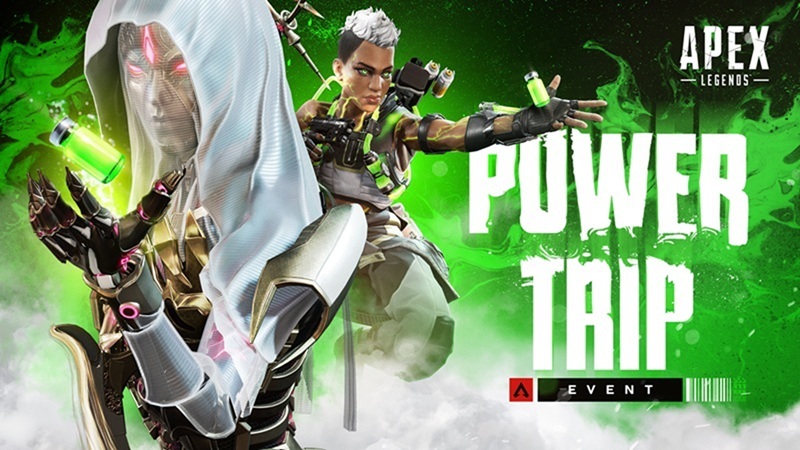
Respawn has flipped the breakers on the Power Trip event in Apex Legends, and from a #gamedev perspective it reads like a live-service lab test disguised as a chaos festival.
The Wildcard combat modifiers rotate across 5-round loops, with some rounds left baseline and others injected with global rule changes:
- Featherweight jump physics
- Universal red-tier armor hardening
- Mythic-grade weapons for all combatants
- Cloak-on-crouch stealth
- Micro-sized legends
- Synced random loadouts
- Infinite grenade spam with self-destruct risk
- Total reset via Blank Slate
Kings Canyon, Olympus, and Broken Moon are the designated test maps, effectively serving as rotating sandboxes for systemic stress-testing. From a design lens, this is a controlled way to:
- Probe extreme TTK and mobility envelopes (mythic weapons, red armor, featherweight jumps).
- Evaluate readability and counterplay under stealth and silhouette distortion (cloak-on-crouch, micro-legends).
- Pressure-test netcode and FX pipelines with infinite ordnance and synchronized loadout swaps.
The vial extraction and cosmetics shop layer turns this into more than a novelty mode. It’s a data capture funnel: Respawn can correlate engagement, retention, and purchase behavior against specific modifier sets, informing future LTMs and long-term ruleset experiments.
For players, the meta read is simple: play as if every corridor is a killbox. For developers watching from the outside, this is a clear case study in how a non‑#indiegame live service can safely iterate on wild mechanics without hard-committing them to ranked or the core battle royale ruleset.
Axle & Conduit: Containing the Sustain and Trap Meta
The latest Balance Uplink pushes a targeted recalibration for Axle and Conduit, both of whom were warping engagements via stall and sustain.
Axle: Nitro Gate Saturation Curbed
Axle’s Nitro Gate deployables are now hard-capped and their armor values thinned. Design-wise, this directly attacks:
- Trap saturation in tight lanes and buildings.
- Burst stall potential that let teams turtle through pushes they should have lost.
The intent is to keep Axle’s identity as a lane-denial and tempo legend intact while preventing her from turning every choke into a full-stop no-go zone. Off-angle holds that previously relied on stacking multiple gates will need to be re-scripted; expect more emphasis on single-gate timing and crossfire setups instead of outright barricades.
Conduit: Sustain Without Infinite Batteries
Conduit’s Radiant Transfer grid has been retuned with:
- Slower regen cadence
- Extended uptime
- Reduced total sustain
The old behavior leaned too hard into “infinite frontline batteries,” letting teams brute-force attrition fights they had no business winning. The new numbers push Conduit towards planned sustain windows—you still get meaningful barrier phases, but you can’t chain them endlessly.
For competitive squads, this shifts value from blind aggression into structured timing calls: syncing pushes with Radiant uptime, using Axle’s more limited gates as commit signals rather than permanent cover.
Tactical Hotfixes: Visibility, Telemetry, and UI Friction
Beyond headline balance, Respawn pushed a Tactical Hotfix Relay that quietly tightens the game’s information layer—critical for both high-level play and clean UX.
Key changes:
- Vantage intel pings now propagate correctly to squad HUDs, restoring proper long-range target marking.
- Seer’s ultimate once again delivers clean footstep telemetry, re-establishing its wallhack-adjacent clarity.
- Axle’s kickstart explosion now purges smoke and gas in its AoE, aligning with other ordnance and improving fight readability.
On the systems side:
- The Turbocharger hop-up UI now shows accurate charge data and attachment requirements, reducing mid-fight misreads during frantic weapon swaps.
- Wildcard replicators no longer suffer menu input delay, a small but vital fix for squads optimizing their rotation and crafting windows.
- Lighting passes on Kings Canyon and Olympus sharpen contrast and target legibility, a classic example of how art and competitive clarity must co-exist.
For PS4, performance optimizations aim to stabilize mid-fight frame pacing. Respawn also flags an ongoing investigation into FPS drops and stutter after kills, likely tied to death event handling in the render and streaming pipeline. This kind of transparent telemetry callout is gold for #gamedev teams studying how large-scale live titles communicate known issues.
Platform Stability: Driver Discipline as Design Dependency
Two separate updates underline a recurring truth in modern PC development: driver stacks are part of your game’s real-world codebase.
- Radeon RX 400/500 lobby crashes were traced to outdated AMD drivers; the fix is purely on the user side via driver updates.
- Storm Point crash incidents show similar patterns across Nvidia/AMD/Arc when running unpatched drivers.
By classifying certain crash-to-desktop events as user error unless drivers are confirmed current, Respawn is drawing a clear operational boundary. For external developers, this is a reminder that live ops now includes educating players about their own hardware hygiene, not just shipping patches.
Ranked, Rotation, and the Return of Storm Point
The Protocol Patch for matchmaking tightens ranked integrity:
- Ranked tier restrictions now enforce correctly, shutting down queue-hopping and high-tier players sliding into low-tier lobbies (intentionally or otherwise).
This is a crucial trust repair move for competitive players and a strong signal of how seriously Respawn guards the integrity of its ladder.
On the map front:
- Storm Point re-enters rotation.
- Kings Canyon exits the pool.
This forces a rapid re-learn of drop routes, rotation timings, and third-party vectors. Teams leaning on legacy Kings Canyon muscle memory—especially around Skull Town patterns—will need to rebuild their mental models for Storm Point’s more open sightlines and longer rotation chains.
Narrative Ops: Axle’s Lore AMA as Community Telemetry
Finally, the Axle Uplink AMA on r/ApexLegends is a reminder that narrative beats are part of the product roadmap, not just set dressing. By focusing the session on Axle’s history, not her kit, Respawn separates mechanical balance discourse from lore exploration.
For #gamedev and #indiegame teams, this is a clean template:
- Use AMAs to deepen character investment.
- Keep balance talk in patch notes and dev blogs.
- Collect narrative feedback and future AMA targets as soft research for long-term worldbuilding.
Sector Outlook: A Live Service in Full Experiment Mode
Across this week’s updates, Apex Legends is operating like a mature live-service platform that’s still willing to experiment aggressively:
- Power Trip tests extreme rule variations without corrupting core ranked data.
- Axle and Conduit nerfs recalibrate sustain and stall without erasing legend identities.
- Hotfixes and driver advisories show a studio comfortable treating hardware, UI, and visibility as live design variables.
For players, the takeaway is clear: expect faster fights, tighter information clarity, and a ranked environment with fewer loopholes. For developers watching from the outside, Apex Legends remains a high-visibility case study in how to iterate on balance, stability, and spectacle at scale—without losing sight of competitive integrity.
Sources and corrections
This archive entry does not have a verified article-source list. Images and video embeds alone are not evidence for every claim.
Found an error? Request a correction. Include the passage and a supporting source.
Your games, in one place
Keep up with Apex Legends
Follow this game to collect its posts in your personal feed. Come back to see what you missed.
More to read about Apex Legends
- Source-checked briefApex Legends tests longer Plat+ matchmaking queues
Apex Legends has begun a matchmaking test for Platinum-and-higher players that may lengthen queues while the system seeks closer-ranked lobbies. The test applies to Plat+ players across every...
- Source-checked briefApex Legends fixes weapon exploits
Apex Legends received fixes for multiple weapon exploits, including issues that could alter magazine firing, reload speed, and fire rate. The announcement says anti-cheat work and enforcement...
- Source-checked briefApex Legends shares first-week Javelin anti-cheat results
The announcement says EA Javelin Anti-Cheat prevented 265,550 cheating attempts in its first week on PC. It also says console players will receive separate updates in the coming weeks. The...